We use these AI tools for technical writing (not ChatGPT)
AI tools we use for technical writing across research, drafting, and review, built to avoid errors developers and LLMs amplify.

When you are creating technical content for developer tools like CodeRabbit, Mintlify, and Cloudinary, the margin for error is zero. Developers will catch a hallucinated code snippet. They will notice when an API reference is wrong. They will leave and not come back.
And now the stakes are higher. Developers are asking LLMs instead of Googling. Those LLMs are pulling answers from the articles you publish. Which means the quality of your technical content does not just affect your blog traffic anymore. It affects what AI tells developers about your product at scale, with your name attached.
That makes every stage of the content process more important. Research, fact-checking, drafting, editing, and technical review all influence whether a piece of content is ultimately useful or misleading. Small mistakes can quickly compound when AI systems surface and repeat information across the web.
For many technical writers, ChatGPT is the starting point for research, ideation, and editing. However, it has limitations. It can hallucinate code, miss implementation details, misunderstand API behavior, or present outdated information with confidence. That is why every AI-generated output still requires validation.
The tools covered in this guide are part of a broader technical writing workflow rather than standalone solutions. Our technical writing process explains how we use AI across each stage, from brief creation and research to drafting, technical review, and publication, while maintaining human oversight and accountability.
What follows is the AI stack our technical writers use in client work, organized by where each tool fits into the process and the specific problems it helps solve.
Research
Perplexity
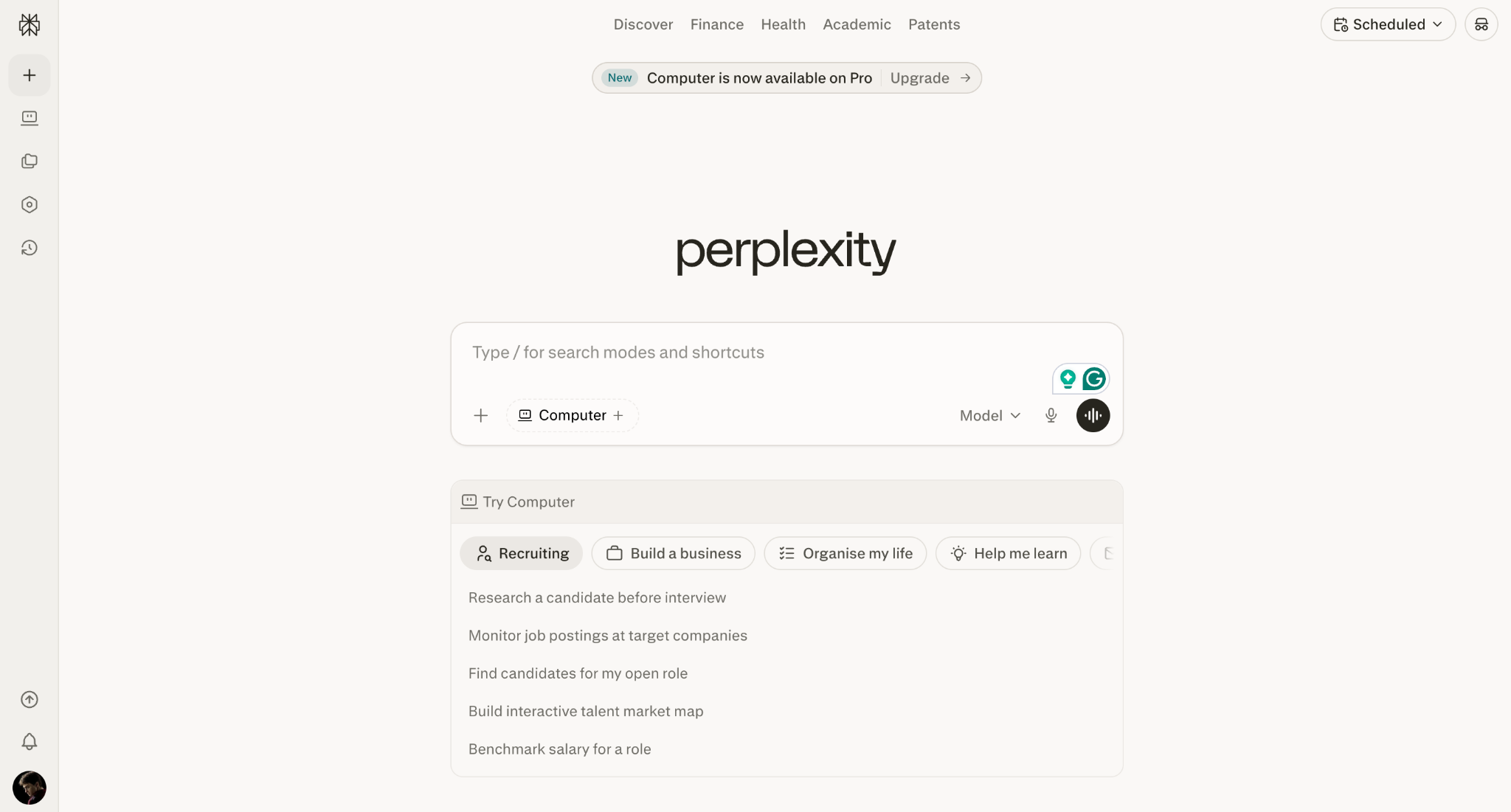
Perplexity AI is a research tool that returns source-grounded answers with citations, making it the right starting point when a piece requires current and verifiable information. When a topic involves recent changes to an API, a framework's latest release behavior, or how a product is currently positioning itself in the market, Perplexity is where our research begins. It returns cited answers we can check, which means we are building on sources we can verify rather than generated summaries that may or may not reflect what is actually true about the product today.
The citations matter. Technical content that gets something wrong loses credibility fast, and having a verified source before drafting begins makes the accuracy review more targeted later in the workflow.
NotebookLM
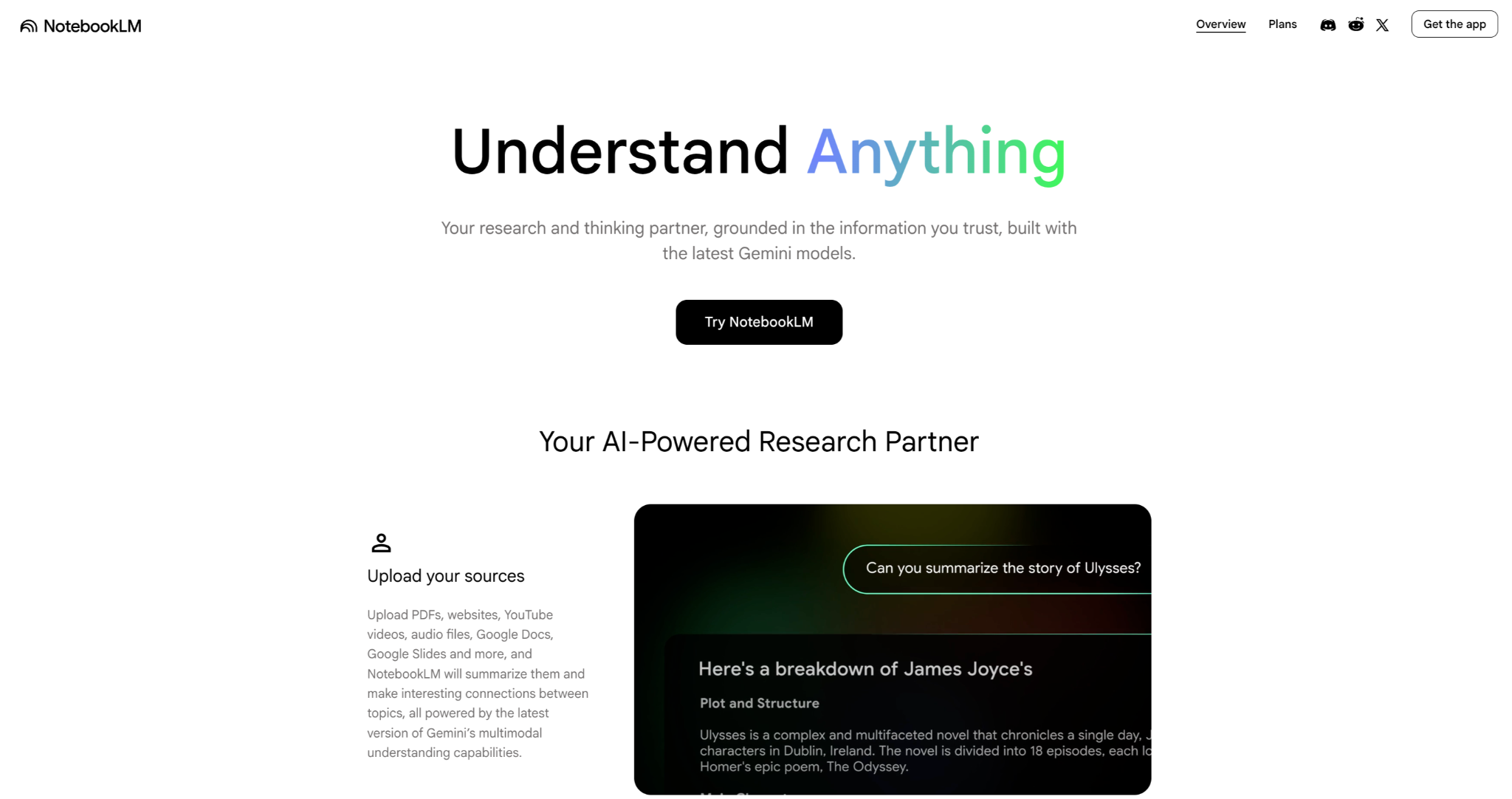
NotebookLM is a Google research tool that answers questions strictly from the documents you upload, with every response traceable to a specific passage in the source material.
NotebookLM is the right tool when a project has a defined source material to work from. A product's documentation, a set of release notes, a transcript from a product demo call, and a collection of SME interview notes. We load that material into a notebook and query it throughout the research phase.
Because NotebookLM only draws from the uploaded sources, the risk of fabricated information is usually reduced. A writer checking a specific claim can trace it back to the exact passage in seconds, rather than re-reading an entire document to confirm a single detail.
That is the kind of friction that slows technical content down, and removing it makes a real difference when you are working across multiple technical products at once.
With the research grounded and the source material organized, the next step is turning that input into a working draft.
Drafting and structure
Notion AI
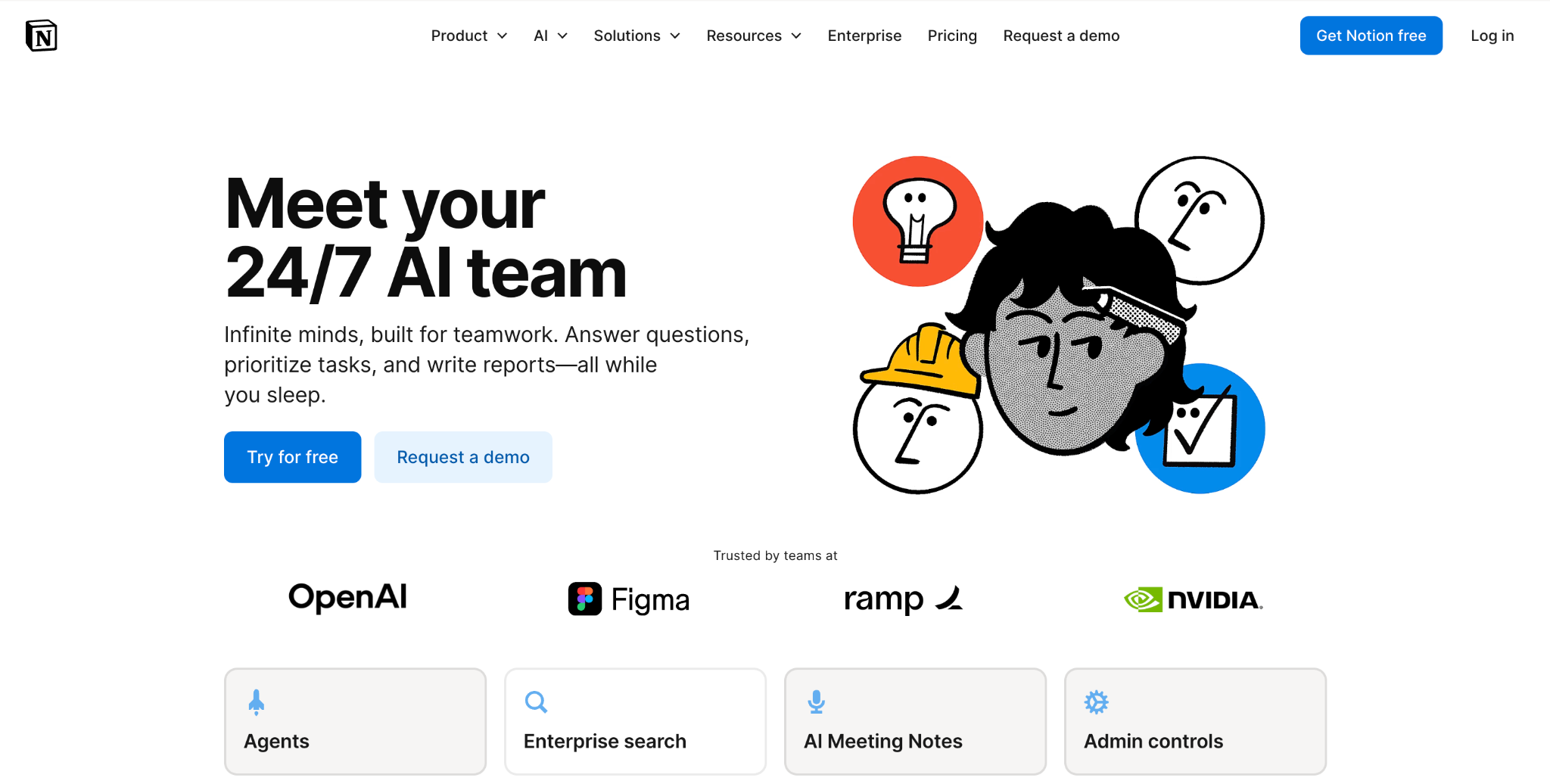
Notion AI is an AI writing assistant built into Notion that generates outlines and first drafts from within the workspace your team already uses.
We use Notion AI to build the skeleton of a piece from a content brief. Given a topic, a target audience, and a set of key technical points, it produces a working outline with headings and rough paragraph-level direction on what each section needs to address.
That skeleton gives our writers a concrete starting point rather than a blank page, which matters when you are producing content across multiple clients in a short span of time. What comes out is scaffolding.
Our writers take that structure, rewrite every section with technical depth, and replace anything generic with knowledge grounded in the actual product.
Claude
Claude is an AI assistant built by Anthropic, used here for briefs that are too dense or technically layered to structure quickly from scratch.
When a piece requires working through a concept before committing to a structure, Claude handles that reasoning step well. It holds context across longer drafts, so we can pass it a detailed brief with technical constraints and get back something organized and coherent to start from. The same principle applies as with Notion AI. A human rewrites the output with product-specific accuracy, the right technical register, and a voice that sounds like it was written by someone who actually understands what they are describing.
A working draft is only as good as what survives the technical review. That is the next step, and it is where most technical writing workflows fall apart.
Technical accuracy review
Boki
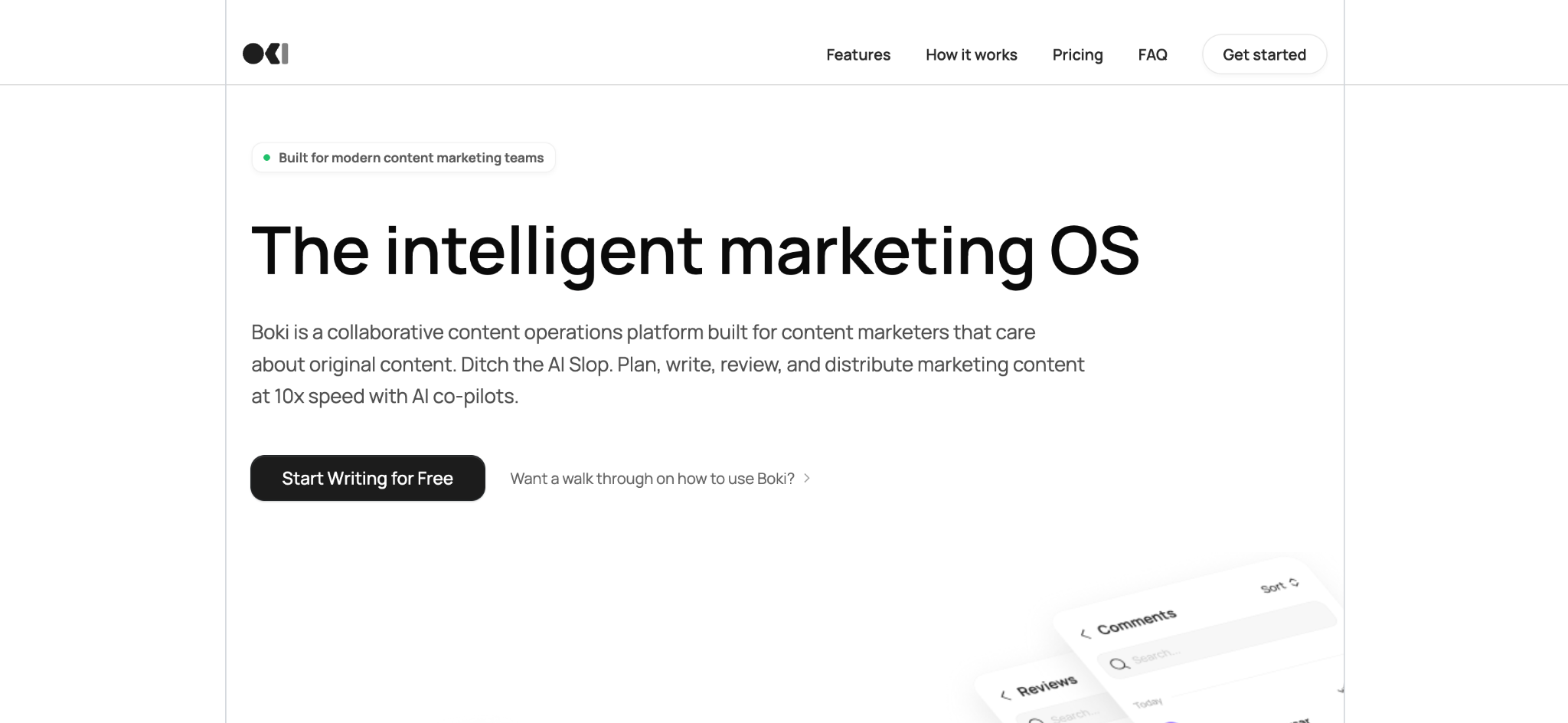
Boki is a content operations platform with a built-in technical review agent that checks content for accuracy before it reaches an engineer.
Most technical content workflows share the same expensive bottleneck. A draft goes to a subject matter expert, comes back covered in corrections, and everyone loses time on a cycle that could have been shorter.
Boki's technical review agent sits inside the writing workflow and catches the errors that create that back-and-forth. Wrong command syntax, missing parameters, outdated API references, and incorrect environment assumptions are the issues that look fine in prose but break the moment a developer tries to follow along.
A writer working on API documentation or a CLI guide receives inline feedback on whether the draft commands match the product's actual behavior. What reaches the engineer is already clean. The review conversation shifts from correcting what is wrong to confirming what is intentional, which is a fundamentally different and shorter conversation.
For teams managing technical documents across multiple products and clients, that shift adds up quickly.
Once the technical accuracy review is done, the draft moves into the editing pass, where the focus shifts from whether the content is correct to whether it is clear and readable.
Editing and clarity
Gemini
Gemini is Google's AI assistant, used here with targeted editorial prompts on finished drafts.
We bring Gemini in after a draft is written. The prompts we run are specific. We ask it to read a section and identify where a technical reader is likely to slow down, lose confidence in what is being said, or have to re-read a sentence to understand what action is being described.
We are not asking Gemini to rewrite anything. We are asking it to surface where the logic breaks, where a sentence is doing too much work, or where an instruction is technically accurate but practically confusing. The output is a focused list of issues we take back into the draft and resolve manually.
All of this, including drafting, reviewing, and editing, runs through a single operational layer that keeps the work moving without any tool-hopping.
Workflow and operations
Boki
Beyond the technical review agent, Boki handles the operational layer of the documentation process, covering brief creation, writer assignment, and content distribution.
We plan work, assign pieces to writers, track progress, and manage the full lifecycle of a content project inside Boki. This keeps the stack lean and the handoff clean at every stage.
The last thing that happens before publishing a piece is making sure it is built to reach the people it was written for.
SEO
Surfer SEO
Surfer SEO is a content optimization platform that analyzes top-ranking pages for a target keyword and provides real-time guidance on structure, topic coverage, and keyword usage.
We bring Surfer SEO in after a draft is written and the technical accuracy review is done. At that point, we use the Content Editor to check whether our content addresses the full scope of what people searching for that topic actually want to know, and whether the structure and keyword coverage reflect what the search results currently reward. We use it to identify gaps and make targeted adjustments. Content that ranks well earns that position by being useful and complete.
Conclusion
We do not paste proprietary client code into public AI tools, and we do not publish AI-generated drafts without human editing and technical review.
AI is useful for accelerating repeatable tasks such as research synthesis, drafting, clarity checks, and content optimization. The parts that matter most, however, still require human judgment. Understanding where developers get stuck, identifying incorrect assumptions, validating technical accuracy, and turning information into content that developers trust are responsibilities that remain with the writer.
The goal of this tool stack is not to replace technical writers. It is to remove low-value manual work so writers can spend more time on analysis, technical accuracy, original insights, and developer experience.
Hackmamba is a technical writing agency where this workflow is used across client engagements, with human oversight and editorial judgment at every stage.
FAQ
The most useful AI tools for technical writers tend to fall across a few areas: accuracy review, drafting support, research and information gathering, editing, and SEO optimization. The tools that make a real difference are either purpose-built for technical content or used with precise prompts that account for how technical readers think. Generic writing assistants are a starting point. The actual value comes from pairing them with tools that catch errors specific to developer documentation.
For producing accurate technical content, no. ChatGPT generates confident prose that regularly contains wrong command syntax, fabricated API parameters, and outdated assumptions about how a product works. It can draft a rough structure, but any content it produces about a specific product, API, or codebase needs to be treated as a first guess rather than a reliable source. Every technical claim must be verified before it enters the publishable documentation workflow.
Boki's technical review agent is the most purpose-built option we have used for this. It catches specific errors that cause rework in technical content workflows, such as wrong commands, missing parameters, outdated API references, and incorrect environment assumptions. It integrates into the writing process rather than sitting outside it, so issues are caught before they reach the engineer rather than after.
The approach that works is treating AI as a workflow tool rather than an author. AI handles the repeatable parts of the process, organizing a brief, synthesizing research, checking keyword coverage, and flagging clarity issues. The accuracy layer requires a human who understands the product and a technical review process that checks the content against what the product actually does. Neither half works without the other.
About author
Asjad Khan is a Developer Advocate and Technical Writer passionate about building communities and making complex technologies simple and accessible. With experience in creating technical documentation, tutorials, and hands-on demos, he bridges the gap between engineering teams and developers by delivering clear, developer-first content. He has contributed to open-source projects, hosted workshops and hackathons, and actively engages with communities to drive adoption and learning. When not creating content or coding, Asjad can usually be found watching football and exploring new ideas in tech









.svg)