The 2026 tech writer layoffs: What senior writers should do right now
AI layoffs are reshaping technical writing. Here’s what senior writers need to know about API docs, content engineering, and staying relevant.

A team of technical writers spent eight months teaching AI how they did their job. The work involved screen recordings, sessions on edge cases, and a handover of the methods and editorial judgment that had taken years to build. Then they were walked out with two weeks of severance.
That story spread through every technical writing community in March 2026 for a reason. It named what senior writers had been sensing, that the deepest expertise in the room is treated as the easiest thing to replace. We have worked alongside documentation teams across 50 devtool companies, and this is what we are telling the senior writers in that network.
Update, May 9. I had finished this article and sent it for review when Cloudflare announced its first mass layoff in 16 years. On May 7, CEO Matthew Prince told staff the company was cutting 1,100 employees, roughly 20% of the workforce, in the same earnings cycle that posted record revenue of $640 million, up 34% year over year. When an analyst asked Prince why a company posting its strongest quarter ever needed to cut so deeply, he said:
Just because you're fit doesn't mean you can't get fitter.
The framing was identical to Snowflake and Amazon. Prince described the cuts as targeting the support functions sitting behind the engineers and customer-facing teams. Whether technical writers were inside that cut will become public over the next week as people start posting on LinkedIn. The thesis does not change. The pattern is accelerating.
What actually happened
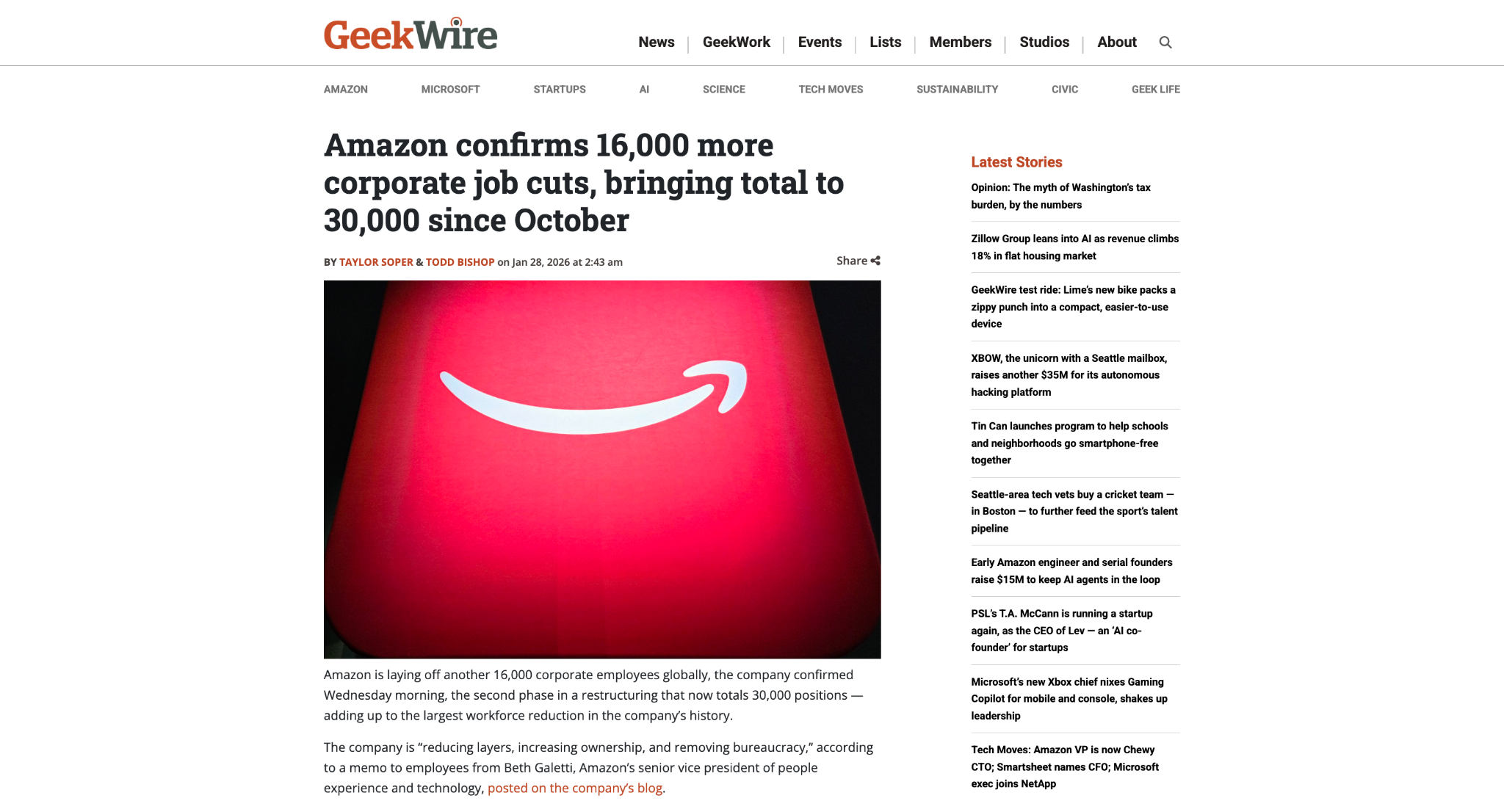
Snowflake eliminated its technical writing team in March 2026. Reporting from Business Insider and others put the cuts at roughly 47 to 70 roles across the documentation team, with the Redwood City office hit hardest. The same week, the documentation manager was promoted to Head of AI-Driven Content Strategy. The company kept the documentation function and removed the people who created it. The strategy stayed in the org chart with a new title attached, while the headcount left the building.
That distinction is the whole story. Snowflake had just reported 30% product revenue growth and a $200 million partnership with OpenAI, so this was a strategic move made from a position of strength, with no financial pressure forcing the decision.
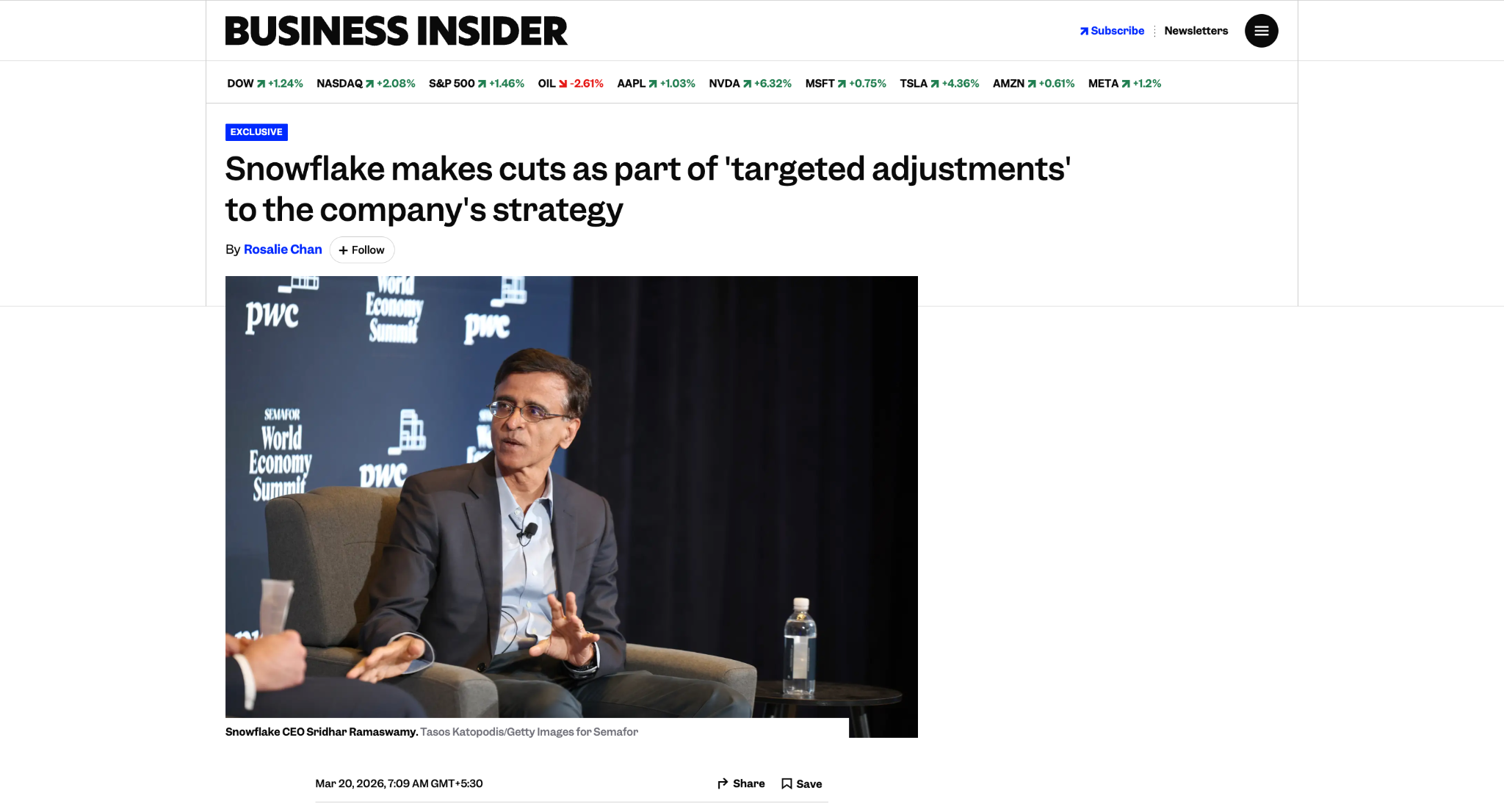 Between January and February 2026, Amazon cut over 16,000 corporate employees, making it the largest workforce reduction in the company's history. Washington state WARN filings confirmed that technical, support, and content functions were inside the wave. Leadership framed it as removing layers and reducing bureaucracy. Separations are scheduled to run through June. The senior vice president who announced the cuts described them in a memo to staff as a move toward:
Reducing layers, increasing ownership, and removing bureaucracy
CEO Andy Jassy was more direct on the earnings call when asked whether AI or financial pressure was behind the decision:
Really, it's culture.
Amazon's revenue and operating income were both strong at the time and operating income were both strong at the time. Profitable businesses are choosing to cut documentation headcount on strategic grounds, and saying so publicly.
 Look at the public statements from both companies, and you find the same pattern in rotation. Evolving how we create documentation, rebalancing investment toward AI, and empowering engineers to own documentation. Every claim is about cost, efficiency, or org structure. No company has said the documentation will be better.
That silence sits next to the most-cited number in the 2026 State of Docs Report from GitBook. 80% of buyers review documentation before making a purchase decision. Companies are removing the people who write documentation, while keeping a clear-eyed view that buyers read it before they buy.
The gap between those two facts is the market signal worth paying attention to.
What the market is actually telling you
The market is contracting in one direction and expanding in another.
Generalist technical writing roles at large tech companies are contracting. The titles that read "Technical Writer" on a centralized documentation team with a broad scope are the first to go in restructurings. If your role exists one or two layers away from a specific product surface, you are in the bucket that gets hit hardest in the next round.
API documentation with technical depth is still in demand. The roles that are filled take different shapes. Job postings now read "Python preferred" or "experience with AI tools," and they list OpenAPI, Postman, or Docusaurus as expectations rather than nice-to-haves. That word "preferred" is doing the filtering work. It is the polite way of saying you will be tested on it, even if the recruiter does not say so.
The work that is being hired right now centers on three role types, and they all sit close to the product.
- The first is the API documentation specialist who tests every code sample against a live endpoint before it ships.
- The second is the docs-as-code engineer who lives inside a CI pipeline and owns the tooling that pushes documentation alongside the product.
- The third is the content engineer who governs AI output, runs evaluation suites against generated docs, and catches the hallucinations before they reach a customer.
The common trait across all three is that documentation is treated as code rather than as marketing collateral.
What is being cut first is the opposite of all of that. The roles disappearing are on centralized teams with no deep product tie, in documentation organizations that report to marketing and produce content rather than instrumented documentation (documentation tied to measurable outcomes like conversion, support deflection, and time-to-value), and in any role where the writer never opens a terminal. None of this means a senior writer cannot make the move into the work that is still hiring. It means the move has to be deliberate.
There is one more pattern worth naming, and we think it is the most useful one. The hiring loops at devtool companies have changed in the last 12 months. A senior writer who applies to a content engineer role today should expect a take-home assignment that involves reading a OpenAPI spec, identifying an inconsistency, and proposing a fix. Some teams ask for a code sample reviewed against a live sandbox. The interview signal hiring managers care about is whether you can find the bug in the docs before the customer does. Resume keywords get you in the room. The take-home is what gets you the offer.
The diagnosis only matters if it changes what you do this month. Here is the work in the order we would recommend doing it.
What to do right now
If you were just laid off, the first 30 days matter more than the next 90.
Your alumni status from a company like Snowflake or Amazon carries weight in this market. Every devtool company hiring documentation right now wants someone who has shipped against engineering teams at scale. Use it before the news cycle moves on. Update your LinkedIn that day, and write actively. Open to new opportunities, specialized in API documentation at scale, list the tools you have shipped with. Recruiters search by skill, so let them find you. Reach out to former colleagues who have already moved to smaller devtool companies, because they know which teams are actually hiring.
Freelance API documentation demand is active. Experienced API writers on Upwork are charging in the $50 to $80 per hour range when they have specialist depth, OpenAPI fluency, and a portfolio of tested code samples. The published median for general technical writing is lower, but specialist API work commands a premium because the talent pool is small. Set up a profile, list three portfolio links, and start applying. The first contract is the hardest. The second one comes from referrals.
If you have not freelanced before, the fastest way to land that first contract is to take a small fixed-price project below your hourly rate, deliver it three days early, and ask the client for a written review. One review on a profile changes how every future bid lands. Two reviews and you can stop competing on price.
Devtool companies are still hiring documentation, often for roles that don't appear on major job boards. The Hackmamba’s technical writing job portal aggregates these openings directly from partner companies, and the technical writing filter is worth checking weekly.
If you are still employed, the goal is to build optionality before you need it.
Create at least one portfolio piece that demonstrates technical depth. The strongest examples are practical: an API tutorial built against a live endpoint, a migration guide tied to a specific SDK release, or documentation that walks through a real implementation with verified code samples. A hiring manager should be able to review it in a few minutes and see that you do more than write documentation. You validate it.
Develop working knowledge of at least one tool commonly used in modern documentation teams. Postman, OpenAPI, Swagger, Docusaurus, Mintlify, and basic Python are all good options. Pick one, build something with it, and make it part of your portfolio. Many technical writing and content engineering roles now list specific tooling requirements.
It also helps to become part of professional communities before you need a job lead. Participate in the Hackmamba community, Write the Docs, or similar technical writing groups. Share your work, answer questions, and build relationships while you are not actively looking. Those connections often become valuable long before a job search begins.
The technical writing courses most aligned with the skills employers continue to hire for, including API documentation, docs-as-code, and technical SEO, are covered in 5 free technical writing courses to boost your skills. For networking, peer support, and job opportunities, the top technical writing communities guide covers the communities where technical writers share opportunities and industry insights.
Where this is going
Some of the companies reducing documentation investment today may eventually discover the cost of documentation debt. AI-generated documentation can accelerate production, but it can also introduce inaccuracies, omit edge cases, and become outdated as products evolve.
The risk is already visible in research around AI-generated code. Georgia Tech's Vibe Security Radar identified 35 CVEs in March 2026 alone that were linked to AI coding tools, exceeding the total recorded in the previous year. The research also found that roughly 20% of AI-generated code samples referenced non-existent packages, creating opportunities for supply-chain attacks. Documentation produced from the same flawed outputs can inherit similar inaccuracies.
When Snowflake announced its documentation layoffs, Benzinga's coverage highlighted the broader industry debate around replacing documentation expertise with AI-driven workflows.
The question is not whether AI will become part of documentation. It already has. The question is where human judgment remains essential. As products grow more complex, companies still need people who can validate technical accuracy, understand developer workflows, test implementations, and maintain documentation as products change.
For technical writers, the opportunity is to position yourself around those higher-value skills. The strongest demand today is for writers who can work with APIs, developer tooling, documentation systems, and technical implementation details rather than simply producing content.
The how to write better API documentation guide covers the technical, structural, and editorial standards that continue to separate experienced API writers from generalist content creators.
Next steps
The hardest part is often the period between deciding you need a change and knowing what to do next. That is where community, opportunities, and practical skill-building become valuable.
The first resource is the Hackmamba Creators community. Through our Discord, more than 2,000 technical writers, developer marketers, and DevRel professionals share job opportunities, industry insights, portfolio feedback, and market signals that rarely make it into public discussions. Whether you're evaluating freelance work, looking for a full-time role, or simply trying to understand where the market is moving, conversations with peers can provide valuable context.
The second is our technical writing job portal, which aggregates opportunities across technical writing, content engineering, documentation, developer marketing, and developer experience. Many of these roles come directly from partner companies and developer-focused organizations.
The third is our ongoing API documentation sprint inside the Creators community. The goal is simple: help writers build a portfolio piece with real technical depth by working against a live API and producing documentation that demonstrates practical implementation skills.
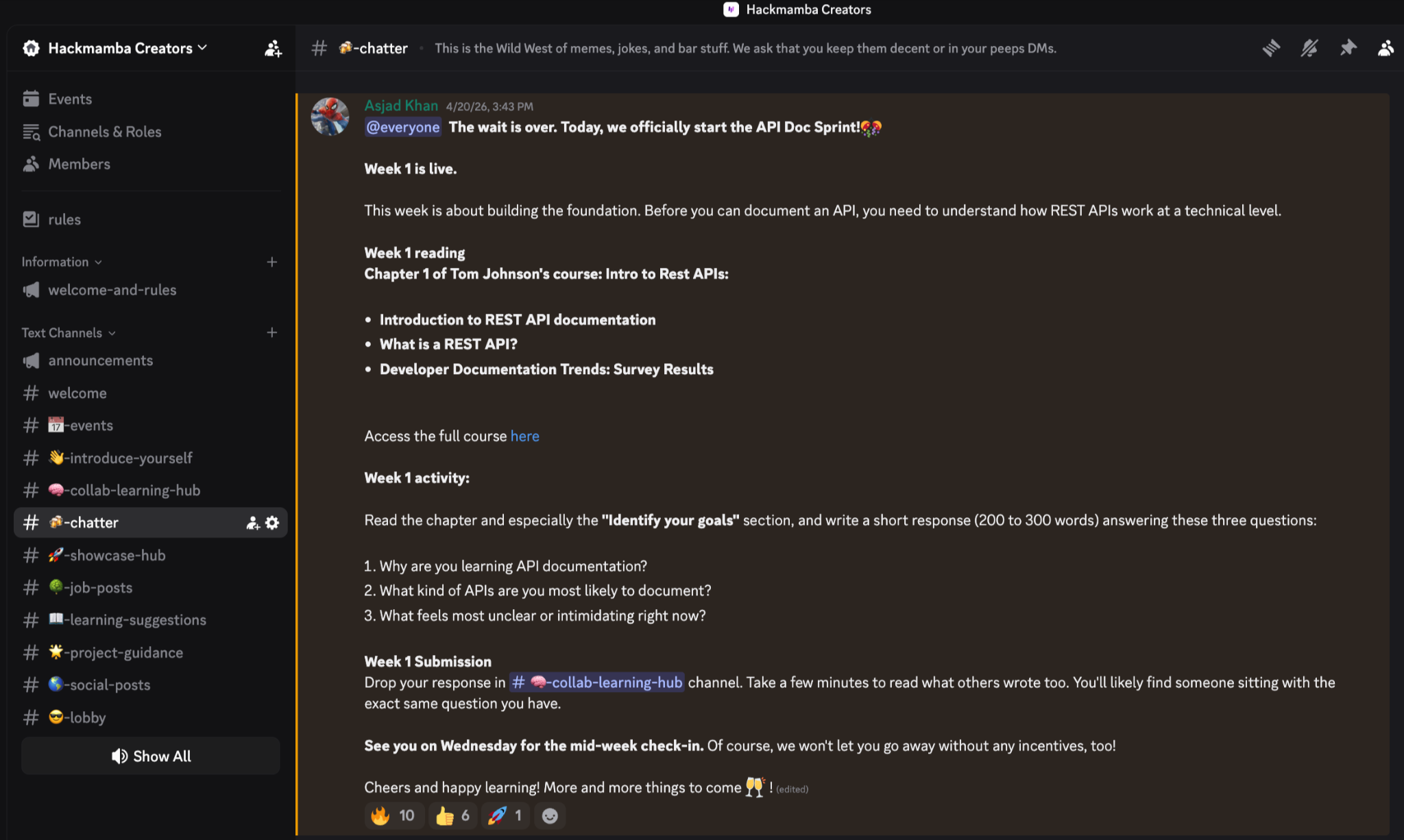
Recently, John Kunney Jr., a Senior IT Technical Writer with more than 25 years of experience, led a hands-on API documentation session inside the program. Additional workshops and practical sessions are planned throughout the year and are available to Hackmamba Creators members.
Whatever path you choose next, the goal is to keep moving. Build a portfolio piece. Join a community. Apply for a role. Start a conversation. Small actions compound faster than waiting for certainty.
For writers looking for additional structure, mentorship, and accountability while developing their skills, the top 5 mentorship platforms for technical writers guide covers some of the most active learning communities available today.
FAQ
Generalist roles on centralized documentation teams at large companies are shrinking. Devtool companies are still hiring for documentation work.
Snowflake eliminated its technical writing team in March 2026. Reporting put the cuts at roughly 47 to 70 roles.
Act in the first 30 days. Alumni status from companies like Snowflake or Amazon carries weight with devtool companies hiring for documentation.
AI speeds up drafting docs, and it also introduces inaccuracies and skips edge cases. Some companies cutting writers in 2026 may find out what that documentation debt costs.
Devtool companies hiring documentation roles are the strongest target. The Hackmamba Creator community also offers paid work and skill-building.
About author
Asjad Khan is a Developer Advocate and Technical Writer passionate about building communities and making complex technologies simple and accessible. With experience in creating technical documentation, tutorials, and hands-on demos, he bridges the gap between engineering teams and developers by delivering clear, developer-first content. He has contributed to open-source projects, hosted workshops and hackathons, and actively engages with communities to drive adoption and learning. When not creating content or coding, Asjad can usually be found watching football and exploring new ideas in tech









.svg)