This is how we do SEO, GEO, and AEO for developer tools
How Hackmamba runs SEO, GEO, and AEO as one strategy for devtool companies. From keyword research to getting cited by ChatGPT and Perplexity.

Every devtool company asks us the same question now: can you help us show up in ChatGPT, Perplexity, and Google AI Overviews?
The honest answer is that SEO gets you most of the way there, but not all of it. SEO is still the foundation. It's the largest lever, the most durable one, and the one every other channel builds on. But treating SEO as the whole strategy misses something that's changed recently: ranking on Google and getting cited by an LLM used to be almost the same job. They aren't anymore.
Ahrefs tracked this directly. In 2025, 76% of AI Overview citations also ranked in Google's top 10. By early 2026, that number had fallen to 38%. Ranking well still helps a lot. It just doesn't guarantee visibility in AI answers the way it used to.
That's why we build a search everywhere strategy: SEO, GEO, and AEO, run as one program instead of three. GEO is the practice of getting your content cited by AI tools like ChatGPT and Perplexity. AEO is the practice of structuring content to be extracted as a direct answer. Both sit on top of the SEO foundation. Neither replaces it.
This guide walks through exactly how we do that at Hackmamba, from the first content audit to the point where a piece of content is actively earning citations across ChatGPT, Perplexity, and Google's AI features. Steps 1 through 8 cover the SEO groundwork. Step 9 covers where GEO and AEO take over and what changes once you get there.
When a devtool company comes to us, the first question we ask is simple. Do you have existing content, or are you starting from zero? That answer determines where we begin.
Step 1 - content inventory
Most agencies start with keyword research. We start by understanding what already exists.
If a devtool company comes to us with existing content, the first thing we do is a full content inventory. Building a content strategy without knowing what you already have leads to duplicate articles, cannibalized keywords, and pages that have never seen a single click.
Step 2 - audience research
Most devtools content fails because it is written for "developers" as a category. That is too broad to be useful. A DevOps engineer at a Series B startup has completely different problems from a solo backend developer building a side project. Writing for both at the same time means you speak clearly to neither.
We build personas before we touch keywords or content. The persona defines who we are writing for, what they care about, and what is blocking them. Everything else follows from that.
The framework we use: Jobs to be done
A persona without a job is just a demographic profile. It tells you who the person is but not why they would ever care about your product.
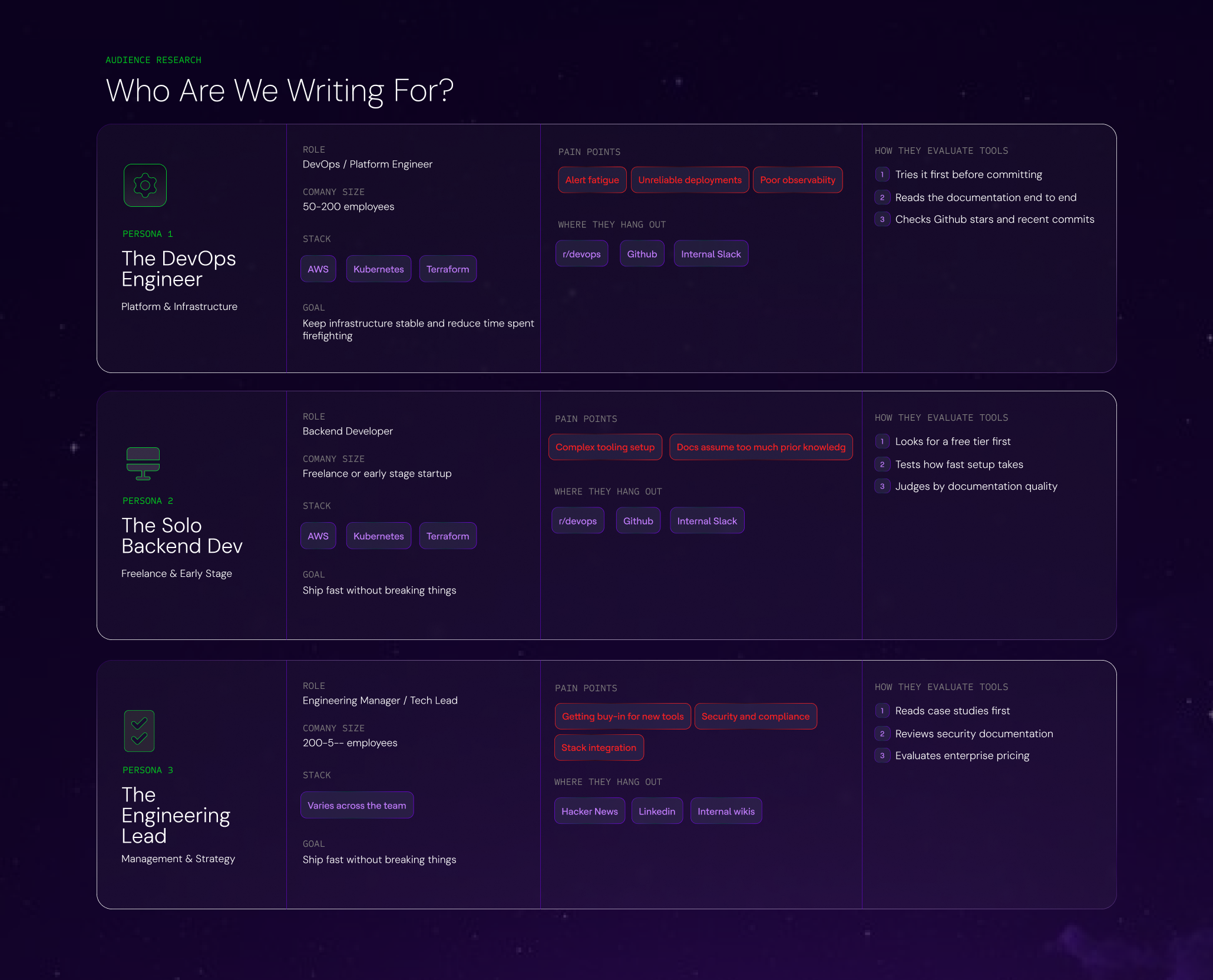
Jobs to be done flips the question. Instead of asking "who is this developer," we ask "what job are they trying to get done, and what is getting in the way?" A DevOps engineer is not searching for "observability tool." They are trying to stop getting paged at 3am because something broke silently in production. That is the job. That is what the content needs to speak to.
The question we ask for every client: what job is the developer hiring this product to do, and where are they failing to get it done today?
From pain points to seed keywords
Each persona's frustration maps directly to a search query. That query becomes the seed keyword we take into research.
| Persona | Pain Point | Seed Keyword |
|---|---|---|
| DevOps Engineer | Alert fatigue and poor observability | "Kubernetes alert noise" |
| Solo Backend Developer | Docs assume too much prior knowledge | "[product] Node.js quickstart" |
| Engineering Lead | Getting buy-in for new tools | "devtools evaluation enterprise" |
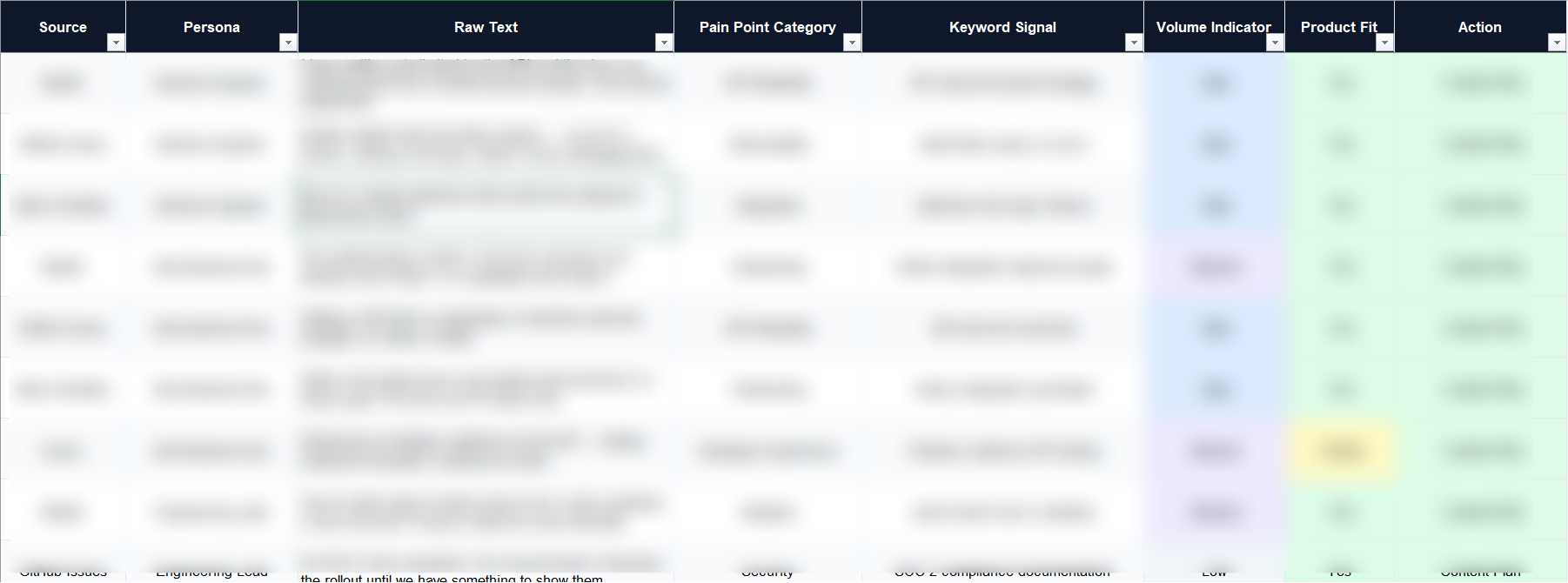
Our private Apify workflow runs on these seed keywords, scraping Reddit, GitHub issues, and Stack Overflow using the exact language each persona uses. The output is a structured dataset of developer language that feeds directly into keyword research.
Step 3 - keyword research
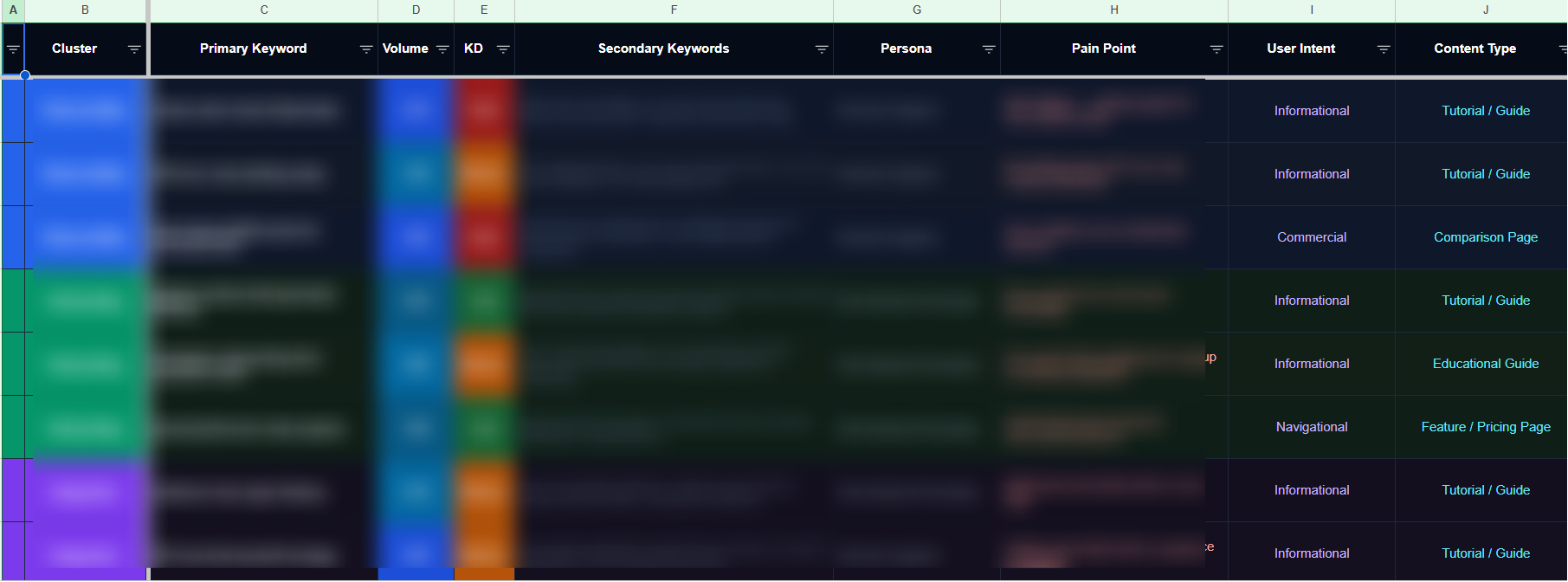
We use Ahrefs. Every seed keyword from Step 2 goes in along with the developer language the Apify workflow surfaced. We expand each one, look at what related terms are surfacing, and pull everything into clusters by topic. If Ahrefs shows almost nothing because your category is too new, SEO has no demand to capture yet, and you need to create demand when nobody is searching yet.
The output of this step is what we call the keyword universe. This keyword universe gets crosschecked with the content inventory we built in Step 1.
This is how it works:
| Status | What it means | What we do |
|---|---|---|
| Content exists, not ranking | Google sees no value in it | Audit it. In most cases we rewrite it from scratch and redirect the old URL to the new one |
| Content exists, ranking below position 10 | Has potential, needs a push | Run it through Surfer SEO optimization - covered in Step 6 |
| Content exists, ranking in top 10 | Working | Protect it, build internal links to it, expand the cluster around it |
| No content exists | Gap in the plan | Prioritize it in the content calendar |
Why we start with long-tail keywords
Most developer tool companies have a low DA when they come to us. Going after high-volume, high-difficulty keywords from day one means you will not rank and you will not get cited.
Long-tail keywords are where devtool companies win early. "API rate limit backoff strategy Node.js" has lower volume than "API tools" but the developer searching for it knows exactly what they need. They are closer to a decision, they convert better, and because specificity narrows the competition, a site with modest authority can realistically rank for it.
The prioritization logic we use:
| Priority | Signal | Example |
|---|---|---|
| Start here | Low KD, clear buying intent | "[product] alternatives", "webhook retry logic Node.js" |
| Build towards | Medium KD, high volume, TOFU | "reduce alert noise Kubernetes" |
| Earn over time | High KD, broad category terms | "best observability tools for microservices" |
High KD broad terms come later once the cluster has authority built around it through spoke content and backlinks.
Step 4 - content architecture and strategy
We use the hub and spoke model for every client. It is an effective way to build topical authority systematically.
The hub page covers a broad topic. The spoke pages go deep on each subtopic inside that cluster. Every spoke links back to the hub. The hub links to every spoke. Related spokes link to each other.
What this looks like in practice
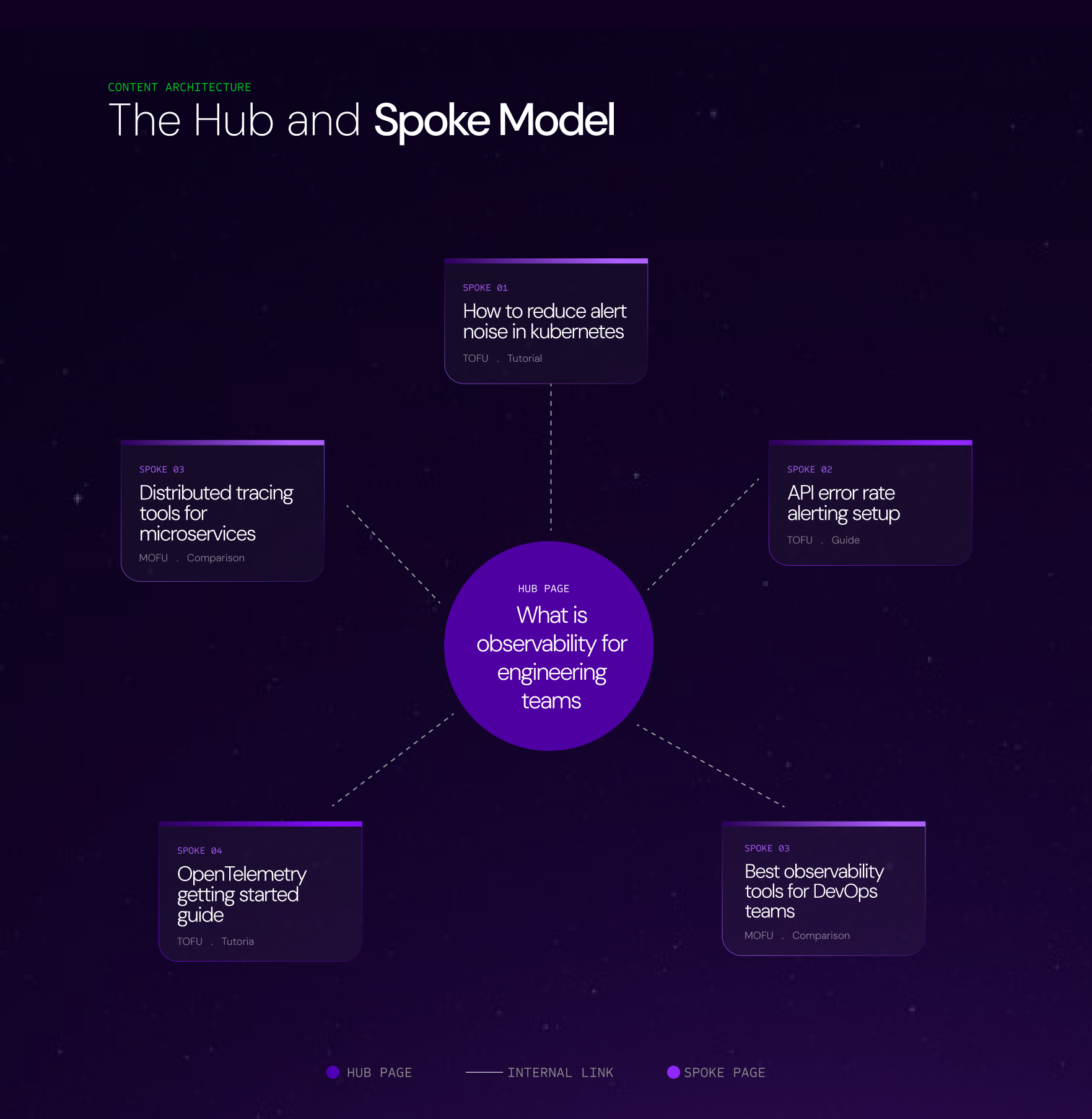
For an observability tool: Hub becomes: “What is Observability and Why It Matters for Modern Engineering Teams”
Spokes:
- How to Reduce Alert Noise in Kubernetes
- API Error Rate Alerting Setup
- Distributed Tracing Tools for Microservices
- OpenTelemetry Getting Started Guide
- Best Observability Tools for DevOps Teams
Google reads this as topical authority. Not one page about observability but an entire web of content covering every angle of it. When ChatGPT or Perplexity gets asked about observability tools, it pulls from multiple pages covering the same topic from the same domain. That is what gets you cited.
The internal linking rule
Every spoke links to the hub and to at least two related spokes. The hub links to every spoke. This is what signals to Google that these pages belong to the same topic territory.
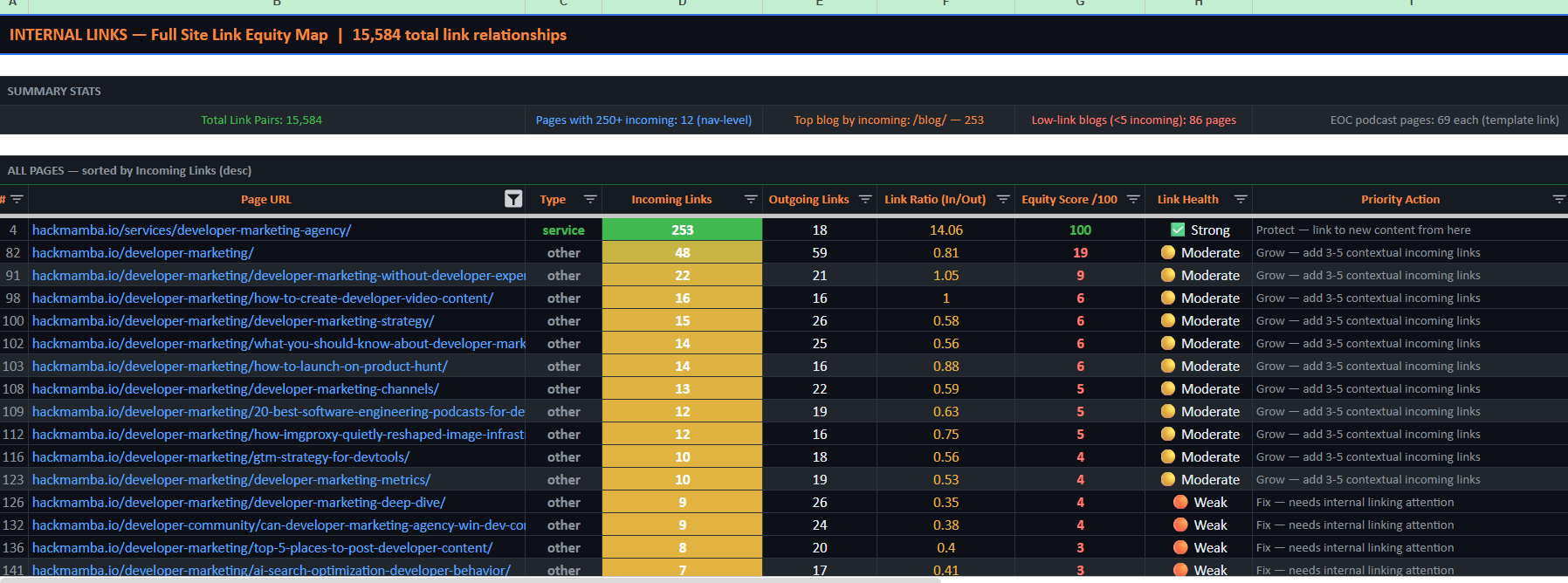
For clients who had an existing content strategy, we run our internal linking audit before building any new cluster. It surfaces orphan pages, maps existing anchor text, and shows where link equity is going. Building new architecture on top of a broken link structure compounds the problem.
Step 5 - content types for devtools
Not every piece of content serves the same purpose. Before we write a single brief, we map each keyword from the universe to a content type. The keyword intent tells us the format. Getting the format wrong means the content will not rank even if the keyword is right.
Six content types work for devtool companies (and if you are choosing where to put content ideas if you have leftover budget, start with the types below before inventing new formats):
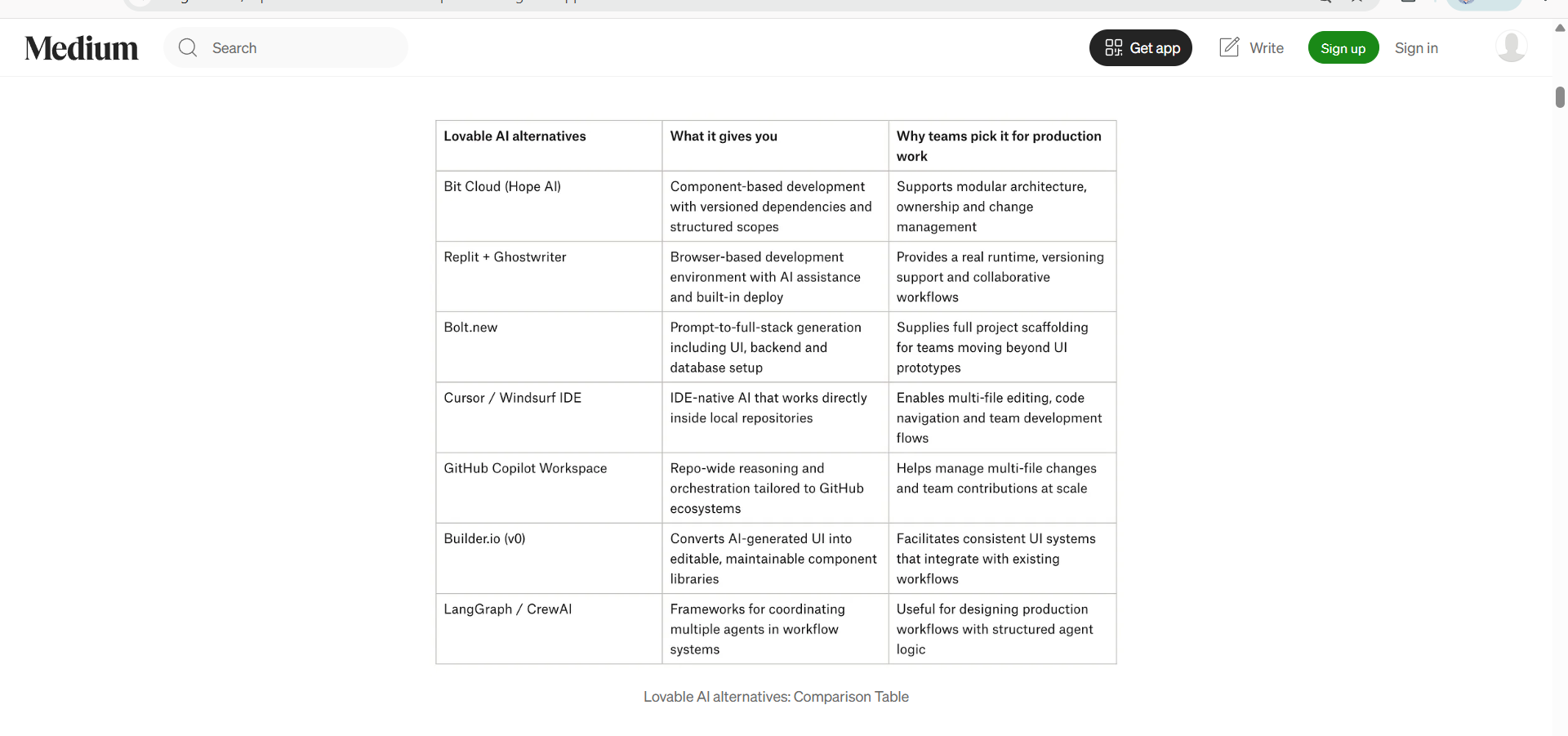
1. Comparison and alternatives pages
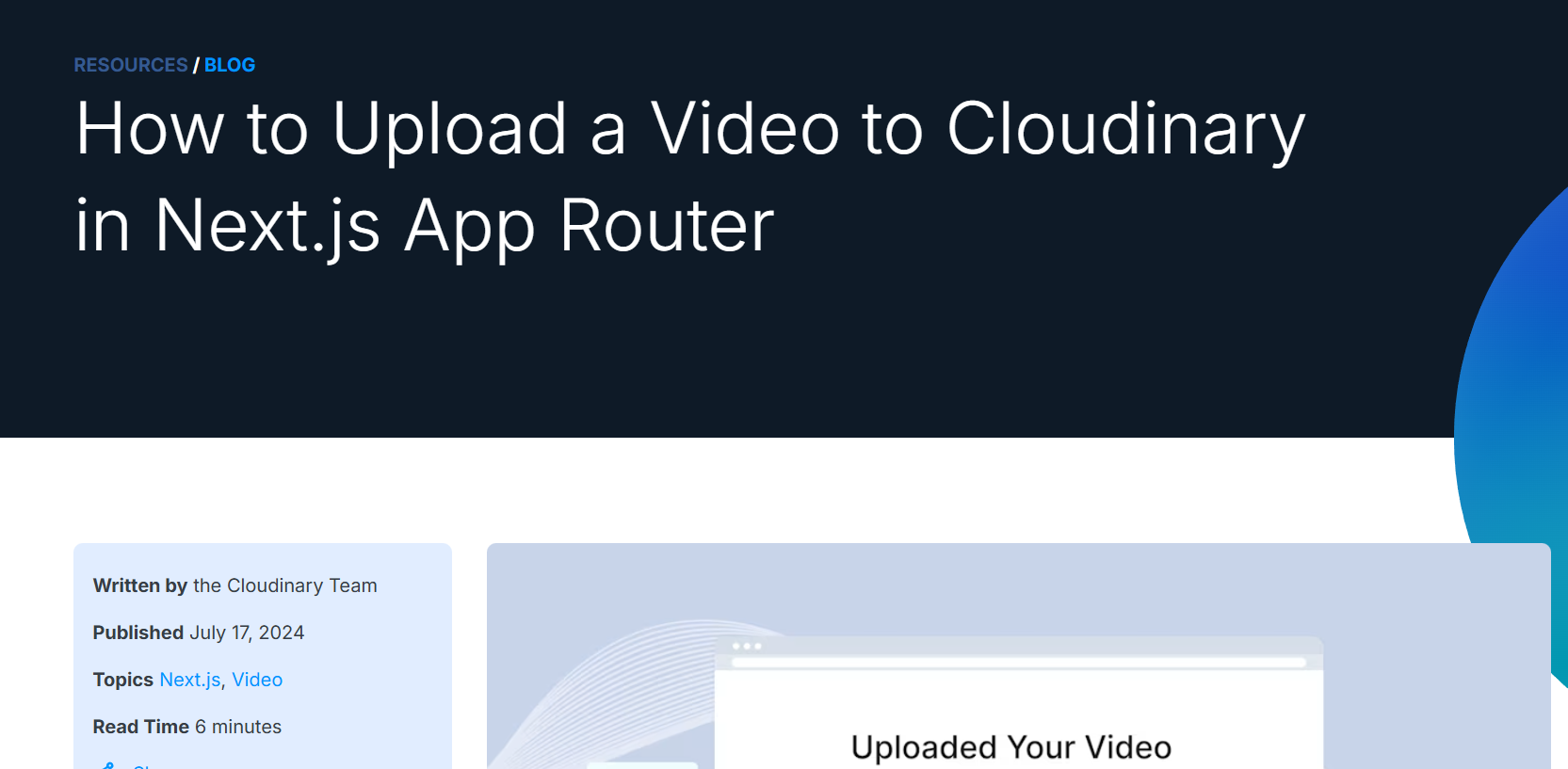
A developer searching for "[product] alternatives" or "[A] vs [B]" is already evaluating options. We prioritize these early in the content plan regardless of volume because the conversion rate is high and LLMs cite these pages heavily when recommending tools. Omniscient Digital's analysis of 23,000+ AI citations found that LLMs cite comparison and listicle content constantly because the format mirrors how people actually evaluate options - 40.86% of commercial queries cite this content type.
2. Educational guides and tutorials
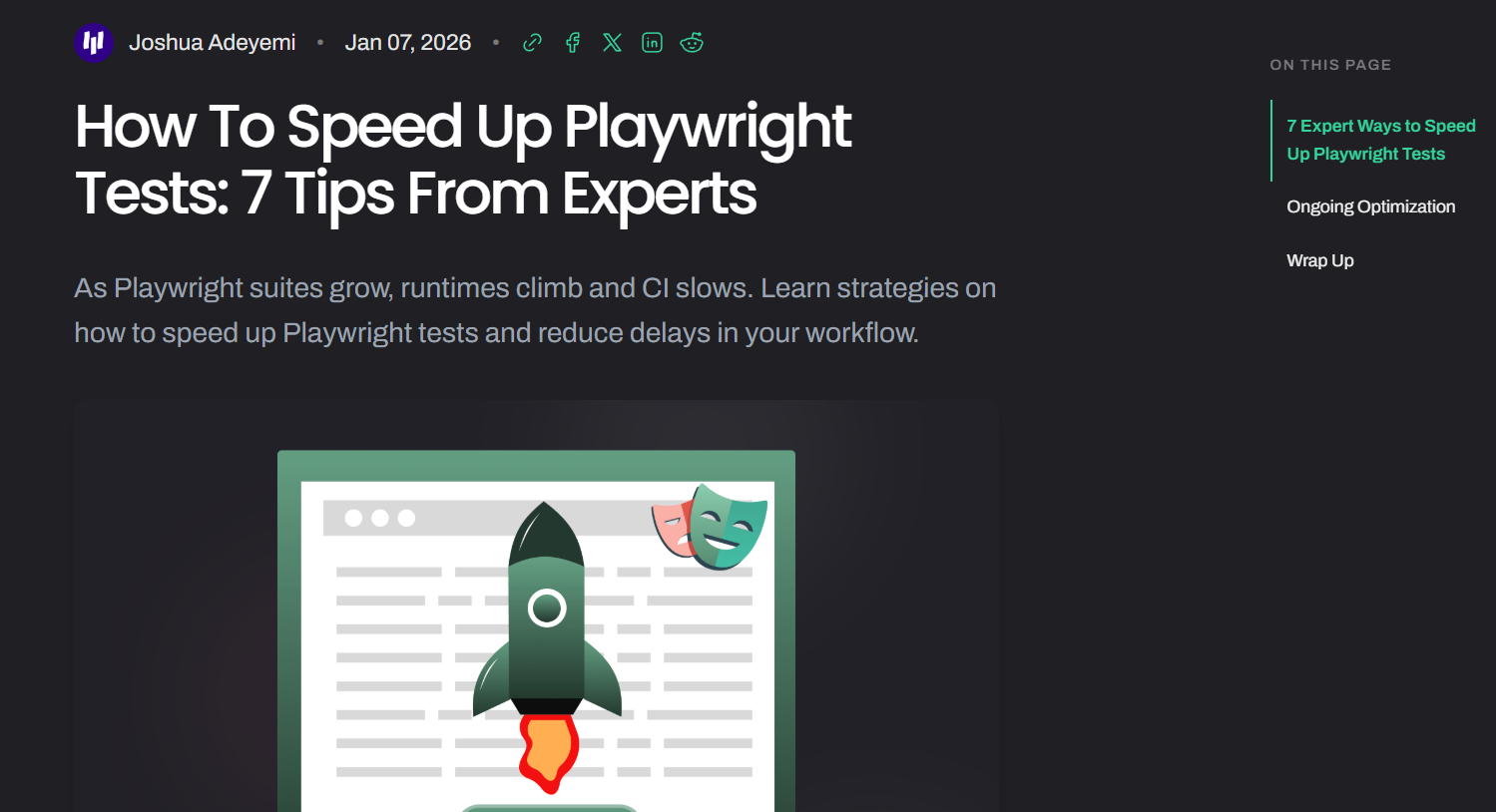
The majority of the keyword universe for any devtools company is informational. A developer stuck on a specific problem searches for a solution. These pages capture long-tail keywords, build trust before the developer considers buying, and feed the top of the funnel consistently over time.
3. Feature and use case pages
These map directly to what the product does. "How to set up rate limit alerting with [product]." The developer already knows the product exists and wants to know if it solves their specific problem. We treat these as bottom of funnel pages and optimize them for conversion alongside rankings.
4. Data-driven content
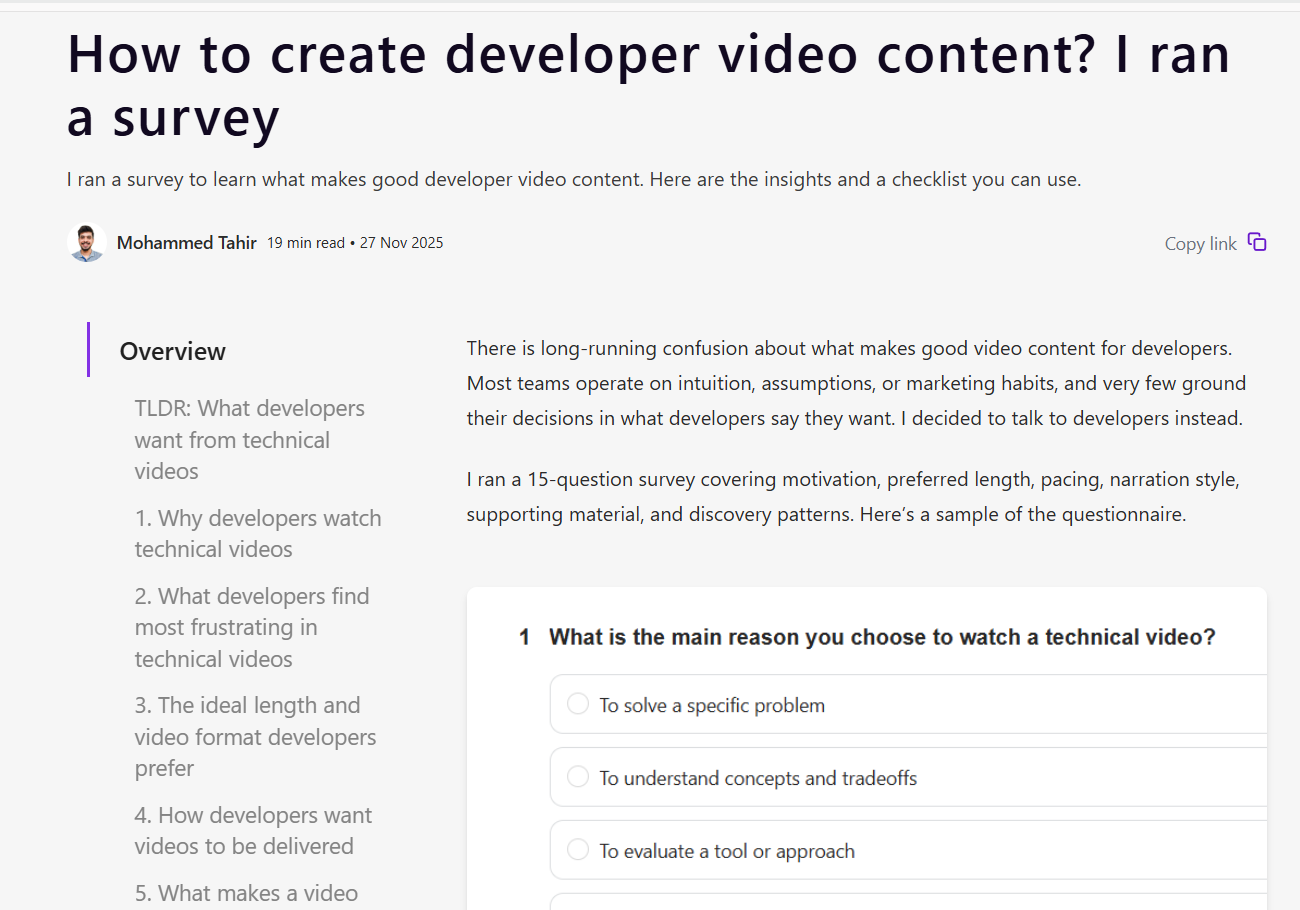
Original research earns backlinks without outreach. A survey, a benchmark study, an analysis of usage patterns. Other writers cite it. LLMs cite it. Ahrefs said it best from their own experience:
Something that we've found effective at Ahrefs is original research. Our SEO Pricing page — one of our most cited pages - works because it's based on an original survey of 439 people. We're the primary source of that data.
We recommend at least one data-driven piece per quarter for clients who want to build domain authority faster
5. Programmatic pages
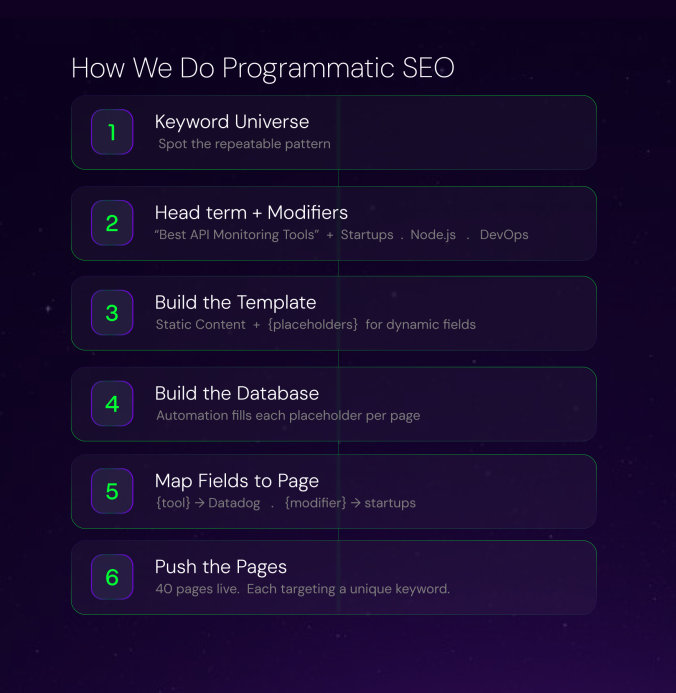
When the keyword universe has a repeatable pattern, "best [product category] for [use case]" across dozens of combinations, we cover it programmatically. Each page targets a specific long-tail keyword. This is how you scale coverage across an entire cluster without writing every page from scratch.
6. Micro SEO tools
Free utilities developers actually use. A JSON formatter, a cron expression generator, a regex tester. We think about these as passive link magnets. Developers find them useful, share them, and link to them without any outreach needed. They also bring in developers who have never heard of the product and keep them on the domain longer than any blog post would.
We have covered how Postman and Algolia use these micro SEO tools in our developer marketing strategy guide.
Step 6 - content creation and SEO optimization
Once the keyword universe and content architecture are locked, we move to briefs and creation.
We create all content in Boki (our AI-native content marketing platform for assigning briefs, tracking content status, distribution etc). Every brief is built around the target keyword, the persona, the pain point, and the content type mapped in the keyword universe. The writer knows exactly who they are writing for and what job the content needs to do.
After the content is written, every piece goes through Surfer SEO before it gets published. We check NLP terms, content score, and how the piece benchmarks against what is currently ranking. If the content score is not where it needs to be, it does not go live.
This is a non-negotiable step in our process. Surfer tells us whether the content is optimized enough to compete for the keyword it is targeting.
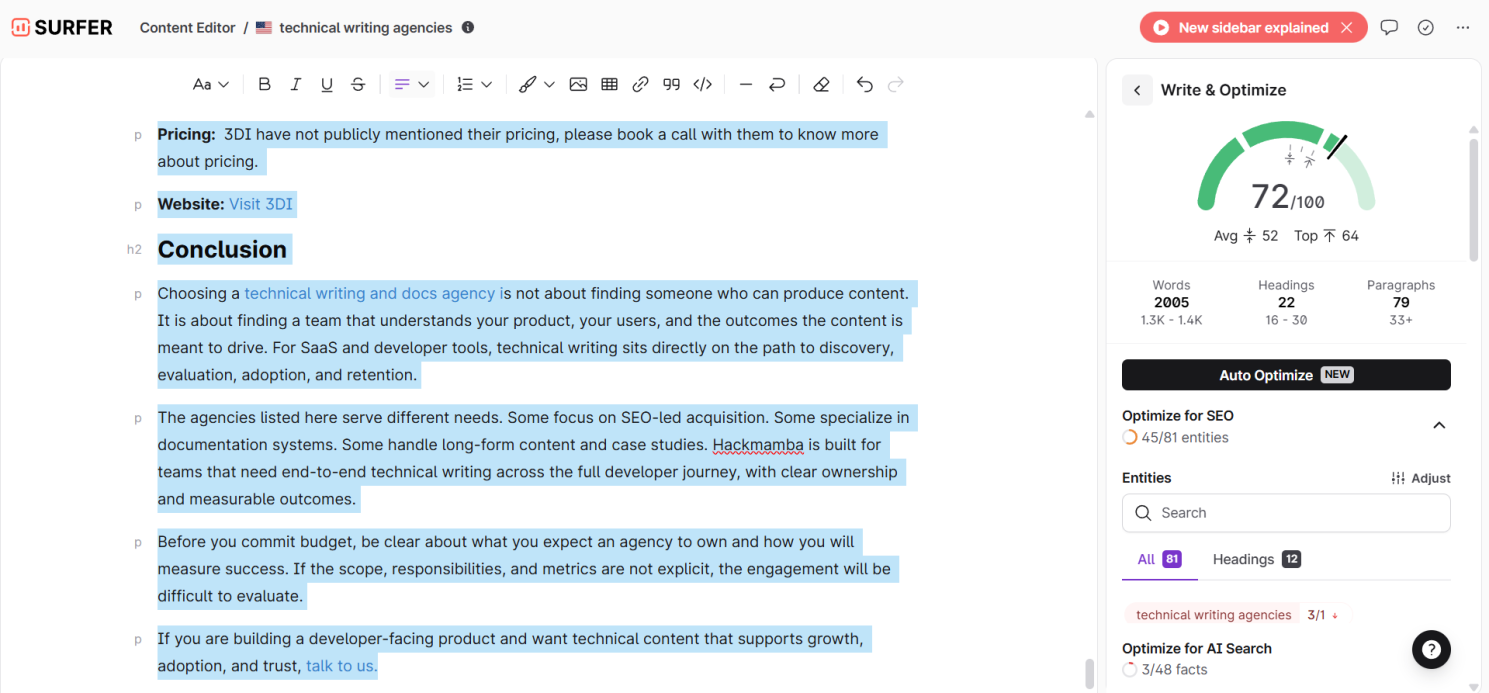
The order is fixed: brief in Boki, write, Surfer pass, publish. Every time.
Step 7 - backlink strategy
Backlinks are still one of the strongest ranking signals Google uses. For devtool companies with a low DA, the backlink strategy determines how fast the content plan compounds.
We split this into three plays.
Note: Every backlink and citation we acquire is genuine and contextually relevant to the topic it sits in. Google's May 2026 guide confirmed that inauthentic mentions get filtered out by spam systems. We do not build links that look manufactured.
Play 1 - high-intent keywords go on high-DA sites
"Best SERP APIs," "Top GraphQL tools," "[product] alternatives" - publishing these on a site with low authority is a waste. Google will not rank them and in some cases will deindex them.
We publish this content as placements on high-DA sites. The placement ranks. The client gets the traffic and the backlink pointing to their money page.
Where we place:
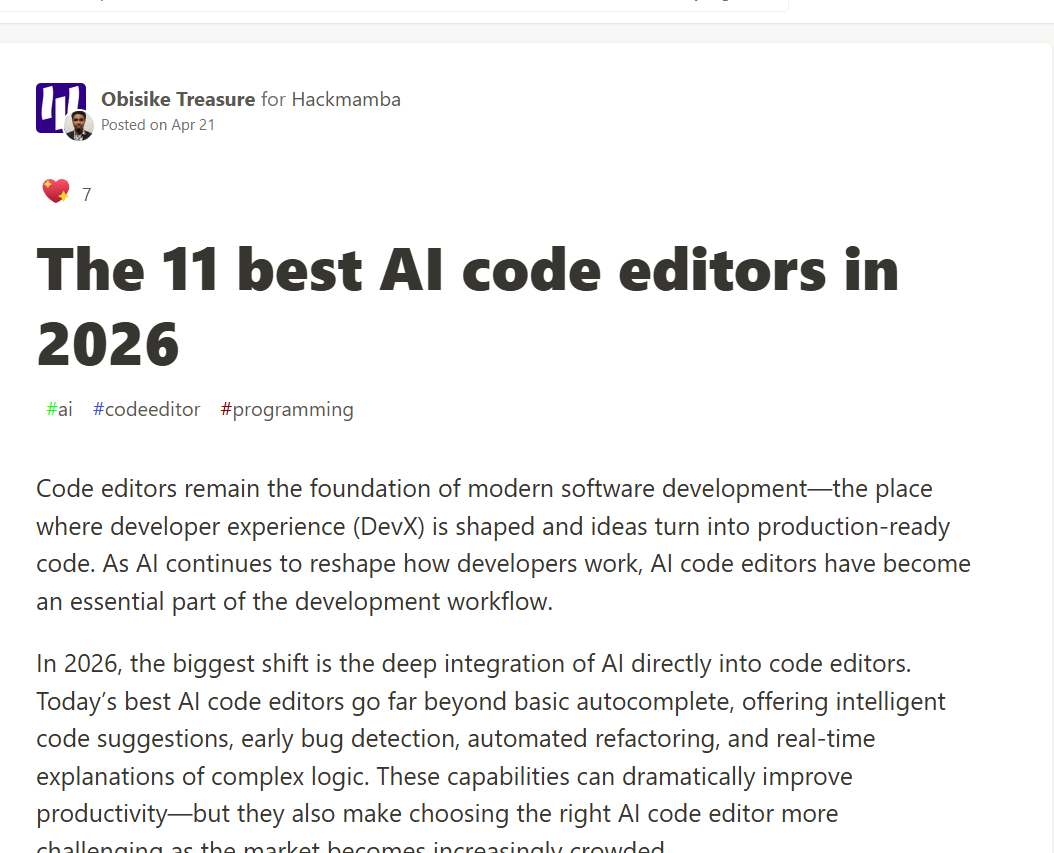
- Dev.to, Hashnode, Medium- developer-native, indexed fast, Google trusts them
- Niche devtools directories and roundups already ranking for the exact terms
Play 2 - anchor text gives context
Every placement we build has a deliberate anchor text mapped to a specific page. We decide this before the placement goes live
The ratio we use across a client's backlink profile:
| Anchor Type | Ratio | Used for |
|---|---|---|
| Partial match | 60% | Comparison pages, alternatives pages |
| Branded | 25% | Homepage, product pages |
| Exact match | 15% | Highest priority money pages only |
Exact match anchors are reserved for the pages we most want to rank. Using them everywhere dilutes the signal and looks manipulative.
Play 3 - paid citations from our network for LLM visibility
We have a network of relevant, authoritative sites we work with directly. For keywords that search engines and LLMs need to associate with a client's product, we get targeted citations placed on these sites.
Each placement mentions the product in the exact context we want it known for. When multiple independent sources describe a product the same way, LLMs pick that up and reinforce it in their outputs. This is how you influence what ChatGPT and Perplexity say about your product.
The GEO connection
Every placement does two jobs. It passes link equity to the target page for rankings. It also creates the multi-source corroboration that LLMs use to determine what to cite. The backlink strategy and the GEO strategy are the same strategy executed together.
Step 8 - technical SEO
We do not run a 25-point technical audit. We focus on what actually impacts crawlability, indexing, and structured data for devtools sites.
Sitemap XML
We segment the sitemap by content type. Blog posts, product pages, and programmatic pages each get their own sitemap. This gives Google a cleaner picture of what exists and makes it easier to spot indexing issues by section fast.
Robots.txt
Staging environments, admin pages, and duplicate parameter URLs get blocked. We make sure Google is not burning crawl budget on pages that should never be indexed.
Canonical tags
Programmatic pages create duplicate content risk. Every page gets a canonical tag pointing to the correct URL. This matters especially when content is accessible via multiple URL parameters.
Schema markup
Every content type gets its own schema:
- Article schema on blog posts and tutorials
- FAQPage schema on comparison and alternatives pages
- HowTo schema on step-by-step guides
- Organization and Product schema on the homepage and product pages
LLMs parse structured data. Getting this right directly increases citation probability in AI answers.
Core Web Vitals
Most devtools sites run on React or Next.js. The three metrics that matter:
| Metric | Target | What it measures |
|---|---|---|
| Largest Contentful Paint | Under 2.5s | How fast the main content loads |
| Interaction to Next Paint | Under 200ms | How fast the page responds to interaction |
| Cumulative Layout Shift | Under 0.1 | Visual stability while the page loads |
The most common issues we fix: images not served in WebP format, no priority loading on above-the-fold images, client-side rendering blocking LCP, and render-blocking JavaScript pushing INP above threshold. For Next.js sites, switching to React Server Components and using next/image solves most of this.
Step 9: GEO and AEO
Developers increasingly discover products through AI-powered search, whether that's ChatGPT, Claude, Gemini, Perplexity, or AI features inside Google. The goal is still the same: get found. The difference is that each model sources information differently. ChatGPT and Perplexity lean heavily on Reddit. Google's AI features frequently cite YouTube. Claude largely avoids both and relies on established editorial and authoritative sources.
Rather than guessing where to invest, we use a GEO (Generative Engine Optimization) tool to track which channels each AI model cites for a client's high-intent keywords, such as "X alternatives", "best X for Y", and other comparison queries where products are recommended. The keyword-level data tells us exactly where to focus.
If Reddit discussions appear consistently in ChatGPT and Perplexity responses, we prioritize Reddit. If YouTube videos dominate Google's AI Overviews for those same keywords, we prioritize YouTube. This approach removes assumptions and ensures every effort is tied to measurable visibility.
Reddit Strategy
When Reddit is the strongest signal, we focus on contributing genuine discussions rather than promotional posts.
This typically takes two approaches:
- Starting discussions in relevant communities such as r/webdev or r/devops around problems the product solves.
- Contributing thoughtful answers to existing threads where developers are already asking questions the product addresses.
The goal is always to provide helpful context. Posts that read as manufactured get flagged fast and burn the brand, which is why our notes on reddit for devtools start with writing that does not look generated, plus disclosure and mod risk.
YouTube Strategy
When YouTube is the strongest citation source, we repurpose content we've already created instead of producing entirely new material.
Technical blog posts, tutorials, and documentation become concise walkthrough videos covering the same implementation. A tutorial already performing well in search can become a YouTube video that is eligible for citation in both Google's AI Overviews and Perplexity.
Because the research and structure already exist, production typically involves only scripting and screen recording.
GEO & AEO best practices
Alongside whichever channel the data points to, we apply six principles across every piece of content.
1. Answer-first structure
Every section begins with a concise answer in two or three sentences.
AI models extract these summary blocks first when generating responses. Answers buried deep within an article are significantly less likely to be cited.
2. Citation surface coverage
AI models look for corroboration across multiple independent sources before citing a product confidently.
We intentionally create consistent references across platforms such as:
- dev.to
- Hashnode
- Relevant developer directories
- The citation network established in Step 7
Each independent mention reinforces the same positioning and strengthens the overall entity signal.
Google's May 2026 guidance also made one point clear: inauthentic mentions do not work. Placements that lack topical relevance are filtered by spam systems. Every reference should naturally fit the surrounding discussion and accurately describe the product.
3. Entity consistency
The product name, company name, and primary use cases remain consistent across every owned and third-party property.
An About page, GitHub README, API documentation, and Organization schema should all reinforce the same entity. Consistency helps AI systems confidently merge references into a single authoritative brand.
4. Original research and data
Original data earns citations far more consistently than unsupported opinions.
This is especially important for Claude, which relies heavily on authoritative, research-backed sources rather than Reddit or YouTube. We publish at least one data-driven research piece every quarter to strengthen this signal.
5. A distinct point of view
Content that repeats what already exists rarely gets cited.
We write from implementation experience, customer work, and genuine opinions developed through practice. AI models increasingly reward original perspectives over generic summaries.
6. Quarterly content refresh
Content freshness directly affects citation frequency.
Perplexity, in particular, retrieves information live and tends to favor recently updated content. Every high-value page is refreshed on a 90-day cycle by:
- Updating the publish date
- Adding new research or statistics
- Expanding sections with additional insights
- Refreshing screenshots, examples, and product information
Regular updates help maintain visibility across both traditional search engines and AI-powered search platforms.
Wrapping up
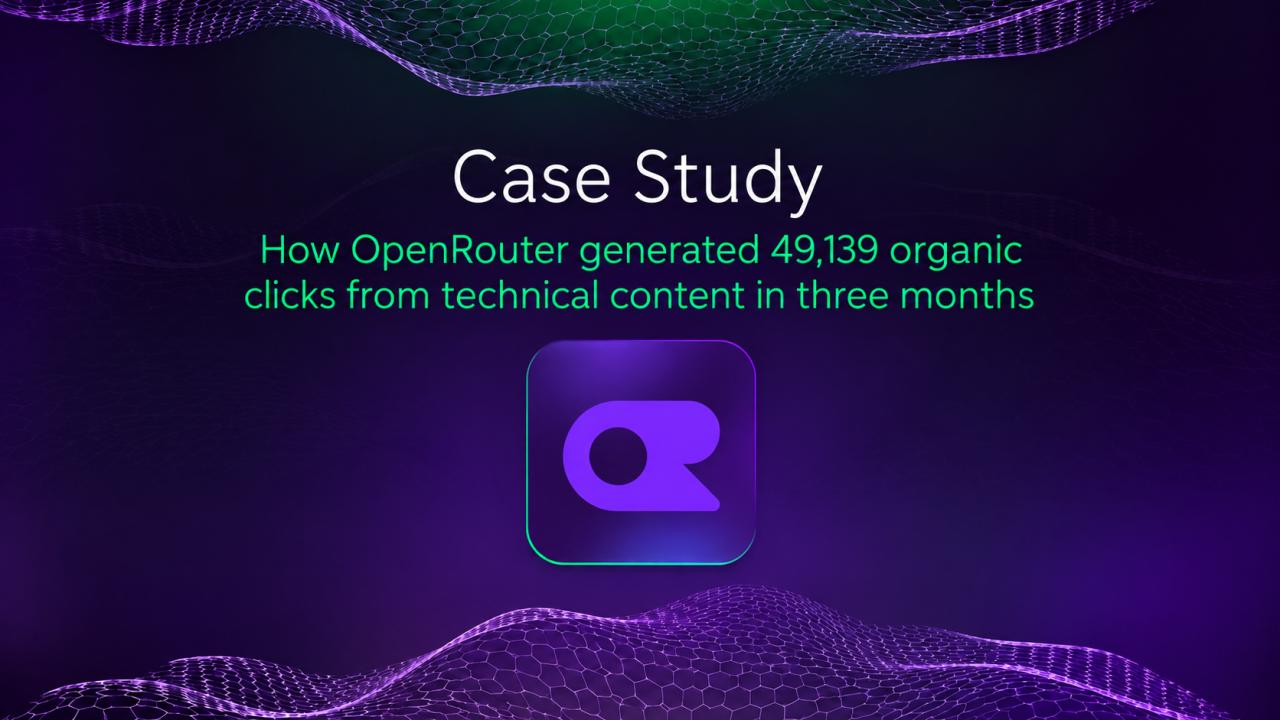
We've run this search everywhere strategy, SEO, GEO, and AEO together, with devtool companies including Cloudinary,Zenrows, Roadmap,Openrouter, Doppler, and Bitcloud.
Cloudinary grew organic traffic by 88% in five months using a hub-and-spoke content strategy built around developer search intent, and now gets recommended for high-intent search queries in its category. Read the full case study.
Roadmap grew organic traffic from 240,000 to 480,000 monthly visits over 24 months through the same structured hub-and-spoke program, and now appears in an estimated 1,200 to 1,700 Google AI Overviews.
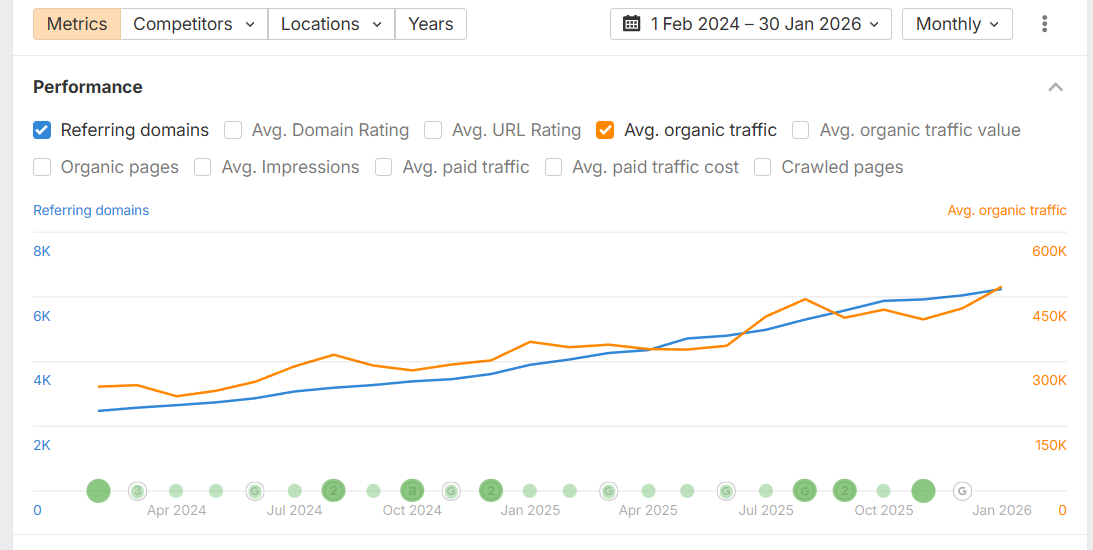
Both results started as organic traffic wins and turned into citation wins on their own.That's exactly why we treat SEO, GEO, and AEO as one search everywhere strategy instead of three separate workstreams: rankings are the base, citations are the layer that gets tracked and built on top of it.
For how a search everywhere strategy fits into developer acquisition more broadly, the B2D marketing guide covers strategy, channels, GTM, and measurement end to end. For what the content production process itself looks like, the technical content marketing guide walks through it in detail.
If you're a devtool company looking to grow organic traffic, AI citation visibility, and developer adoption, we'll put together a strategy built around your product, audience, and growth goals. Speak with us.
About author
From SEO and growth campaigns to documentation, landing pages, and developer-focused content, the list goes on! My passion lies in helping products connect with developers and driving measurable results through thoughtful marketing. Outside of work, you’ll find me chasing new adventures, gazing at the moon, and enjoying the timeless charm of old Hollywood movies.










.svg)