Developer marketing strategies: 5 proven approaches
Learn the 5 developer marketing strategies that consistently drive adoption - free tools, onboarding design, community building, technical video, and SEO. Real examples from Stripe, Algolia, and Postman.

Developer marketing strategies are the specific programs a devtool company runs to earn developer attention, drive product adoption, and build trust with a technical audience. This guide covers five that consistently work: building free tools that solve adjacent problems, designing onboarding around a developer's first moment of success, building community as a long-term retention and advocacy asset, technical video content, and content paired with SEO. For a complementary, channel-level read on what's working in technical marketing right now, we published current field notes alongside these five program patterns.
Companies like Stripe, Twilio, Supabase, and Postman have each used one or more of these approaches to scale to millions of developers without relying on traditional demand generation.
Understanding the developer mindset
Developers evaluate products by using them. They skip the marketing page, navigate directly to documentation, run a code sample or API call, then validate their experience through peer communities before making any adoption decision. Case studies, sales decks, and ROI slides do not move the needle. Peer proof, GitHub stars, working examples, and honest documentation do.
The critical moment is the trial run. If it fails or requires excessive setup, developers abandon immediately and rarely return. Nearly 90% of devtool startups fail by year two, and the most common reason is not a bad product. It is applying traditional SaaS marketing tactics to an audience that rejects them on contact.




Inside the launch of VectorAI DB
How Actian positioned VectorAI DB for developers and drove adoption from day one
Read the case study
Understanding the full journey a developer takes from problem awareness to product advocacy is what we call the Developer Adoption Architecture.
Strategy 1: free developer tools for awareness
The most effective awareness strategy for a devtool company is building a free, lightweight utility that solves a specific problem adjacent to your core product. No signup. No credit card. No demo request. Just a tool that works and carries your brand without friction.
Postman began as a free Chrome extension for API testing in 2012, spreading virally through developer communities before becoming a full platform. The tool solved a real problem developers had every day. The brand came along for the ride.
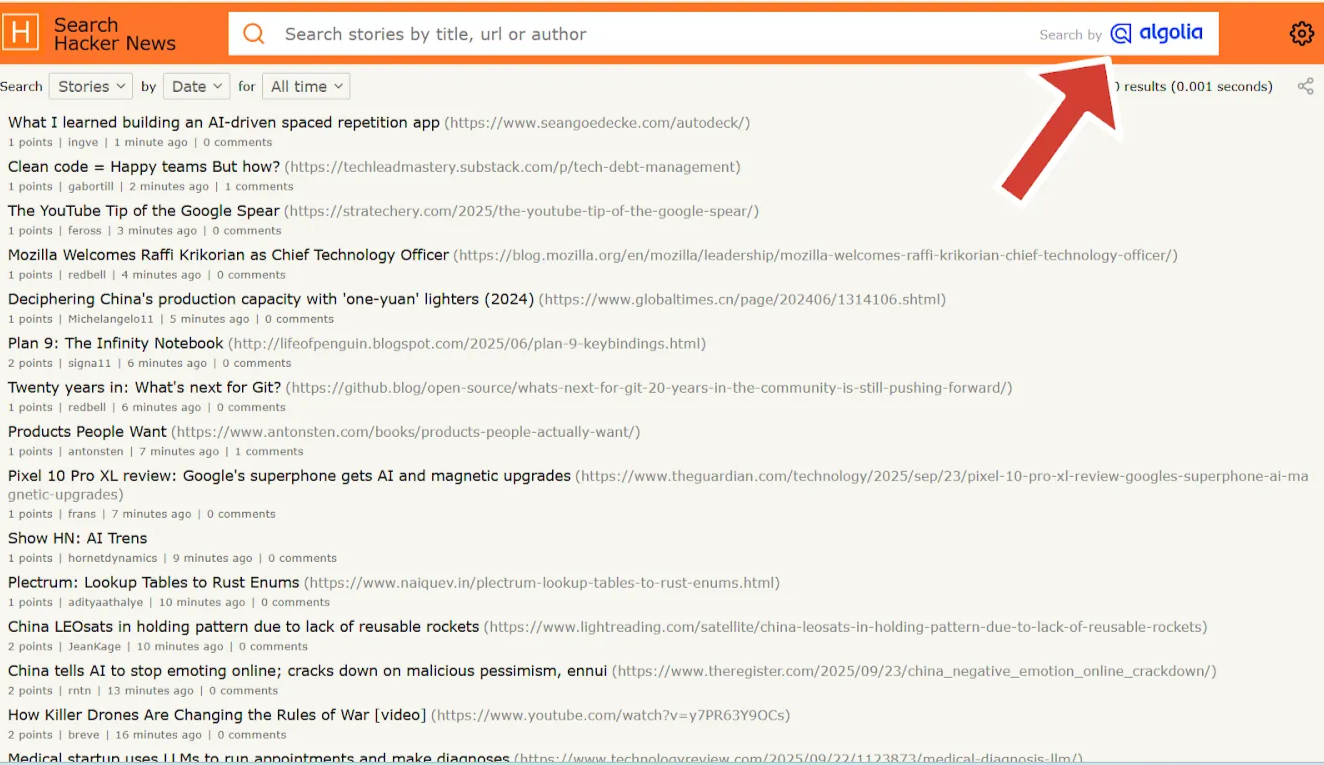
On the other hand, Algolia built hn.algolia.com, a fast, free Hacker News search tool that kept the company top-of-mind with exactly the developer audience they were targeting. The branding was light and non-intrusive. It felt like a contribution to the community, not a marketing asset.
How to implement this:
Pick a problem adjacent to your core product's domain. Ensure zero friction: no logins, credit cards, or form fields. Use light, non-intrusive branding. Distribute through developer communities using people with genuine developer credibiliy.
Strategy 2: onboarding as developer journey
Most companies treat onboarding as the process of completing a signup form. The companies that win developer audiences design onboarding to get developers to their first moment of success within minutes: a working database query, a processed API call, a deployed application.
Stripe gives developers a sandbox account with a test API key and a working example immediately. A developer can process a test payment within minutes of landing on the documentation, without talking to anyone.
How to implement this:
Map the actual developer journey from first visit to first meaningful product action. Define a time-to-value target and work backwards from it. Provide sandboxes and free tiers that let developers experiment without risk. Embed onboarding inside the documentation with copy-paste examples rather than behind a separate flow. Track every drop-off point and iterate on the friction you find.
Strategy 3: build trust through community
Community is the longest strategy to build and the most durable once established. It is not a marketing channel. It is the environment in which peer trust forms, and peer trust is the primary driver of developer tool adoption.
According to the GitHub 2021 State of the Octoverse report, 78% of open source contributors are motivated by recognition and credit for their work. Communities that acknowledge contributors visibly attract the most active participants and generate the most durable word-of-mouth.
How to implement this:
Hire developer relations before demand generation. Pick one community home base, whether Discord, Slack, or a dedicated forum, rather than spreading thin across every platform. Make it a learning hub, not a support channel. Show up publicly: respond to GitHub issues, share progress transparently, and celebrate community contributions by name. The companies that do this well share six common lessons that are worth understanding before you pick your platform or hire your first DevRel.
Strategy 4: technical video content
Developers use video for two specific purposes: gaining deeper conceptual understanding of a technology, and solving problems when written documentation falls short. Videos that deliver on both get shared: honest explanations, complete code examples, and genuine presenter expertise. A developer shares a video when it teaches something clearly enough to pass on to a junior teammate or a colleague solving the same problem.
YouTube is the primary discovery channel for technical video. Production quality matters less than technical accuracy and authentic delivery. A developer with a $200 mic and a working demo outperforms a polished explainer with no working code every time. We ran a survey with 101 developers to understand exactly what they expect, and the patterns were consistent enough that we documented the full approach in how to create developer video content.
How to implement this:
Start by identifying the top five questions your target developers ask that your product answers. Build one video per question. Keep each video focused on a single outcome, and not a feature overview, but a working solution to a real problem. Use a screencast with live code rather than slides. Show the full implementation, including the parts that go wrong. Publish on YouTube first and distribute the link through the communities where your developers already spend time.
Strategy 5: content and SEO
Content and SEO capture developers at the exact moment they are searching for a solution to the problem your product solves. This only works once developers are searching, so in a brand-new category you start with demand creation. The approach that works is use-case driven. A post titled "How to reduce Kubernetes alert noise by 80%" reaches a developer searching for that specific outcome. A post titled "Introducing our observability platform" reaches no one who was not already looking for you. Developers search for the problem and not the product.
The compounding effect of consistent technical content is what builds topical authority, the signal that tells both search engines and AI systems that your site is the most reliable source on a given topic. Once you have that authority, every new piece of content ranks faster and the whole content program becomes more efficient. The SEO for developer tools guide covers the full hub-and-spoke architecture, keyword clustering, and GEO optimization approach we use to build that authority for devtool companies.
How to implement this:
Start with a hub-and-spoke content architecture. Pick the core problem your product solves and write the definitive guide on that topic. Then build spoke articles around every specific use case, integration, comparison, and adjacent question that maps to real developer search intent. Publish consistently — topical authority compounds with volume and time. Instrument every piece of content so you know which articles drive documentation visits, trial signups, and activation, not just page views.
Measuring whether your strategies are working
Page views and community signups are not success metrics. The metrics that matter track developer progression from discovery through activation to sustained use.
Discovery metrics tell you whether developers can find you: search-driven clicks to documentation, GitHub repo views, Stack Overflow question views under your product tags. Activation metrics tell you whether developers who find you reach a working state: the first API call, the first successful query, the first deployment. Adoption metrics tell you whether the product is in real projects. Advocacy metrics tell you whether developers are recommending you unprompted in forums, READMEs, and peer conversations.
The developer marketing metrics guide covers the full measurement framework, funnel benchmarks by stage, and how to attribute revenue by channel so you know what is actually driving growth.
How these strategies connect
Each strategy feeds a different stage of the developer adoption journey. Free tools and content drive awareness before a developer is even searching. Onboarding converts discovery into activation. Community and DevRel build the advocacy layer that drives word-of-mouth at scale. Video and SEO/AEO extend reach at each stage without requiring a sales motion to initiate the relationship.
The companies that scale developer adoption run these as a coordinated system. For the complete picture of how to build and run this as a developer marketing program, the B2D marketing guide covers strategy, channels, GTM, and measurement in full.
If you are building a devtool and want to put these strategies into practice, our team at Hackmamba works with devtool companies as a developer marketing agency to build the content, SEO, and community programs that drive real adoption. Talk to us about what you are building.
FAQ
Developer marketing strategies are the specific programs a devtool company runs to earn developer attention, drive adoption, and build trust with a technical audience. The five covered in this guide are building free tools for awareness, designing onboarding around first success, building community as a retention and advocacy asset, technical video content, and content paired with SEO.
Developers validate products by using them. They skip marketing pages, go directly to documentation, run a code sample, and check peer communities before making any adoption decision. Gated content, feature-focused messaging, and sales-led outreach add friction before the developer has experienced any value.
Start with developer relations before demand generation. Hire people with genuine developer credibility who can engage authentically in the spaces where your target developers spend time, or partner with a developer relations agency that already has them. Establish one primary community hub rather than spreading across every platform. Create structured engagement through office hours, contributor recognition, and Q&A sessions, and participate visibly as founders and engineers.
When organic and community channels have established enough credibility that a developer clicking an ad will find a product worth their time. Paid acquisition without working documentation, a fast onboarding path, and a free tier drives clicks that do not convert.
Track the full chain from channel to first meaningful product action to paid conversion to lifetime value. Discovery, activation, adoption, and advocacy metrics in that order. Attributing revenue by channel separately is not optional. Blended numbers hide which strategies are actually working.
About author
From SEO and growth campaigns to documentation, landing pages, and developer-focused content, the list goes on! My passion lies in helping products connect with developers and driving measurable results through thoughtful marketing. Outside of work, you’ll find me chasing new adventures, gazing at the moon, and enjoying the timeless charm of old Hollywood movies.












.svg)