How to choose a SaaS content marketing agency (2026 guide)
A practical guide to evaluating SaaS content marketing agencies - what questions to ask, what pricing to expect, red flags to avoid, and which agencies to shortlist in 2026.

Not every SaaS content marketing agency is built for the same audience. The right choice depends on who you are trying to reach and what outcome you are optimizing for.
Some SaaS products are built for developers, engineers, and IT teams. These users need tutorials, API documentation, integration guides, and technical content that reflects real hands-on experience with the product. Surface-level content does not work here, and they can identify when a writer has never actually used what they are writing about.
Other SaaS products target business decision-makers, operations leaders, finance teams, and executives evaluating tools for internal use. These buyers care about ROI, integration capability, and strategic fit. Thought leadership, case studies, and product comparisons are what move them.
Some products need both. Knowing which category your product falls into determines everything else in this decision.
This guide covers how to evaluate a SaaS content marketing agency, what questions to ask before signing a contract, what pricing to expect, and which agencies specialize in each audience type.
How to evaluate a SaaS content marketing agency
1. What outcome is their process optimized for?
This is the first question to ask, and most companies skip it. Content marketing can be optimized for traffic, for email growth, or for product signups. These are not the same goal, and the agency's process should reflect whichever one matters to your business.
If your goal is customer acquisition, ask the agency directly: is your strategy designed to produce content that generates trial signups or demo requests? Ask them to show you a case study where they can trace a specific piece of content to a pipeline outcome. Agencies that cannot answer this question are optimizing for deliverables, not results.
2. What is their approach to developer marketing content?
If your product is developer-facing, this question separates competent agencies from the right ones. The best approach is education, not promotion. Content that teaches developers how to solve real problems with your product builds trust faster than any campaign. Tutorials, implementation guides, and documentation that reflects actual product experience are what drive developer adoption.
When evaluating an agency, ask to see examples where their content contributed to measurable developer activation, not just page views. Ask how their writers validate the code or workflows they publish.
Hackmamba has worked with companies including Appwrite, Flutterwave, Hygraph, Sourcegraph, and Jozu to produce tutorials and technical guides built from hands-on product use. One example is a guide on turning proprietary data into expert AI with Lamini and KitOps, built specifically to help developers understand a real implementation workflow.
3. What is their documentation process?
Strong agencies do not draft documentation in isolation. They talk to developers and users before writing anything. For developer-facing products, that means understanding API usability, error handling, onboarding friction points, and the real path from first API call to working integration.
When Hackmamba produced documentation for Flutterwave, the process started with structured interviews covering API functionality, common developer pain points, comparison with alternatives, and user experiences. That input shaped every decision in the documentation.
Ask any agency you are evaluating: what does your documentation discovery process look like, and how do you validate technical accuracy before publishing?
4. How do they measure success?
The goal of developer marketing is to move developers from initial interest to successful implementation as efficiently as possible. Documentation quality, onboarding clarity, and tutorial depth all contribute to whether developers continue evaluating a product or abandon it.
An agency tracking content output alone is not measuring what matters. A strong agency tracks metrics across the full funnel: discovery (organic traffic from developer-intent searches), activation (time to first meaningful product action), adoption (depth of use), and advocacy (community mentions, unprompted recommendations).
The developer marketing metrics guide covers what each of these metrics means and how to evaluate whether an agency is tracking outcomes that connect to developer adoption rather than vanity metrics.
5. Do they use in-house teams or freelancers?
Freelancers often work across multiple clients simultaneously and rarely have time to understand a product deeply. The result is generic content that misses the technical specificity developers and technical buyers expect.
The better model is dedicated client teams that work with you long-term, develop genuine familiarity with your product, and create content from that context rather than surface-level research. This approach eliminates the disconnect between what the product does and what the content says.
Mia-Platform worked with Hackmamba on this basis. The Mia-Platform case study covers how that engagement produced content that improved both publishing velocity and lead quality.
6. What is the technical background of their writers?
For developer-facing products, writer quality is directly tied to technical depth. Writers who have built with the tools they are writing about produce fundamentally different content than writers who are researching the topic.
At Hackmamba, when a client needs a tutorial on their API, the writer starts by using the API: setting up integrations, building a demo, and working through the steps a developer would take. That hands-on process surfaces real friction points, edge cases, and implementation details that research alone cannot produce.
Ask any agency to describe their writer vetting process. Ask what percentage of their writers have shipped production code or built with developer tools. Ask whether you can speak to a writer before the engagement begins.
7. How do they approach SEO and AI search visibility?
In 2026, content needs to perform in both traditional search and AI-generated results. According to research from Grow and Convert, 94% of B2B buyers now use LLMs in their buying process. If your product is not cited by ChatGPT, Perplexity, or Google AI Overviews when a prospect searches for solutions in your category, that traffic goes to a competitor.
A strong agency approach starts with audience and intent, not keywords. That means building content around high-intent developer questions, technical workflows, and real implementation problems. SEO optimization supports great content; it does not replace the need for it.
Hackmamba uses a two-track approach. The top-down track identifies high-value topics and content gaps across a market, then builds content designed to rank and drive qualified traffic. The bottom-up track starts with genuine subject matter expertise, then optimizes for search without compromising technical accuracy.
Roadmap
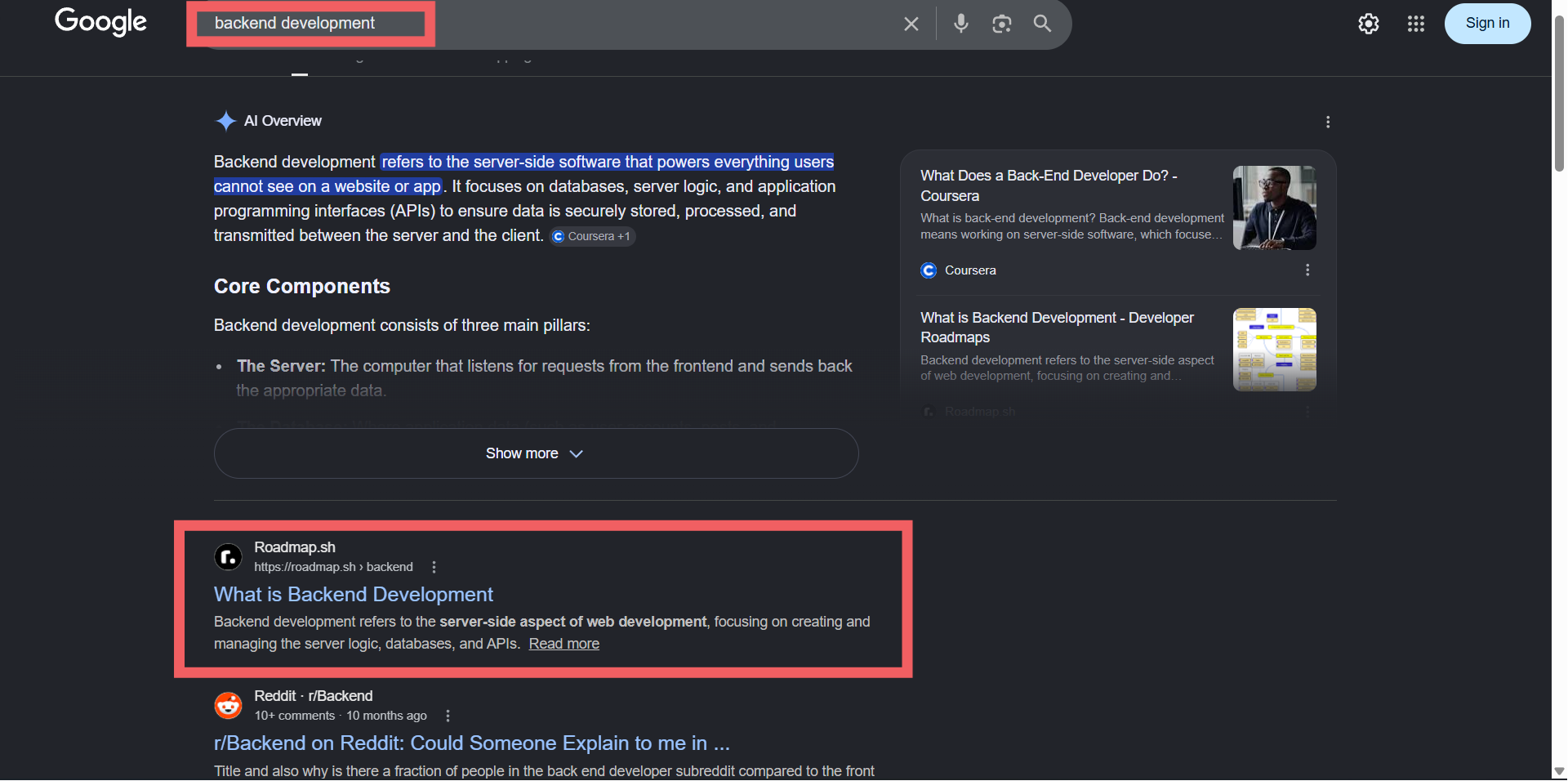
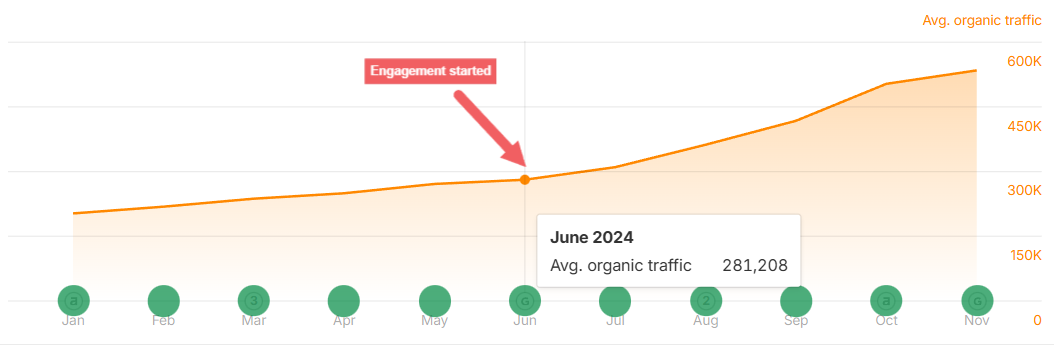
Roadmap used a hub-and-spoke content strategy to build topical authority around developer career paths and learning resources. Over 24 months, organic traffic grew from approximately 240,000 to more than 480,000 monthly visits, including first-position rankings for topics like backend development with 58,000 monthly searches.
Cloudinary
Cloudinary used the same hub-and-spoke approach focused on developer search intent. Organic traffic increased 83% within five months, creating a larger pipeline of qualified visitors entering the product ecosystem.
Read the Cloudinary case study.
The full SEO framework is covered in the SEO for developer tools guide.
8. What is their content quality process?
Ask any agency to walk you through how a piece of content moves from brief to published. A weak process runs a single editorial review and ships. A strong process has multiple checkpoints: peer review for technical accuracy, code validation, SEO alignment, editorial review for clarity and positioning, and a final client review before publication.
At Hackmamba, every piece goes through a minimum of five team reviews covering technical accuracy, code validation, goal alignment, SEO positioning, and language quality. The process exists to catch problems before clients see them, not after.
9. How do they distribute content after publishing?
Publishing is not the finish line. Content that sits on a blog without distribution rarely reaches the developers it was built for.
The stronger approach treats distribution as part of the content strategy from the start. That means repurposing assets into social posts, technical videos, short-form content, and community-specific formats, and placing content in front of developer audiences through communities, newsletters, and developer-focused platforms.
Hackmamba distributes content through a developer community and technical distribution network, with the goal of reaching the audiences most likely to act on it, not just generating impressions.

The channels that work for developer content distribution are covered in where to distribute developer content.
Red flags when evaluating a SaaS content marketing agency
They cannot connect content to pipeline. If an agency's reporting stops at traffic and rankings, they are not accountable for business outcomes. Ask for a case study where content contribution to pipeline or revenue is demonstrated. If they cannot provide one, move on.
They start execution before understanding your product. A reputable agency runs a discovery phase before producing anything: auditing your existing content, understanding your ICP, mapping your sales cycle, and aligning on what success looks like. Agencies that want to start writing in week one have not done this work.
Their writers have no technical background. For developer-facing SaaS products, this is non-negotiable. If the agency cannot tell you how their writers build credibility with a technical audience, the content will reflect that.
They have no position on AI-generated content. Every serious agency in 2026 uses AI at some point in the content process. The question is where human judgment comes in. A clear process - AI for research acceleration and outline generation, human writers for subject matter depth, accuracy, and voice, is a sign of a mature operation. An agency that either avoids AI entirely or uses it as the primary output mechanism without meaningful human oversight is not operating at a competitive standard.
They do not ask about your CRM or attribution model. Agencies serious about revenue impact will want to understand how you attribute pipeline. If they never ask about HubSpot, Salesforce, or how you measure deal influence, they are not planning to be accountable for downstream results.
What does a SaaS content marketing agency cost?
Pricing varies significantly based on scope, team seniority, and service depth. Based on current market benchmarks:
| Engagement type | Typical range |
|---|---|
| Monthly retainer (small to mid-market) | $3,000 to $10,000/month |
| Monthly retainer (growth-stage SaaS) | $10,000 to $25,000/month |
| Monthly retainer (enterprise or full-program) | $25,000 to $50,000+/month |
| Per-article (technical content) | $700 to $1,500 per piece |
| Project-based (documentation, audits) | $5,000 to $30,000 per project |
A retainer at the $5,000 to $15,000 range should include strategy, content briefs, writing, editing, subject matter expert interviews, SEO optimization, internal linking, and reporting. Higher retainers typically add technical SEO, link building, AI visibility monitoring, and sales enablement assets.
The wide range reflects differences in deliverable volume, team seniority, and how deeply the agency integrates with your GTM motion. Pricing without a defined scope is not meaningful, always ask for a written breakdown of what is included at a given retainer level.
Dev-focused SaaS content marketing agencies
1. Hackmamba

Hackmamba is a developer marketing agency that helps devtools and SaaS companies drive product adoption, pipeline, and revenue through technical content, documentation, SEO, community, and developer-focused GTM programs.
The agency specializes in creating technical assets developers use: documentation, tutorials, implementation guides, product marketing content, and educational resources that cover the full developer journey from discovery through advocacy.
Clients include Flutterwave, GBG GO, GBG Loqate, Roadmap, Cloudinary, Mia-Platform, Magnolia, Neon, Sourcegraph, and Hygraph.
Recent results include an 88% increase in organic traffic for Cloudinary in five months, growth from 240,000 to 480,000 monthly organic visits for Roadmap, and a complete documentation build for GBG GO before their product launch.
The approach is built around the Developer Adoption Architecture, a five-stage framework that maps every engagement to how developers actually discover, evaluate, adopt, and recommend products.
2. Draft.dev

Draft.dev works with companies targeting software developers, data engineers, and DevOps professionals. Their clients typically include developer relations or developer marketing teams at mid-sized companies with Series A funding or above.
The agency focuses on highly technical content, tutorials and long-form blog posts, and can assist with content planning and one-time projects like ebooks. Subject matter experts with active engineering backgrounds produce each piece. Notable clients include Redpanda, Sinch, JetBrains, and Equinix.
3. Catchy

Catchy builds and manages developer programs for technology companies. Their services include go-to-market strategy, demand generation, developer experience, and production services. Catchy has worked with emerging technology companies and Fortune 500 brands including Meta, Google, Amazon, Microsoft, and Intel.
B2B SaaS content marketing agencies
B2B SaaS content agencies serve decision-makers, product managers, and business buyers rather than technical users. The content focus shifts to case studies, white papers, product comparisons, and thought leadership that demonstrates ROI and strategic fit.
1. Animalz

Animalz creates growth-focused content for enterprises, startups, and VC-backed firms. Their approach centers on long-form, high-quality content designed to drive sustainable organic growth. Services span SEO, lead generation, and product marketing. Clients include Google, Airtable, and GoDaddy.
2. Grow and Convert

Grow and Convert is an SEO-focused content agency that prioritizes conversion over traffic volume. Rather than optimizing for impressions, they build content around high-intent keywords where readers are close to a purchase decision. Clients include Smartlook, Patreon, Brandfolder, and Leadfeeder.
Do we work with B2B SaaS?
Yes. Hackmamba has worked with B2B enterprise clients including Mia-Platform, Magnolia, and Monogram, producing thought leadership, whitepapers, use cases, and product content for technical decision-maker audiences.
Where to go next
Choosing a SaaS content marketing agency is a decision worth spending time on. The right agency becomes an extension of your product and GTM team. The wrong one burns budget producing content that does not move the metrics your business depends on.
If you are building a devtool or developer-facing SaaS product and want to understand how a developer marketing agency approaches content, documentation, SEO, and distribution as a connected system, reach out to us here.
FAQ
A SaaS content marketing agency creates and distributes content specifically for software-as-a-service companies. The scope typically includes blog content, SEO strategy, technical documentation, case studies, and distribution. Specialized agencies further divide into developer-focused agencies (serving products with technical audiences) and B2B agencies (serving products with business decision-maker audiences).
Monthly retainers for SaaS content agencies range from $3,000 to $50,000+ depending on scope, deliverable volume, and service depth. Most growth-stage SaaS companies work with agencies in the $5,000 to $15,000/month range. Per-article pricing for technical content typically runs $700 to $1,500 per piece. Always ask for a written scope breakdown before comparing prices across agencies.
A developer marketing agency produces content for technical audiences, developers, engineers, and DevOps teams, using writers with hands-on technical backgrounds. The content focuses on tutorials, API documentation, integration guides, and implementation examples. A B2B SaaS content agency produces content for business buyers, covering ROI, strategic fit, and purchasing decision support through case studies, white papers, and thought leadership.
The main red flags are: no process for connecting content to pipeline, starting execution before completing a discovery audit, writers with no technical background for developer-facing products, no clear position on how AI fits into their content process, and no interest in integrating with your CRM or attribution model.
Organic SEO content typically shows measurable traffic results between three and six months after publication, with compounding returns over 12 to 24 months as topical authority builds. Technical content and documentation that reduces support load or improves activation can show results faster. Any agency promising significant organic results within 30 to 60 days is overstating what content alone can deliver.
About author
Henry Bassey spearheads Content Strategy and Marketing Operations at Hackmamba. He holds an MBA from the prestigious Quantic School of Business and Technology, Washington. A strong advocate for innovation, depth and thought leadership, Henry's commitment to quality permeates every technical content he handles for clients at Hackmamba.










.svg)