26 developer newsletters to sponsor in 2027 (after 100+ sponsorships)
Compare 26 developer newsletters for 2027, including 16 we've sponsored. See firsthand ratings, subscriber counts, sponsorship costs, and who each one reaches.

We've managed over 100 newsletter sponsorships for clients at Hackmamba. And somehow, I still remember the one where a publisher sent our ad with a broken link. Yes, the entire placement went out, and they had to rerun it a week later. :)
For another client, we booked 35 sponsorships across 12 publishers. One newsletter brought in 1,003 clicks, but we did'nt get any signups. Meanwhile, a much smaller newsletter with around 15,000 subscribers actually brought in product downloads and sign-ups.
I was recently going through these campaigns with Henry, our head of developer marketing, and we got talking about which newsletters we'd happily sponsor again and which ones we'd probably skip.
So I thought, why not put together a list?
I've ranked 26 developer newsletters for 2027, starting with 16 newsletters we've sponsored for our clients, rated based on our experience working with them.
I've also included 10 more newsletters I'd consider sponsoring, based on their audiences, pricing, and what other advertisers have reported.
For each one, I've included my rating, who you can reach, what sponsorships cost where available, and whether I'd recommend spending your budget there.
26 developer newsletters I'd recommend sponsoring in 2027 (in a nutshell)
Here's the full list. I've grouped the first 16 under newsletters we've sponsored at Hackmamba. The remaining 10 are recommendations based on their audiences, sponsorship offerings, and what other advertisers have reported.
The ratings are my assessment of where I'd consider spending a client's budget. The right choice depends on the developers you're trying to reach.
16 developer newsletters we've sponsored
| Rank | Developer newsletter | Best for | My rating | My take |
|---|---|---|---|---|
| 1 | 80/20 AI | AI infrastructure, ML platforms, databases | 5/5 | We've booked them repeatedly. One of my first choices for AI developer campaigns. |
| 2 | Big Data Analytics News | Databases, data engineering, analytics | 5/5 | Its smaller audience has generated product interest and sign-ups for our clients. |
| 3 | AlphaSignal | AI developer tools, LLM infrastructure | 4.5/5 | Strong reach for AI product launches. I'd pay close attention to which edition carries the ad. |
| 4 | DataTalks.Club | Data engineering, MLOps, ML platforms | 4.5/5 | The newsletter, community promotion, and demo options make it useful for technical campaigns. |
| 5 | TLDR | DevTools, APIs, AI, cloud | 4.5/5 | Its separate technical editions let advertisers reach more specific engineering audiences. |
| 6 | ByteByteGo | Backend infrastructure, distributed systems | 4.5/5 | Particularly relevant for databases and platforms that solve backend engineering problems. |
| 7 | Hands On AI Engineering | AI agents, LLM apps, AI SDKs | 4.5/5 | A smaller technical audience that has generated meaningful product activity for our clients. |
| 8 | Postgres Weekly | PostgreSQL, database infrastructure | 4.5/5 | High on my list for PostgreSQL products, despite its relatively small subscriber base. |
| 9 | PyCoder's Weekly | Python SDKs, APIs, developer tooling | 4/5 | We've sponsored it. I'd consider it again for products with a strong Python use case. |
| 10 | Real Python | Python tools, APIs, developer education | 4/5 | Its tutorial-focused readership makes it suitable for hands-on technical campaigns. |
| 11 | JavaScript Weekly | JavaScript SDKs, APIs, web development | 4/5 | Broad JavaScript reach, with separate pricing for primary ads and smaller sponsored links. |
| 12 | Console | Developer tools, APIs, infrastructure | 4/5 | Readers come here to discover developer tools. Especially relevant for self-serve products. |
| 13 | Golang Weekly | Go, cloud infrastructure, backend tooling | 4/5 | A focused Go audience with primary sponsorships starting at $1,120. |
| 14 | Pointer | Engineering productivity, DevEx platforms | 4/5 | Worth considering when engineering managers influence product adoption or purchasing. |
| 15 | React Status | React SDKs, frontend monitoring | 4/5 | I'd prioritize it over broader JavaScript newsletters for React-specific products. |
| 16 | Node Weekly | Node.js APIs, observability, backend tools | 4/5 | A good fit for backend products with strong Node.js support. |
10 more developer newsletters I'd consider sponsoring
| Rank | Developer newsletter | Best for | My rating | My take |
|---|---|---|---|---|
| 17 | The Code | AI coding agents, LLM APIs, AI infrastructure | 4/5 | Established infrastructure advertisers have appeared here repeatedly. I'd request sponsor-specific reports. |
| 18 | Changelog News | Open source, DevTools, infrastructure | 4/5 | Its newsletter, podcast, and YouTube package could suit technical launches. Confirm the publishing schedule. |
| 19 | SRE Weekly | Observability, DevOps, incident management | 4/5 | A specialized reliability engineering audience. I'd request the media kit before booking. |
| 20 | Frontend Focus | Browser APIs, frontend tooling, web performance | 4/5 | A focused option for frontend products, with sponsored links available from $560. |
| 21 | Data Elixir | Data science, ML, analytics | 4/5 | Reports a 57% open rate, but I'd verify actual sponsorship clicks before spending. |
| 22 | iOS Dev Weekly | iOS SDKs, Swift, mobile developer tools | 4/5 | One sponsor per issue and a focused Apple developer audience. |
| 23 | Bytes | JavaScript, React, frontend development | 3.5/5 | Its informal editorial style calls for sponsorship creative that fits the newsletter. |
| 24 | Refactoring | Engineering productivity, DevEx, team tools | 3.5/5 | Better suited to products aimed at engineering managers and technical leaders. |
| 25 | Engineering Leadership | Engineering analytics, productivity platforms | 3.5/5 | Relevant for tools sold to engineering leadership rather than individual developers. |
| 26 | Ruby Weekly | Ruby, Rails, application tooling | 3.5/5 | I'd only prioritize it if Ruby or Rails developers are important to the product. |
Below, I'll get into the individual newsletters, including their audiences, published sponsorship rates, and what I'd check before booking.
16 developer newsletters we've sponsored (and would book again)
1. 80/20 AI
Our rating: 5/5
Best for: AI infrastructure, databases, ML platforms, and AI developer tools
Audience: Around 90,000 subscribers
Sponsorship cost: From $200 per placement, with weekly packages available
We've sponsored 80/20 AI multiple times for client campaigns, and it's one of the newsletters we'd happily book again.
Their audience includes AI engineers, researchers, data scientists, and people keeping up with new AI tools. It's a fairly broad mix, so I'd be careful about treating every subscriber as a developer.
We booked our placements through Paved. And here's something worth mentioning: performance varied quite a bit between sends, even when we were promoting the same product. I'd always ask for recent sponsor-specific click numbers before committing to a package.
Their public sponsorship page lists main placements starting at $200 and a one-week package at $800. I'd confirm the exact placement and number of sends before booking.
Would we sponsor them again? Absolutely, especially for an AI infrastructure product with a practical use case developers can try. For a more specialized DevTools product, I'd check the audience breakdown first.
2. Big Data Analytics News
Our rating: 5/5
Best for: Databases, data engineering, analytics platforms, and AI infrastructure
Audience: Around 15,000 subscribers based on our campaigns
Sponsorship cost: Quote available through Paved
I'll admit, this one surprised us. We've sponsored Big Data Analytics News for client campaigns, and it's one of the smaller newsletters we'd happily book again.
Their audience includes data architects, data scientists, analysts, and developers working with data infrastructure. For a database product, that's a pretty relevant group of people to reach.
We booked our placements through Paved. They offer primary sponsorships at the top of the email, native placements, and dedicated emails. The sponsorship can also get exposure through their website and social channels.
What stood out from our campaigns was the engagement. We saw readers go beyond clicking the ad and actually try the product.
Would we sponsor them again? Definitely. I'd put them near the top of my list for databases, data engineering tools, or anything developers use to process and analyze data.
3. AlphaSignal
Our rating: 4.5/5
Best for: AI developer tools, LLM infrastructure, ML platforms, and AI coding agents
Audience: 200,000 subscribers
Sponsorship cost: $6,000 for a main ad, $3,000 for a secondary ad, or $10,000 for a dedicated email
AlphaSignal is one of the bigger AI newsletters we've sponsored, and we'd consider working with them again.
Their readership includes AI researchers, ML engineers, software developers, and technical founders. They send three newsletters a week covering research, code, and AI news.
We sponsored AlphaSignal for a client campaign, and the reach was impressive. But there's something I'd pay attention to before booking: which edition your sponsorship appears in.
If I were promoting an AI coding agent or an inference API, I'd want to know whether the ad would run alongside code examples and developer-focused content. That's a much more relevant setting than a general AI news roundup.
And at $6,000 for a main placement, it's not exactly a cheap experiment. I'd ask for recent sponsor-specific click reports and compare the $3,000 secondary placement before committing.
Would we sponsor them again? Yes, particularly for an AI product launch where reaching a large technical audience is the priority. For a smaller campaign focused entirely on developer sign-ups, I'd compare it with more specialized newsletters first.
4. DataTalks.Club
Our rating: 4.5/5
Best for: Data engineering, MLOps, AI infrastructure, and machine learning tools
Audience: 130,000+ newsletter subscribers
Sponsorship cost: €1,500 for a primary placement, €2,500 for a dedicated email
We've sponsored DataTalks.Club before, and I particularly like what Alexey Grigorev has built around the newsletter.
It's more than an email list. They have almost 100,000 Slack community members and run free courses on data engineering, MLOps, and LLMs. According to their community survey, 28.5% work in data engineering and another 26.8% in data science or ML.
For one of our campaigns, the sponsorship included a newsletter placement alongside social promotion and a demo. That's worth knowing when comparing their packages, since the exposure isn't necessarily coming from the newsletter alone.
Their primary placement appears at the top of the Monday newsletter, and your headline can even become the email's subject line. I'd use that opportunity to promote something useful, like a technical tutorial showing developers how to build a RAG application with your database.
They also offer sponsored workshops and course integrations if you want developers to spend time using the product.
Would we sponsor them again? Yes. I'd especially consider them for a data or AI infrastructure product with a working demo developers can follow.
5. TLDR
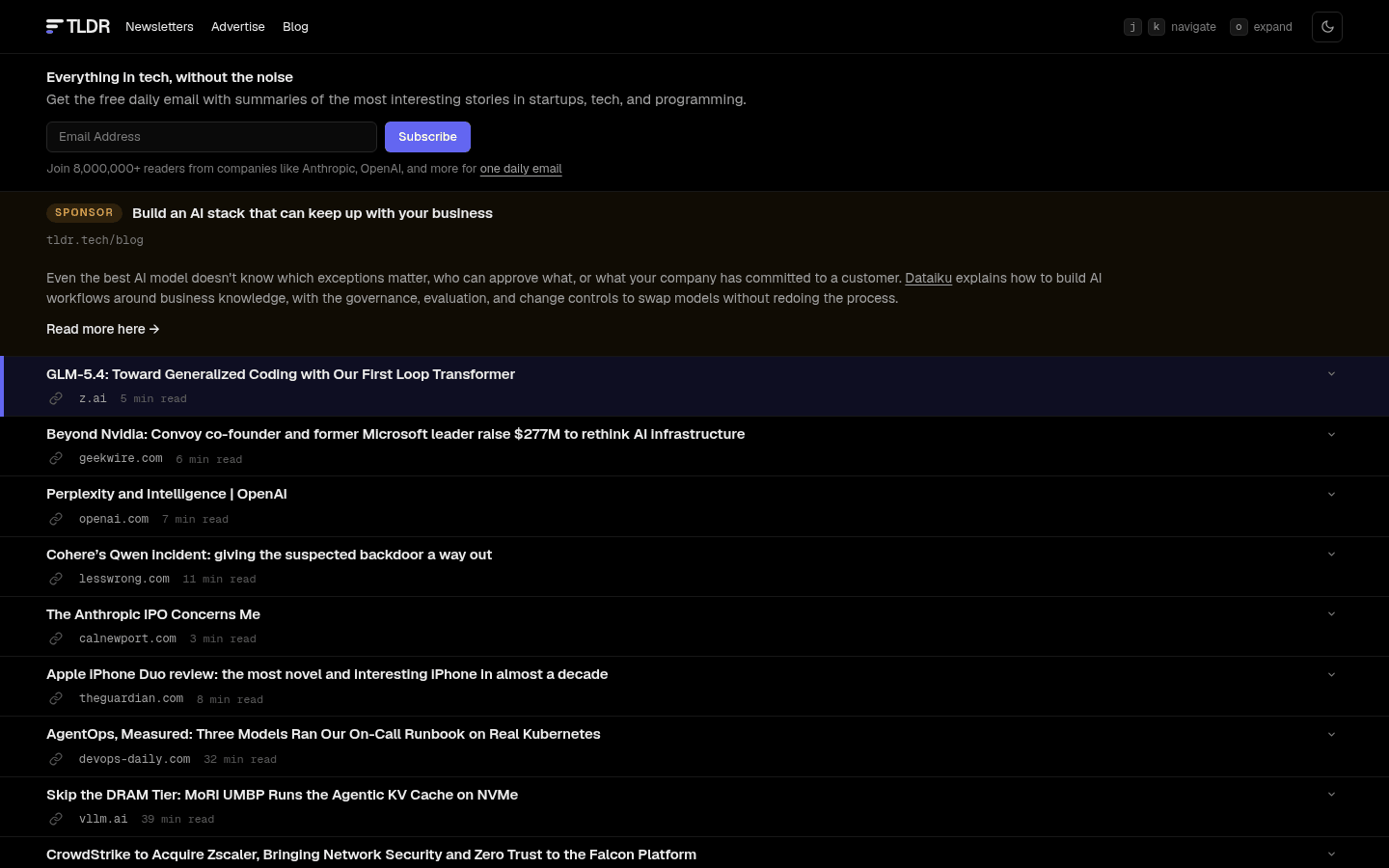
Our rating: 4.5/5
Best for: Developer tools, APIs, AI infrastructure, DevOps, and cloud platforms
Audience: 470,000 subscribers for TLDR Dev, with a 43% open rate
Sponsorship cost: Custom quote based on the newsletter edition and placement
TLDR is probably one of the first names that comes up when you're looking to sponsor a developer newsletter. And there's a good reason for that.
They run 14 newsletters covering different technical audiences. TLDR Dev reaches 470,000 subscribers, TLDR DevOps has around 350,000, and TLDR AI has over 1.1 million.
What I particularly like is that you can choose an edition based on the product you're promoting. For a Kubernetes monitoring tool, I'd look at TLDR DevOps. For an AI coding agent, I'd compare TLDR Dev and TLDR AI.
They offer three sponsorship formats: a primary placement at the top, a secondary placement in the middle, and a short Quick Links ad near the bottom. Their team also helps write the ad in the newsletter's editorial style.
Would we sponsor them again? Yes. I'd shortlist TLDR for developer products with a broad technical audience. I'd start with one relevant edition and compare the placement options before buying across several newsletters.
6. ByteByteGo
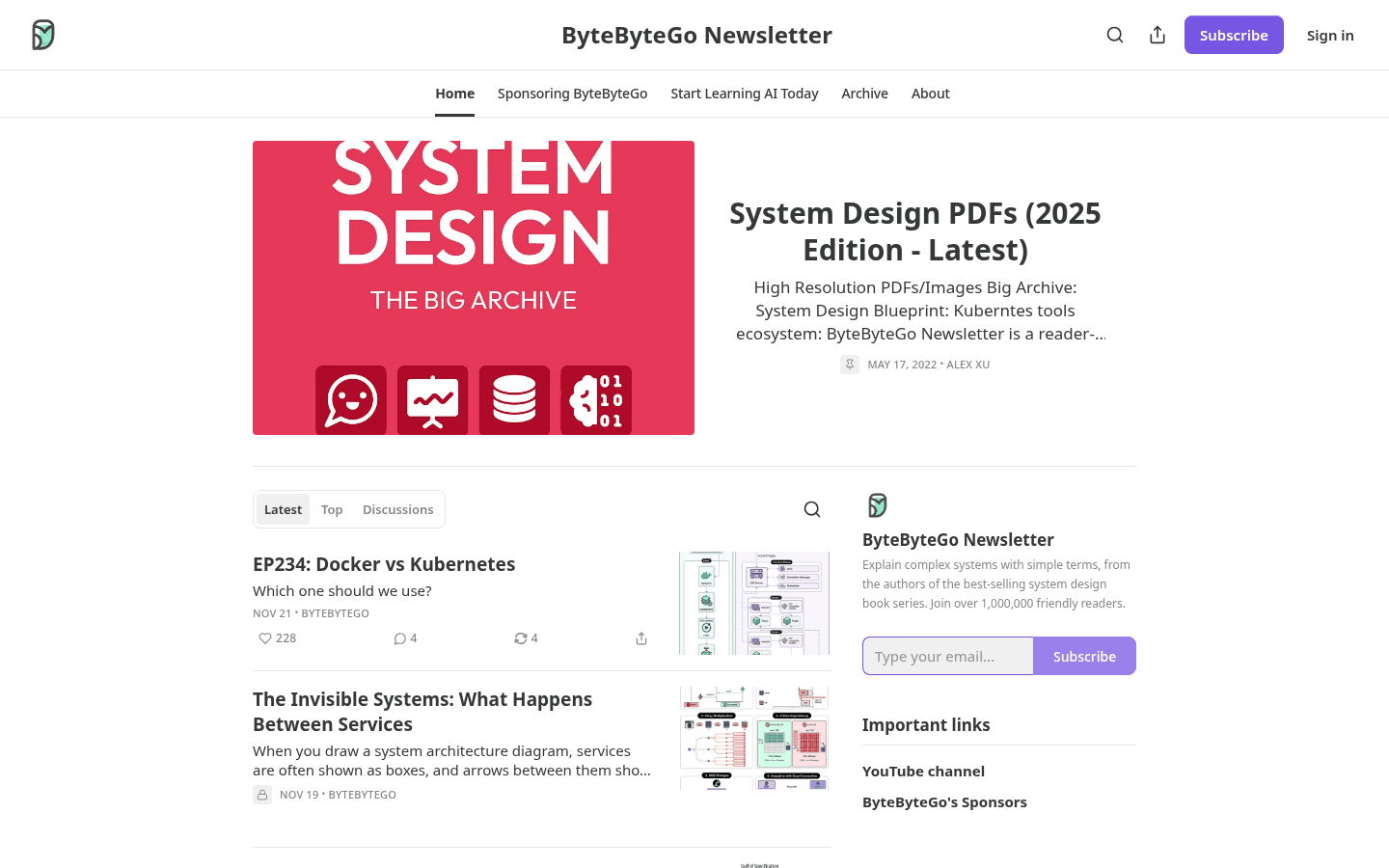
Our rating: 4.5/5
Best for: Backend infrastructure, databases, distributed systems, APIs, and cloud platforms
Audience: 1.35 million+ subscribers, with a 35%+ average open rate
Sponsorship cost: Custom quote through BuySellAds
If you're marketing a backend or infrastructure product, ByteByteGo is definitely one I'd shortlist.
Founded by Alex Xu, the author of System Design Interview, ByteByteGo publishes visual explanations of how large-scale systems work. Think database architectures, caching, distributed systems, and API design.
And the audience is pretty interesting. According to their advertising page, 94% of readers work in engineering. Around 20% are engineering leaders, and another 28% are senior engineers.
They offer primary and secondary newsletter placements. Pricing isn't public, so you'd need to request a quote.
Here's something I found interesting while researching them: BuySellAds reports a 75% partner renewal rate. Datadog, Sentry, and AWS are among their past sponsors. That's a useful signal, although I'd still want to see actual sponsorship performance before booking.
For a database or observability platform, I'd probably promote a technical benchmark or architecture walkthrough that fits the kind of content readers already expect from ByteByteGo.
Would we sponsor them again? Yes, especially for backend and infrastructure products. I'd compare the primary and secondary placement costs before committing.
7. Hands On AI Engineering
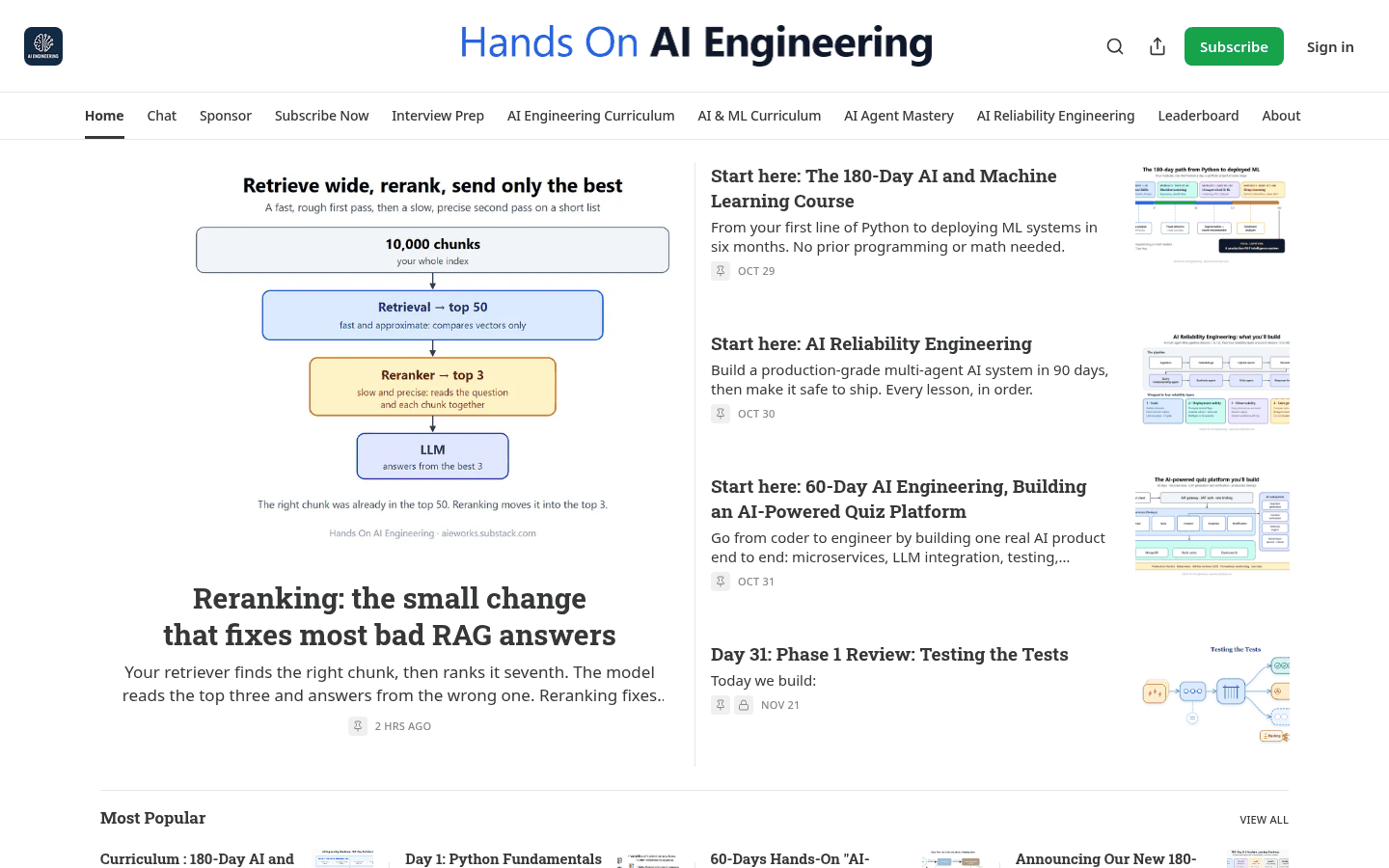
Our rating: 4.5/5
Best for: AI agents, LLM applications, vector databases, and AI developer tools
Audience: 42,000+ subscribers, according to the publisher's headline
Sponsorship cost: $149 for a classified ad, $349 for a sponsored section, and $699 for an exclusive issue
We've sponsored Hands On AI Engineering for a client, and it's one I'd happily consider again.
What I like about this newsletter is how technical the content gets. You'll find tutorials on building LLM applications, retrieval pipelines, and AI agents. The readers include engineers actually implementing these systems, alongside technical founders and people learning AI engineering.
When we sponsored them, the number of clicks wasn't particularly exciting compared with some of the bigger AI newsletters we'd booked. But we did see readers take action on the product, which made the placement worth looking at more closely.
Their pricing is also quite accessible. A mid-newsletter sponsored section costs $349, while $699 gets you mentions across the issue. They publish twice a week and offer post-campaign reports covering opens and clicks.
If I were promoting a vector database or AI SDK, I'd use the placement to share a working tutorial, ideally something developers could run themselves.
Would we sponsor them again? Yep. Especially for AI infrastructure products where you want to reach engineers building applications, not just following AI announcements.
8. Postgres Weekly
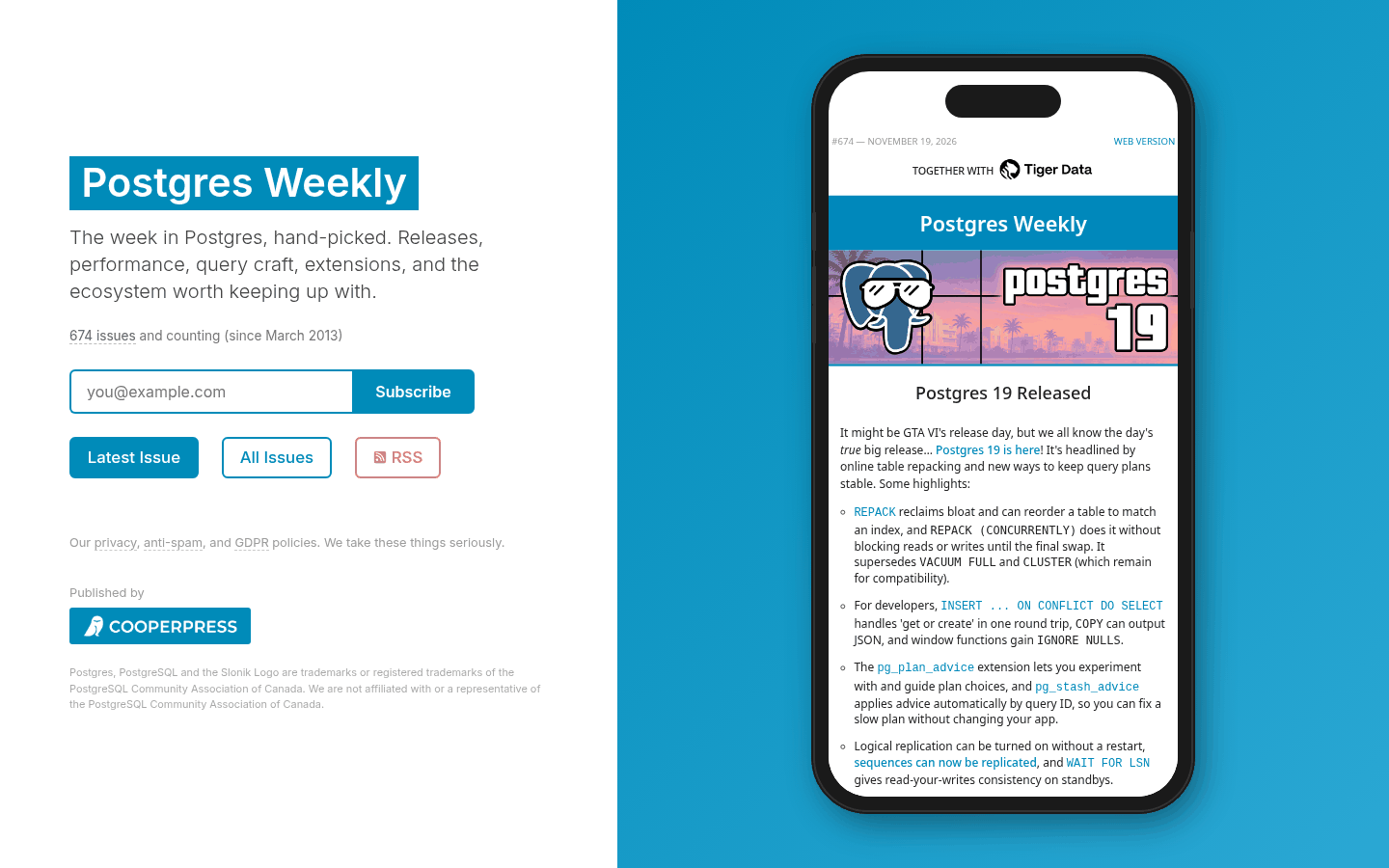
Our rating: 4.5/5
Best for: PostgreSQL databases, database hosting, query optimization, and developer infrastructure
Audience: 17,501 subscribers, with a 48% open rate
Sponsorship cost: $1,280 for a primary placement or $250 for a classified ad
If I were running a campaign for a PostgreSQL product, Postgres Weekly would be high on my list.
It's published by Cooperpress and covers PostgreSQL releases, performance tuning, extensions, and tutorials. So you're reaching developers who already work with Postgres, rather than trying to find them in a general tech newsletter.
Here's something interesting about their pricing. A primary placement costs $1,280 for just 17,501 subscribers. That's roughly $73 per 1,000 subscribers, compared with around $23 for JavaScript Weekly, another Cooperpress publication.
You're paying quite a premium for that specialized readership.
They also have a $250 classified placement, which I'd consider testing before booking the primary slot. For a database product, I'd promote something specific, like a PostgreSQL query optimization benchmark or a working tutorial showing how to reduce query latency.
Their published 48% open rate looks promising, but I'd still request recent sponsor-click reports before spending.
Would we sponsor them again? Definitely for products built around PostgreSQL. For a general-purpose developer tool, I'd look at broader newsletters first.
9. PyCoder's Weekly
Our rating: 4/5
Best for: Python SDKs, developer APIs, data engineering tools, and AI infrastructure
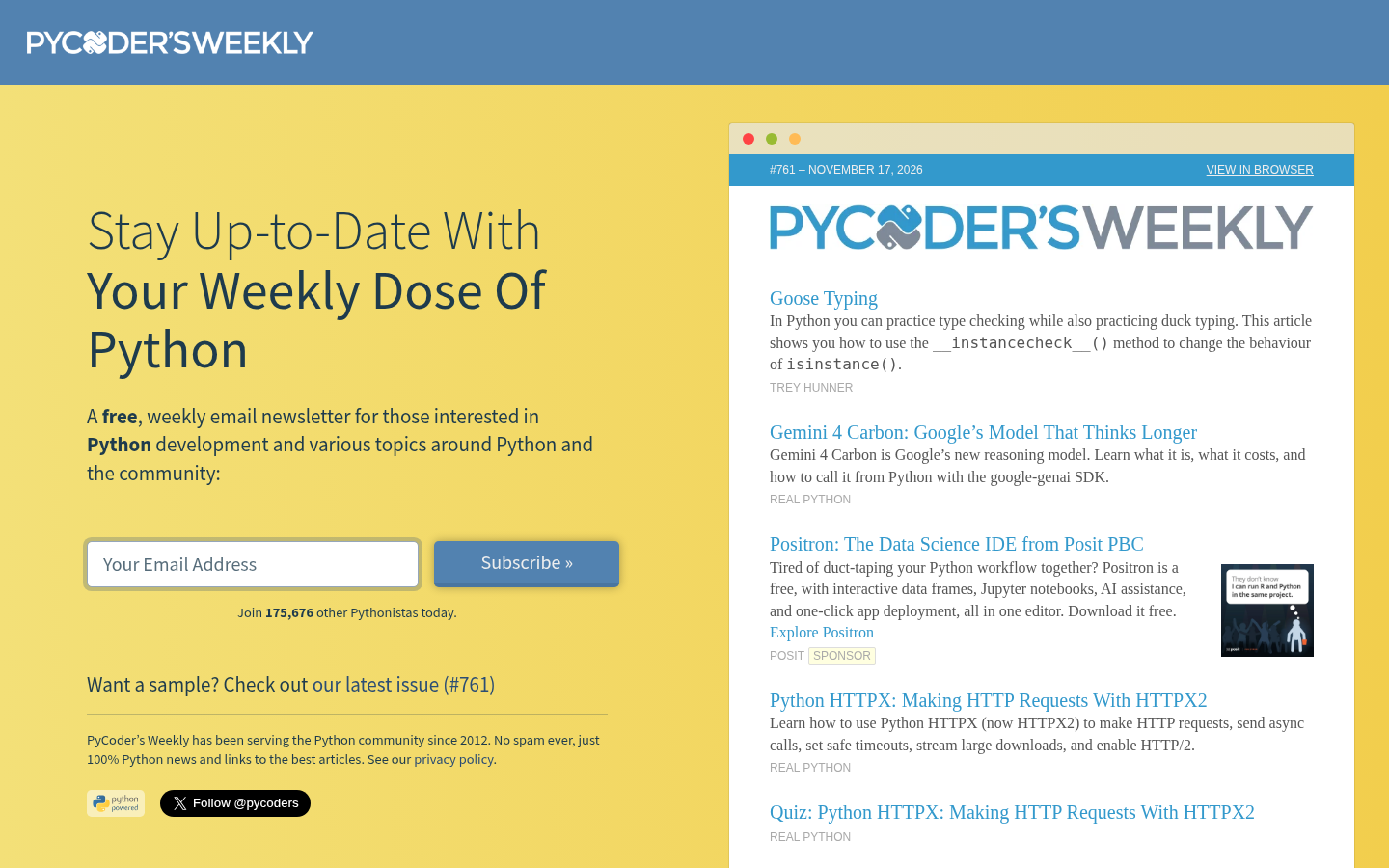
Audience: 175,000+ subscribers, according to its website
Sponsorship cost: Custom quote through Real Python
We've sponsored PyCoder's Weekly for a client, and I'd definitely consider it again for a product with a strong Python use case.
It's been around since 2012, covering Python releases, tutorials, open-source projects, and developer tools. The audience includes Python developers, data scientists, and ML engineers.
What I like is that the newsletter is heavily focused on Python. You're not paying to reach people interested in technology generally. They're subscribing specifically to keep up with the Python ecosystem.
When we sponsored it, we got a decent amount of traffic, but our links pointed to a page where we couldn't properly measure what visitors did afterwards. Something I'd fix before running another placement.
One interesting thing: PyCoder's Weekly is managed through Real Python, which also runs its own newsletter reaching close to 200,000 developers. You can enquire about both through the same team, but they're separate publications.
For a Python SDK or developer API, I'd promote a working code example showing what developers can build in a few lines of Python.
Would we sponsor them again? Yep. Especially for a Python-first product. I'd also ask Real Python for a quote on both newsletters before choosing where to advertise.
10. Real Python
Our rating: 4/5
Best for: Python SDKs, developer APIs, AI/ML tools, and backend infrastructure
Audience: Around 200,000 subscribers, with a 55.9% open rate
Sponsorship cost: Custom quote through Real Python
We've sponsored Real Python for a client, and I'd happily consider them again for a Python-focused product.
Unlike PyCoder's Weekly, which primarily curates Python news and articles, Real Python publishes its own tutorials, courses, and coding exercises. That makes it interesting for products that need a bit of explanation before developers will try them.
Their media kit reports a 55.9% open rate, with 72.8% of subscribers opening at least one of the previous four issues. Those figures are from November 2025, so I'd request updated numbers for 2027.
Here's something worth knowing: your sponsorship appears alongside their educational content. For a developer API, I'd use that space to promote a tutorial showing how to make requests with Python, handle the response, and build something useful.
They've also worked with companies like JetBrains, MongoDB, Sentry, and WorkOS. You can book their newsletter separately or enquire about additional exposure through their website and podcast.
Would we sponsor them again? Yes, particularly for Python SDKs and APIs. I'd lean towards a useful code example that readers can try straight away.
11. JavaScript Weekly
Our rating: 4/5
Best for: JavaScript SDKs, developer APIs, frontend tooling, and web development platforms
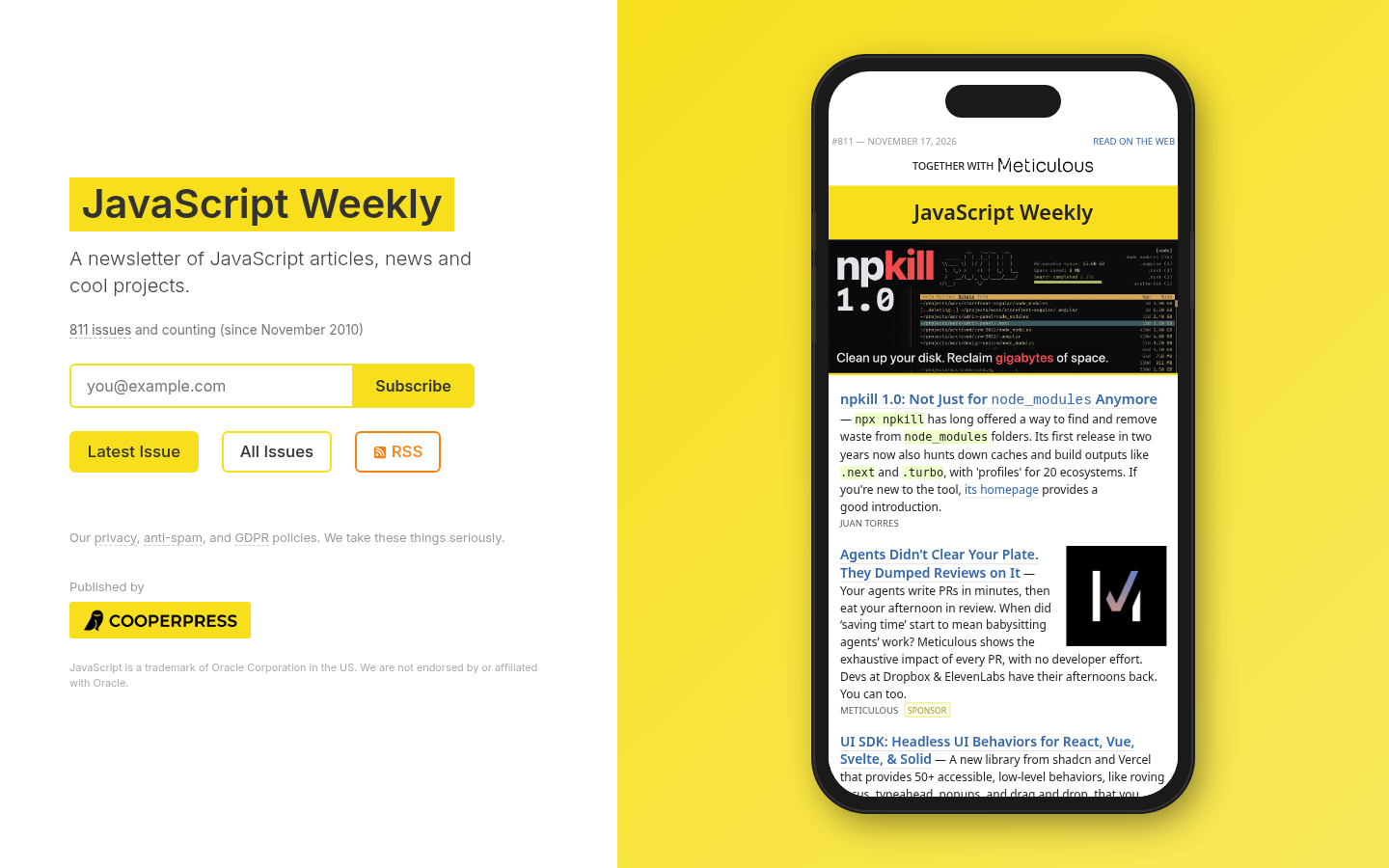
Audience: 163,202 subscribers, with a 37% open rate
Sponsorship cost: $3,680 for a primary placement, $1,260 for a sponsored link, or $250 for a classified ad
JavaScript Weekly has been around since 2010, and it's one of the bigger developer newsletters published by Cooperpress.
It covers JavaScript and TypeScript releases, new libraries, frameworks, and tools developers can use in their projects.
What caught my attention was the pricing. A primary sponsorship costs $3,680, but you can also get a sponsored link for $1,260. That's a pretty big difference, especially if you're testing the newsletter for the first time.
I also checked who's advertising there. According to Ad Almanac, companies like Sentry, Expo, and Tiger Data have appeared across multiple issues. Repeat bookings are encouraging, although they don't tell us whether those campaigns were profitable.
If I were promoting a JavaScript SDK, I'd start with a sponsored link to a working demo or GitHub repository. I'd only consider the primary placement once I had a better idea of what the traffic was worth.
Would we sponsor them again? Yes, especially for products developers use with JavaScript or TypeScript. For something focused entirely on React or Node.js, I'd compare their more specialized newsletters first.
12. Console
Our rating: 4/5
Best for: Developer tools, APIs, cloud infrastructure, CI/CD, and open-source projects
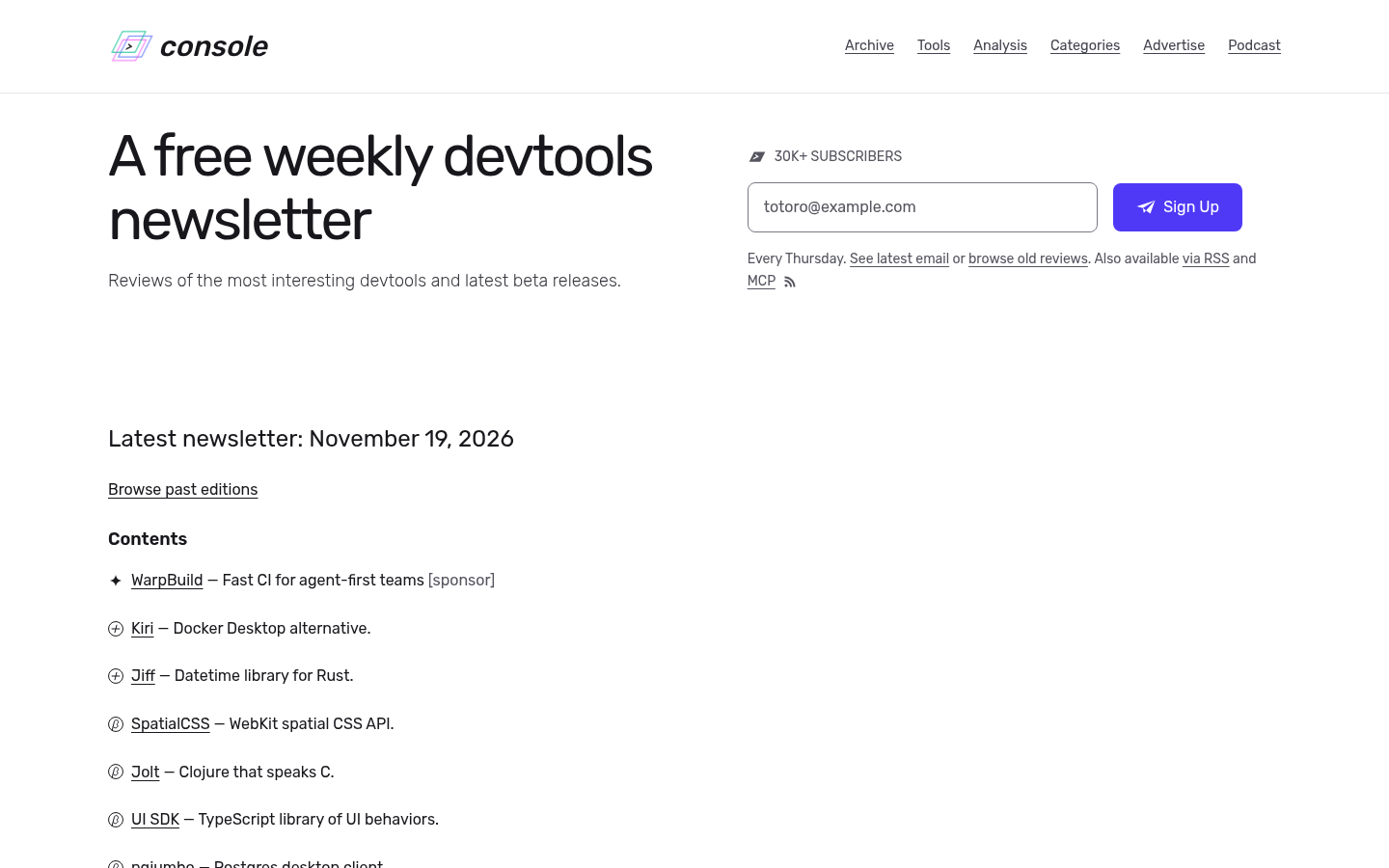
Audience: 30,000+ subscribers
Sponsorship cost: Custom quote from the publisher
I quite like how Console is positioned. It's a weekly newsletter by David Mytton, who previously co-founded Server Density, and it's entirely focused on helping developers discover new tools.
According to their advertising page, 77% of readers have been coding for over five years. They also claim that 68% of readers have signed up for a tool featured in Console. That's from their audience research, not attributed sponsorship conversions, but it's interesting nonetheless.
Here's something to know before booking: Console has just two advertising slots per issue. The main ad gets a short mention in the table of contents and up to 100 characters before the newsletter content. The second placement is a link in the table of contents.
That's not much room to explain a complicated product.
If I were promoting a developer API, I'd probably use the main placement to highlight one specific capability and link to a working example. Their newsletter archive is also public, so you can check how other companies write their sponsorships before pitching yours.
One more thing: Console doesn't accept payment for product reviews. Sponsorships are clearly separated from editorial coverage, which I appreciate.
Would we sponsor them again? Yep, particularly for self-serve developer tools with a simple value proposition. I'd request a quote for the main placement and check recent sponsor-click reports before booking.
13. Golang Weekly
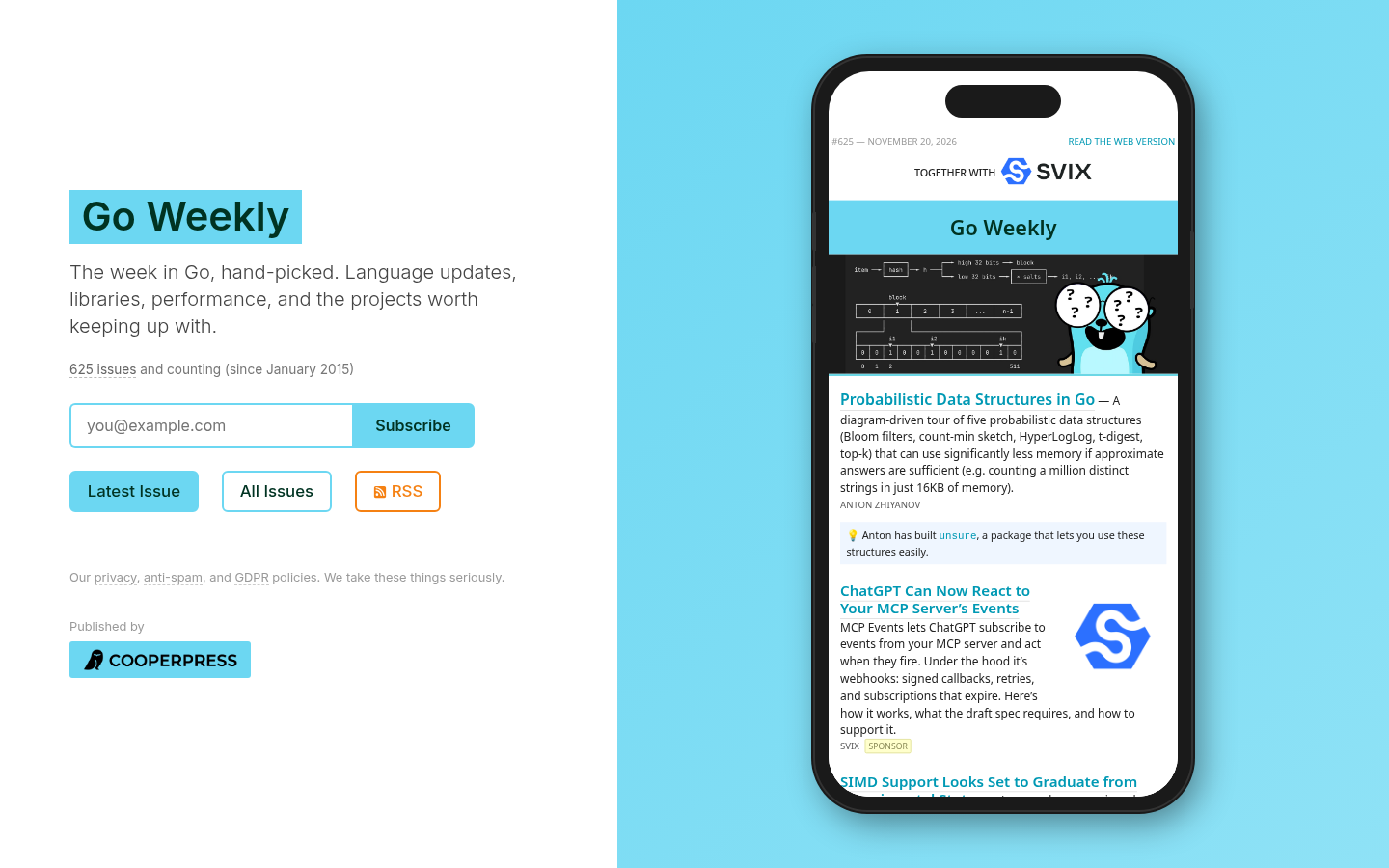
Our rating: 4/5
Best for: Go developer tools, cloud infrastructure, Kubernetes, backend APIs, and observability platforms
Audience: 39,112 subscribers, with a 49% open rate
Sponsorship cost: $1,120 for a primary placement, $620 for a sponsored link, or $200 for a classified ad
If you're marketing a developer tool built with Go, Golang Weekly is worth checking out.
Published by Cooperpress, it covers Go releases, libraries, performance improvements, and practical tutorials. There's plenty of backend and infrastructure content, making it a relevant option for cloud-native products.
According to Cooperpress's media kit, 66% of subscribers opened at least one of the previous five issues. That's useful when planning repeat placements, since not everyone opens every edition.
Looking at its sponsorship history, Tiger Data has advertised there repeatedly. It's a relevant example of a database infrastructure company reaching Go developers, although repeat bookings don't tell us how those campaigns performed.
The primary placement costs $1,120, compared with $1,280 for Postgres Weekly, which has fewer than half as many subscribers. Of course, the more relevant audience depends on the product.
For a Kubernetes monitoring tool, I'd promote a Go tutorial showing developers how to instrument a service and inspect its traces.
Would we sponsor them again? Yes, especially for Go-based infrastructure and backend tools. I'd test the $620 sponsored link before committing to a primary placement.
14. Pointer
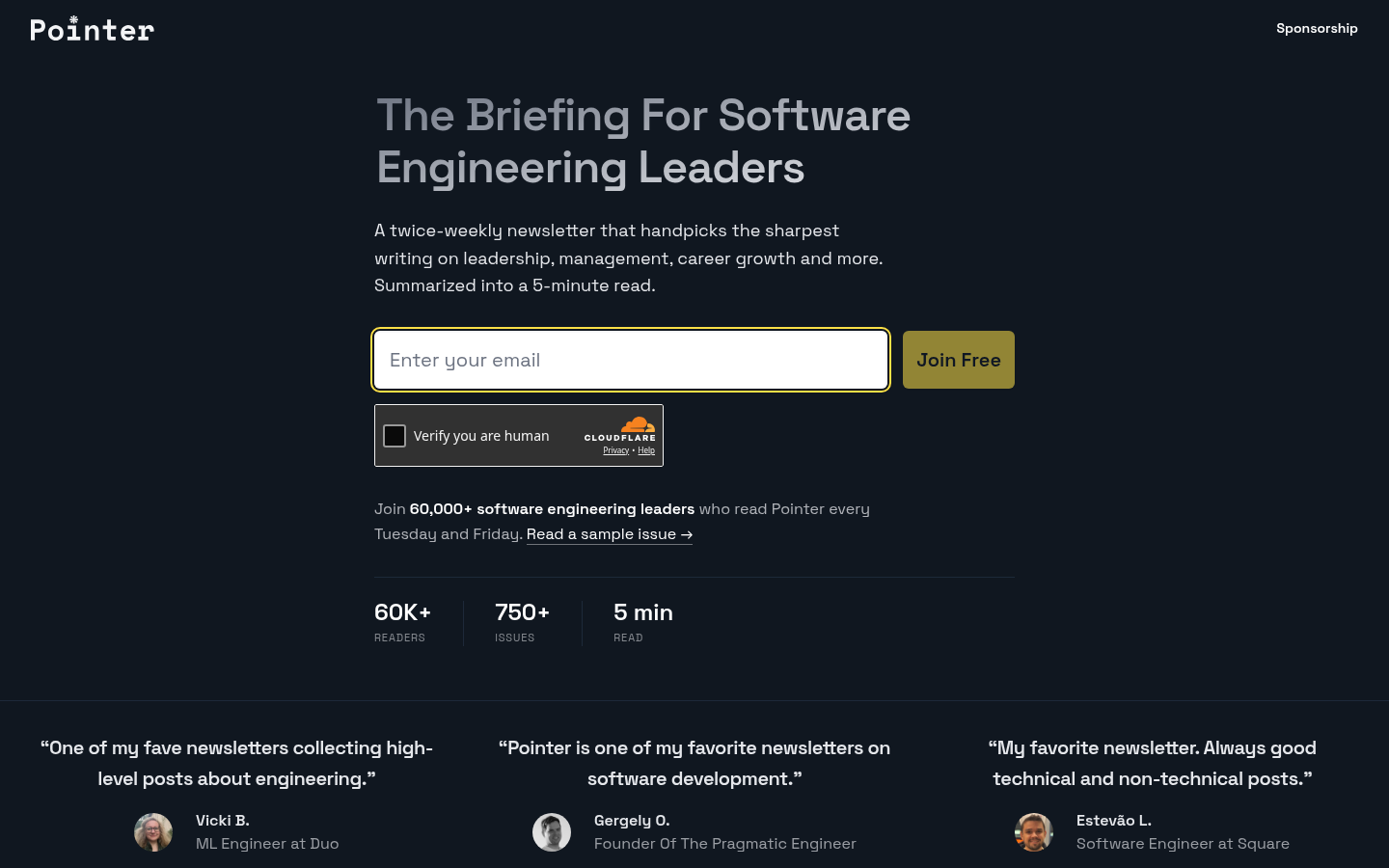
My rating: 4/5
Best for: Developer productivity, engineering analytics, DevEx platforms, and tools for engineering teams
Audience: 55,000 subscribers, with a 40% open rate
Sponsorship cost: Custom quote from the publisher
If you're selling a developer tool where engineering managers influence the buying decision, Pointer is worth considering.
Published twice a week by Suraj Kapoor, Pointer covers software engineering, team management, career growth, and technical leadership.
According to their sponsorship page, 50% of readers manage engineering teams, 90% are based in the US, and the average reader has 10 years of professional experience.
That's a useful audience profile if you're selling something like engineering analytics, code review automation, or developer productivity software. You're reaching people who may have the authority to introduce a tool across an entire engineering team.
Gergely Orosz, who writes The Pragmatic Engineer, also recommends Pointer to sponsors. He doesn't accept sponsorships for his own newsletter, so his recommendation is worth considering.
For an engineering productivity platform, I'd promote a case study showing how a team reduced PR review time or improved deployment frequency. That's more relevant to Pointer's readers than a generic product announcement.
Would we sponsor them again? Yes, particularly for products aimed at engineering managers and technical leaders. I'd request their media kit and recent sponsor-click numbers before booking.
15. React Status
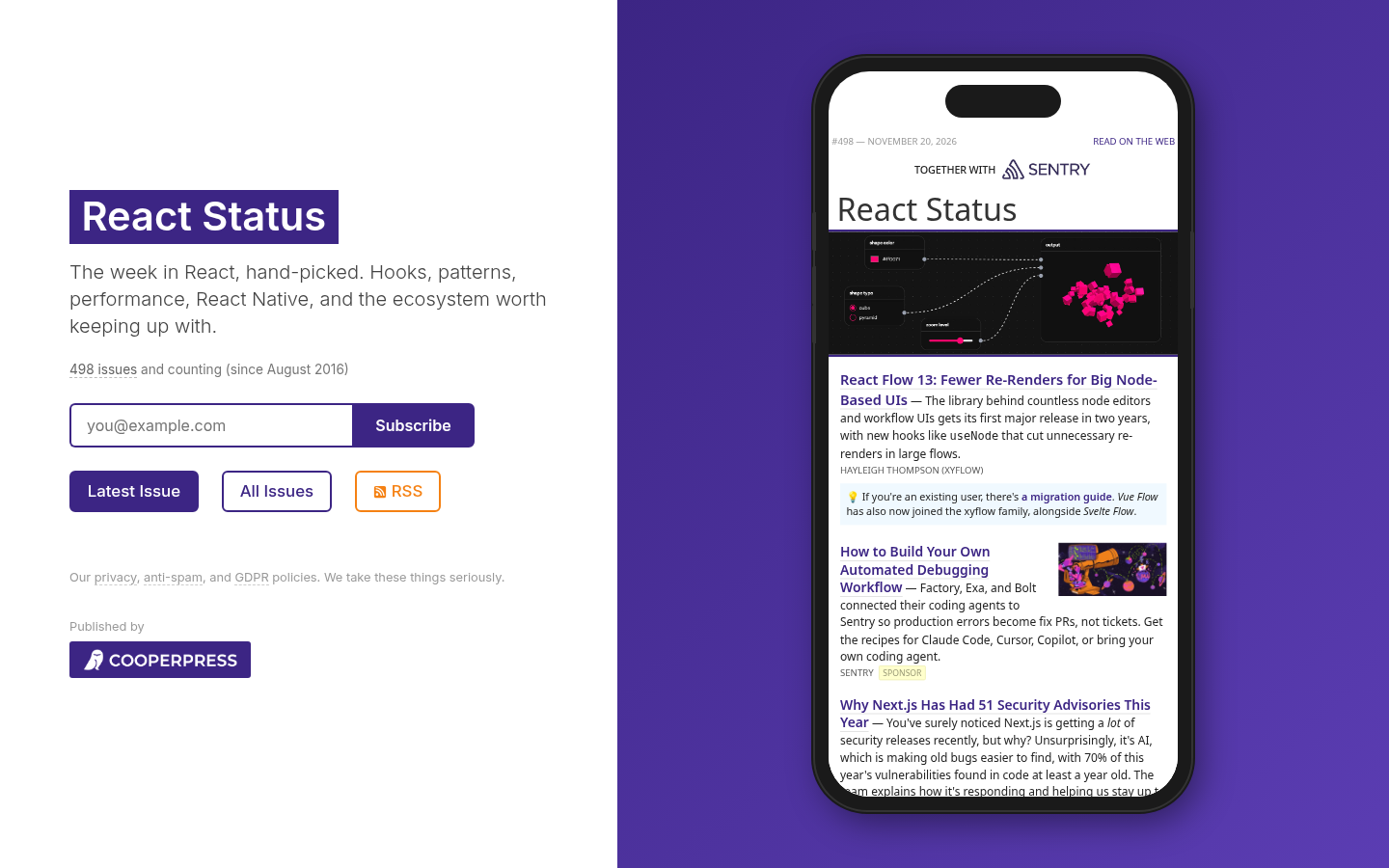
My rating: 4/5
Best for: React SDKs, frontend monitoring, UI libraries, and developer tools
Audience: 53,382 subscribers, with a 40% open rate
Sponsorship cost: $1,265 for a primary placement or $200 for a classified ad
If your product is built for React developers, I'd seriously consider React Status before spending on a broader JavaScript newsletter.
Published by Cooperpress since 2016, it covers React releases, React Native, libraries, and tutorials. It's a pretty focused audience, especially if you're promoting something developers can integrate directly into their React applications.
According to Cooperpress's media kit, 55% of subscribers opened at least one of the previous five issues. The newsletter also has a lower primary sponsorship price than JavaScript Weekly: $1,265 compared with $3,680.
There are only two advertising options: a primary placement or a $200 classified ad. Unlike JavaScript Weekly, there's no mid-newsletter sponsored link.
For a frontend monitoring tool, I'd use the primary placement to show how developers can identify hydration errors or debug slow React components, ideally with a working example.
And if you're testing the newsletter for the first time, the $200 classified ad is a reasonable way to try the audience before committing to a larger placement.
Would we sponsor them again? Yes, especially for React-specific products. I'd favor React Status over a general JavaScript newsletter when React developers are the main users you're trying to reach.
16. Node Weekly
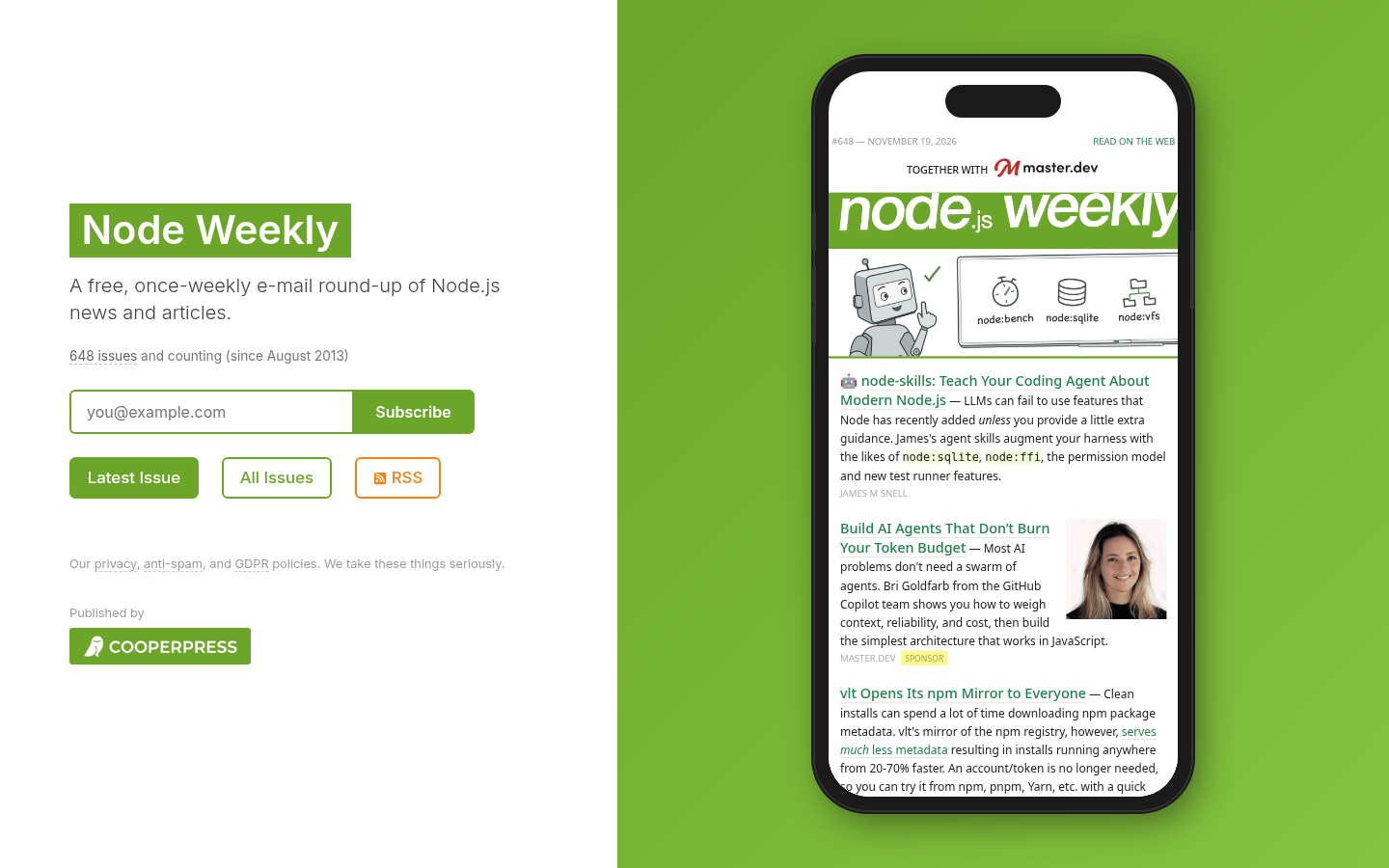
My rating: 4/5
Best for: Node.js SDKs, backend APIs, observability, serverless platforms, and developer infrastructure
Audience: 58,708 subscribers, with a 38% open rate
Sponsorship cost: $1,460 for a primary placement, $650 for a sponsored link, or $200 for a classified ad
If your product has a Node.js SDK or is built for backend developers, I'd put Node Weekly on your shortlist.
It's been around since 2013 and is published by Cooperpress, the same team behind JavaScript Weekly. The difference is that Node Weekly focuses on server-side JavaScript, covering runtime updates, frameworks, libraries, performance, and backend development.
According to Cooperpress's media kit, 53% of subscribers opened at least one of the previous five issues. The average open rate was 38% in July 2026.
For $650, you can get a sponsored link in front of that audience without paying $1,460 for the primary placement. I'd consider that a reasonable starting point for testing a Node.js-specific product.
If I were promoting an observability platform, I'd link to a tutorial showing how to instrument a Node.js application, capture traces, and troubleshoot a slow API endpoint. Something readers can follow in their own projects.
Cooperpress also provides an ad preview before publication and a performance report after the send. I'd review both carefully, especially the final URL and tracking parameters.
Would we sponsor them again? Yes, particularly for backend tools with strong Node.js support. I'd start with the $650 sponsored link and consider the primary placement if the first campaign brings in relevant developers.
10 more developer newsletters I'd consider sponsoring in 2027
1. The Code
My rating: 4/5
Best for: AI coding agents, developer infrastructure, LLM APIs, and engineering productivity tools
Audience: 300,000+ subscribers
Sponsorship cost: Custom quote through Superhuman AI
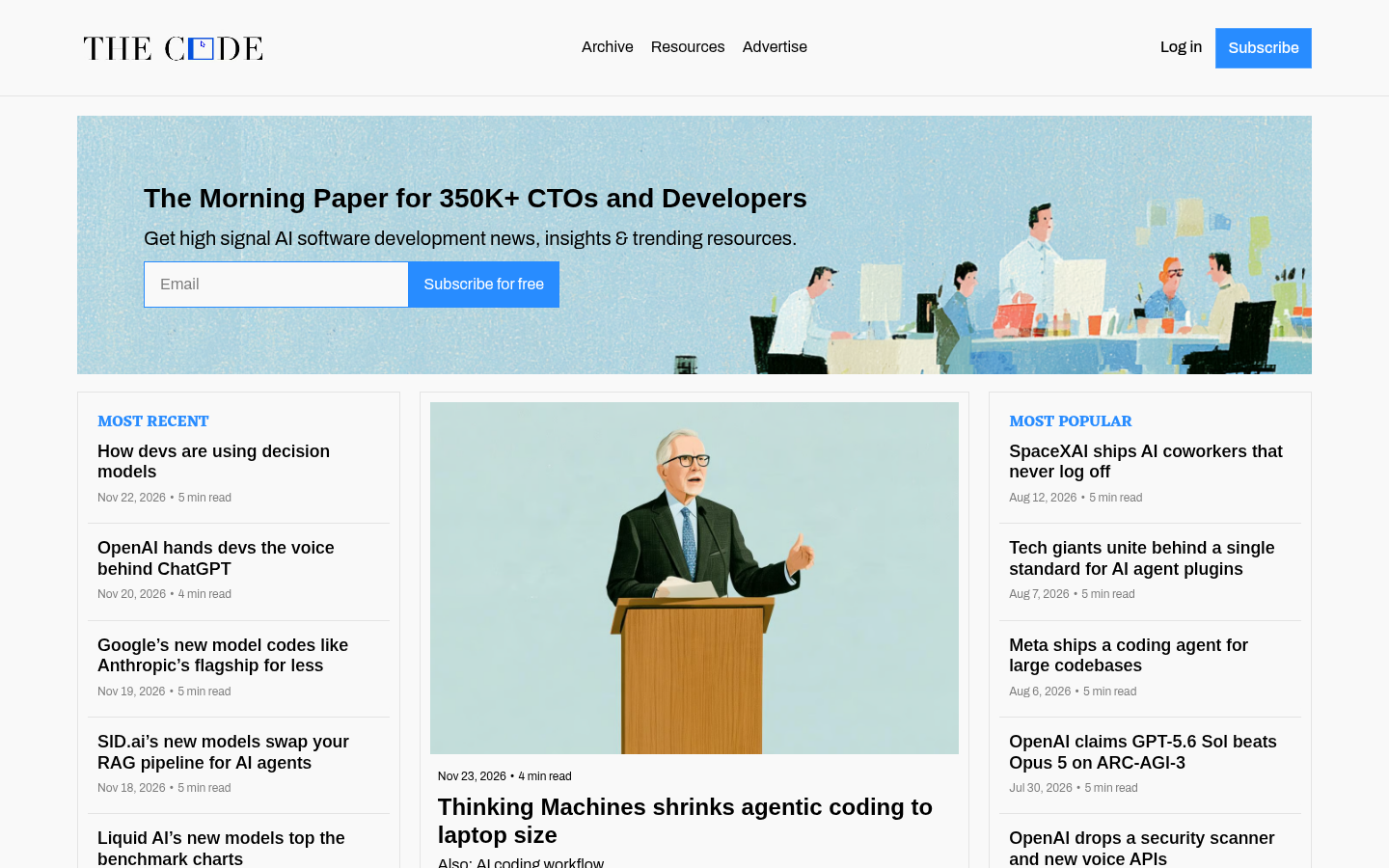
The Code is an AI engineering newsletter from the team behind Superhuman AI. It goes out on weekdays and targets CTOs, engineering leaders, and developers building with AI.
I'd consider The Code for developer-focused products rather than the broader Superhuman AI newsletter, which targets business professionals.
Their sponsorship history is worth looking at. According to Ad Almanac, Tiger Data, Datadog, MongoDB, and Buildkite have all advertised there. Wispr Flow appeared across 24 weeks in a recent six-month period. Repeat bookings suggest continued advertiser interest, although they don't prove the campaigns were profitable.
There's also a case study from bitdrift, a mobile observability platform. Their content marketing lead said The Code became one of their top five website traffic sources during the campaign. That's a publisher-hosted testimonial, but it's relevant for infrastructure marketers.
The Code offers primary and secondary advertising placements, with its editorial team helping write the copy. I'd request click reports for both positions before choosing one.
For an AI coding agent, I'd promote a practical example showing the agent fixing a failing test or working through an actual repository issue.
Would we recommend sponsoring them? Yes, especially for AI developer tools and infrastructure products. I'd compare the cost per qualified visit against other AI engineering newsletters before booking multiple sends.
2. Changelog News
My rating: 4/5
Best for: Open-source tools, developer APIs, cloud infrastructure, and DevTools launches
Audience: 27,000+ newsletter subscribers, with a reported 51.35% open rate
Sponsorship cost: $1,500 per week for a combined newsletter, podcast, and YouTube placement
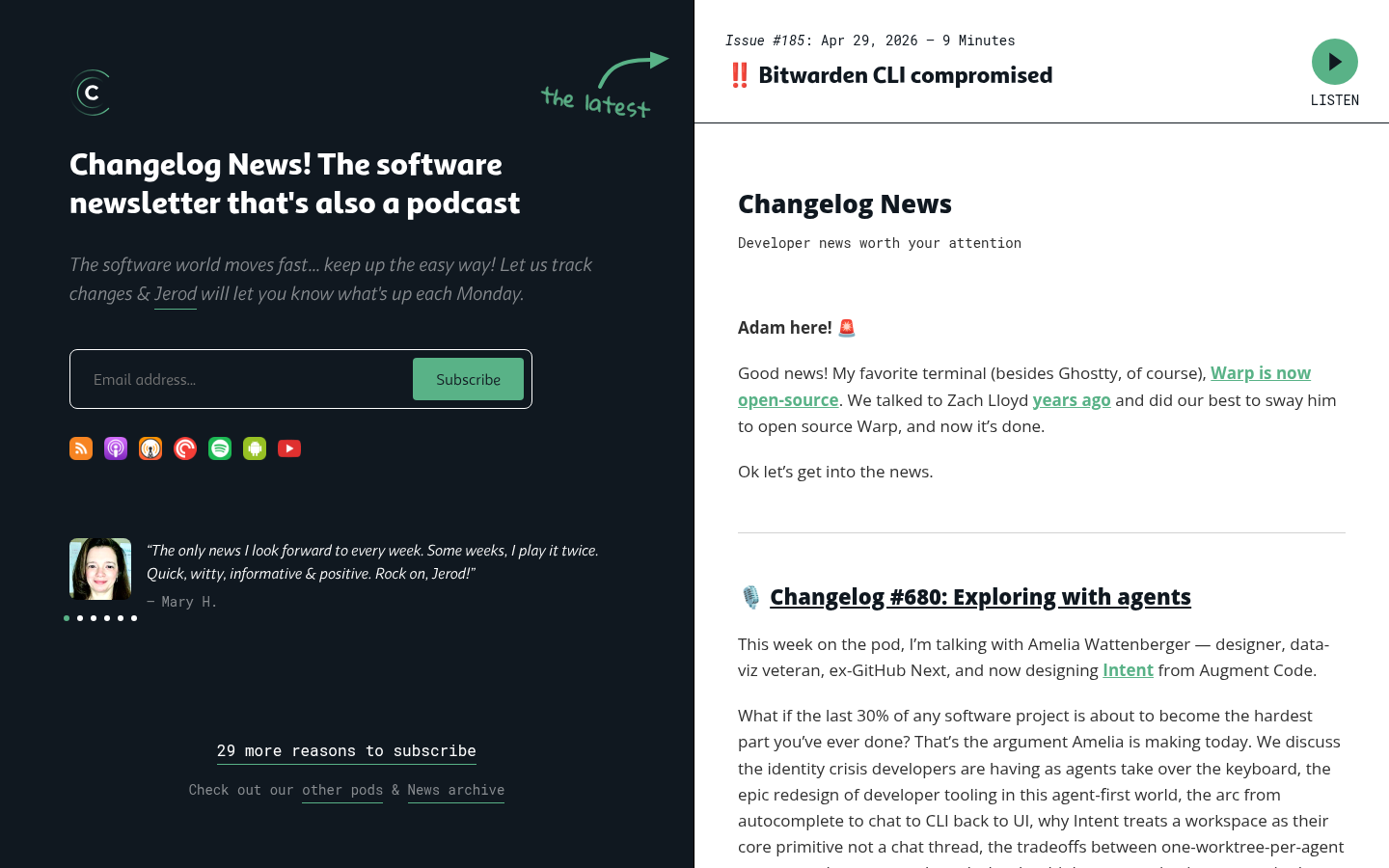
Changelog News is a developer newsletter that also comes as a podcast, hosted by Jerod Santo.
The content covers software engineering, open source, AI, and developer tools. According to their media kit, 43% of the wider Changelog audience works in backend engineering, while 27% works in frontend development.
Their sponsorship package is quite different from the others on this list. For $1,500, you're the featured brand across the newsletter, podcast, and YouTube edition for that week. The publisher reports 20,000 to 30,000 podcast listens per episode, alongside its email audience.
I'd consider that for launching an open-source tool or introducing a new developer API. You get room to explain the product through audio, with links for developers who want to try it.
One thing I'd check before paying: the publishing schedule. Their public archive currently shows April 29, 2026, as the latest issue, despite the advertising page still describing a weekly package. I'd confirm that new editions are running and ask for updated audience figures.
Would we recommend sponsoring them? Yes, provided publishing has resumed. The combined format could work well for a technical product launch, but I'd want recent campaign reports before booking.
3. SRE Weekly
My rating: 4/5
Best for: Observability, incident management, cloud infrastructure, Kubernetes, and platform engineering
Audience: Not publicly disclosed
Sponsorship cost: Custom quote. You'll need to request the media kit.
If you're selling an observability or incident management tool, I'd definitely look at SRE Weekly.
It's run by Lex Neva and has been publishing for over a decade. The newsletter covers production incidents, reliability engineering, infrastructure failures, and the challenges of running large-scale systems.
The audience is particularly relevant for tools used by SREs and platform engineers. Recent issues have covered database failovers, autoscaling, incident response, and production outages.
I checked their recent sponsors, too. PlanetScale sponsored seven issues between August and September 2026, according to Ad Almanac. Incident.io has also advertised there, promoting its incident management tooling.
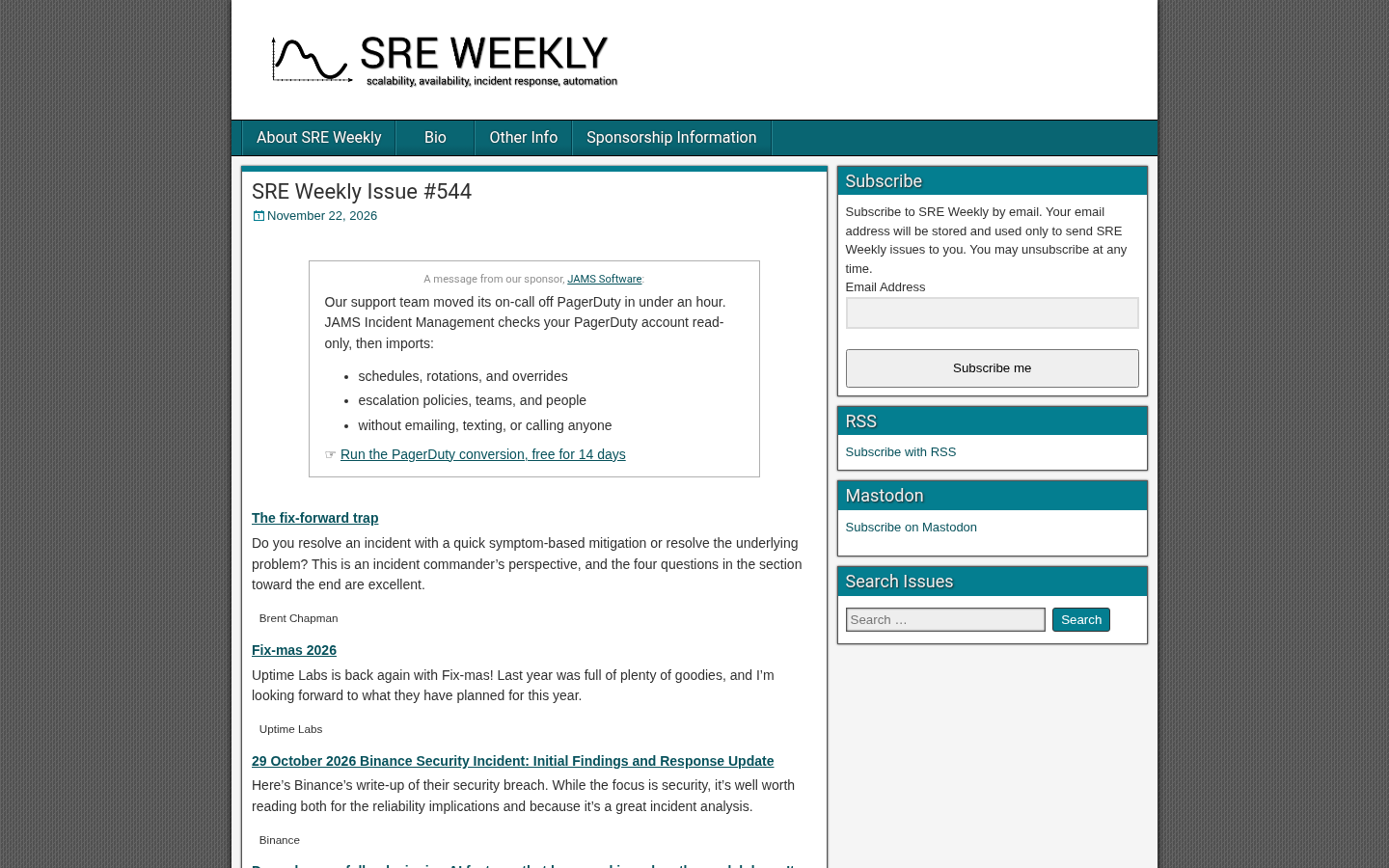
Looking through the November 15 issue, the sponsor message appears right at the top, before the editorial content. That gives the advertiser a prominent position without competing with several other ads in the same issue.
The downside is the lack of public audience data. There's no subscriber count, open rate, or pricing available on the website. Lex asks advertisers to email for the media kit.
For an incident management platform, I'd consider promoting a technical walkthrough showing how to automate incident escalation or reduce alert noise.
Would we recommend sponsoring them? Yes, especially for products used by SREs and platform engineers. I'd ask for the media kit and recent sponsor-click numbers before deciding on a placement.
4. Frontend Focus
My rating: 4/5
Best for: Frontend developer tools, browser testing, web performance, CSS frameworks, and accessibility tools
Audience: 69,192 subscribers, with a 37% open rate
Sponsorship cost: $1,790 for a primary placement, $560 for a sponsored link, or $180 for a classified ad
If you're trying to reach frontend developers, Frontend Focus is worth considering.
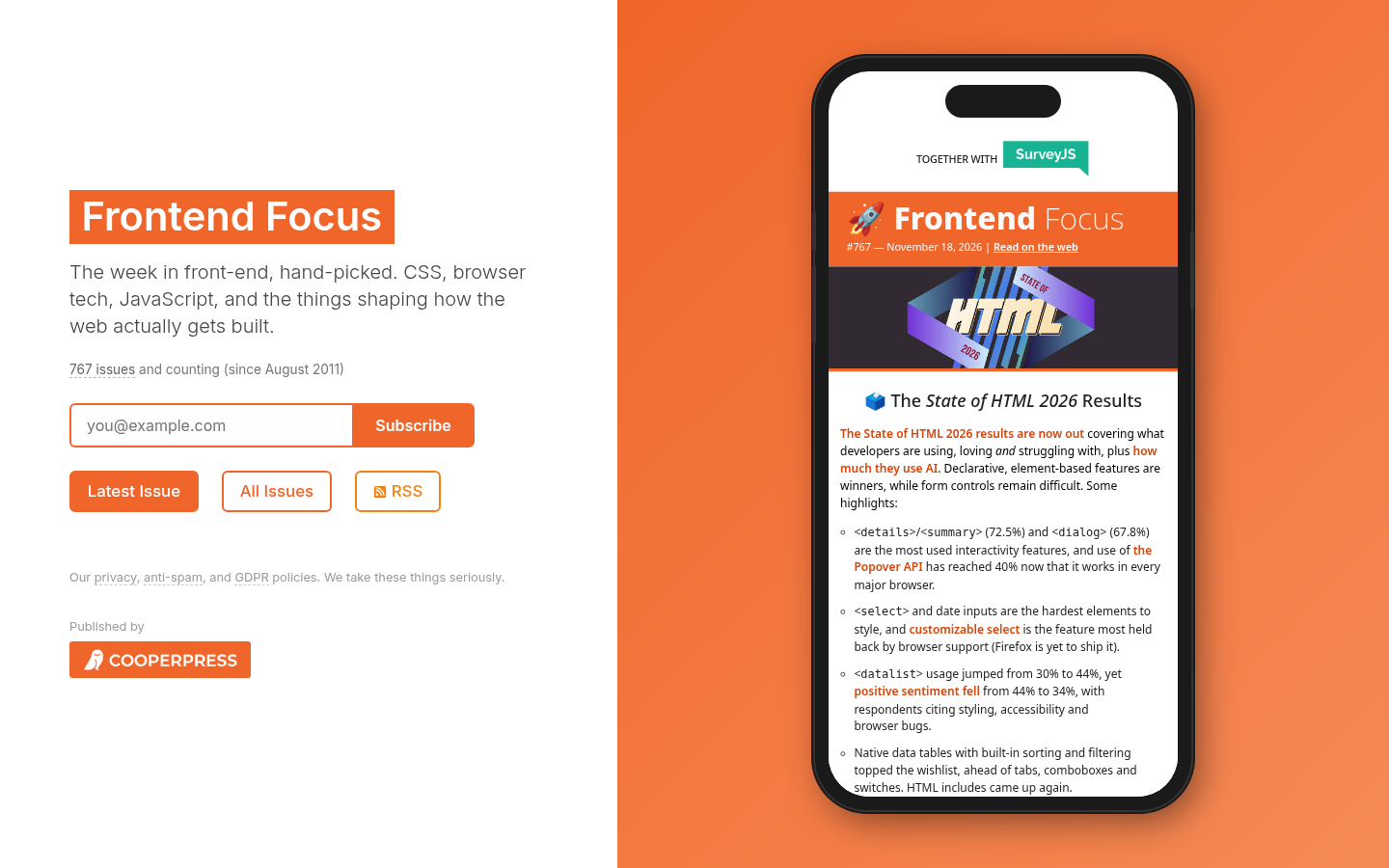
Published by Cooperpress since 2011, it covers HTML, CSS, browser updates, web APIs, and frontend development. Chris Brandrick curates the newsletter, which goes out every Wednesday.
According to Cooperpress's media kit, 52% of subscribers opened at least one of the previous five issues. The average open rate was 37% in July 2026.
The pricing is reasonable compared with JavaScript Weekly. A sponsored link costs $560 here, versus $1,260 in JavaScript Weekly. Of course, JavaScript Weekly has a much larger audience, but Frontend Focus is more specific to browser-based development.
I'd look at this newsletter for products like browser testing platforms, frontend monitoring tools, or anything that helps developers improve website performance.
For example, if I were promoting a Core Web Vitals monitoring tool, I'd link to a technical walkthrough showing how to identify and fix a poor Interaction to Next Paint (INP) score. That's something frontend developers can put to use.
You can also test a $180 classified ad before spending on the larger placement, although I'd expect the format to offer much less room to explain the product.
Would we recommend sponsoring them? Yes, especially for tools built specifically for frontend engineers. I'd consider the $560 sponsored link first, then evaluate the results before booking a primary placement.
5. Data Elixir
My rating: 4/5
Best for: Data science platforms, ML infrastructure, analytics tools, and AI developer products
Audience: 45,000+ subscribers, with a 57% average open rate
Sponsorship cost: Custom quote. Pricing is available in their media kit.
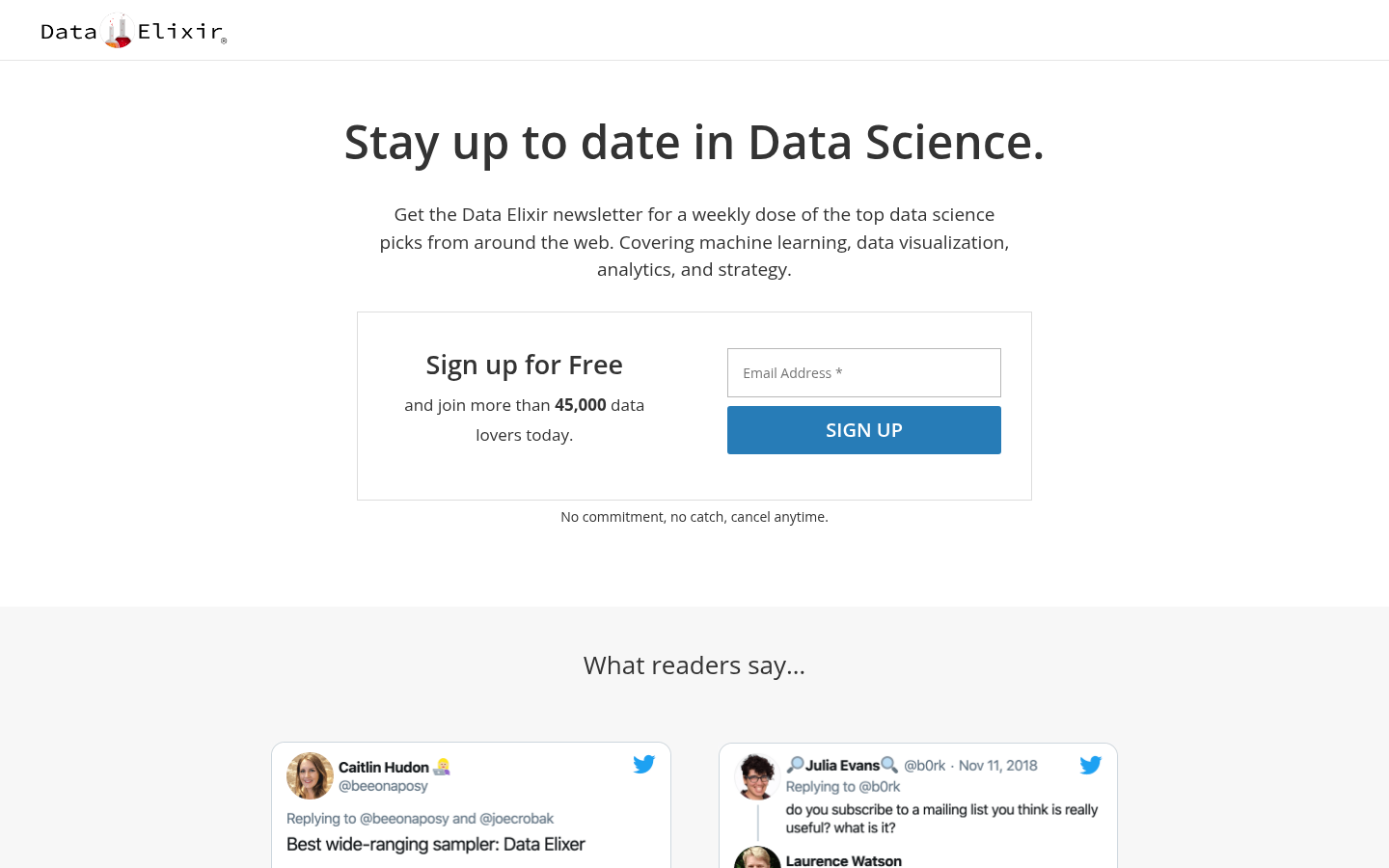
Data Elixir has been around since 2015, making it one of the longer-running newsletters focused on data science and machine learning.
It's curated by Lon Riesberg and covers research papers, Python and R tutorials, data visualization, and open-source tools. The readers include data scientists, ML engineers, analysts, and researchers, primarily from the US, Europe, Canada, and Australia.
Their sponsorship page reports a 57% average open rate and 7.9% click-through rate. Those are publisher-wide figures, though. I'd ask how many clicks the actual sponsored placements receive before using them to forecast a campaign.
I also looked through their recent issues. In the November 10 edition, Precisely promoted its AI Studio with a sponsored message right at the top. Mercor had another placement further down. That gives you an idea of how advertisements appear alongside the technical content.
For an ML monitoring platform, I'd promote a reproducible example showing how to detect data drift in a production pipeline. Readers could inspect the code and try it with their own datasets.
Would we recommend sponsoring them? Yes, particularly for products used by data scientists and ML engineers. I'd request their media kit and compare the available placements before booking.
6. iOS Dev Weekly
My rating: 4/5
Best for: iOS SDKs, Swift developer tools, mobile testing, app performance, and Apple platforms
Audience: 40,000+ subscribers
Sponsorship cost: €2,500 per issue, with discounts for multiple bookings
If you're marketing a product specifically for iOS developers, iOS Dev Weekly is worth considering.
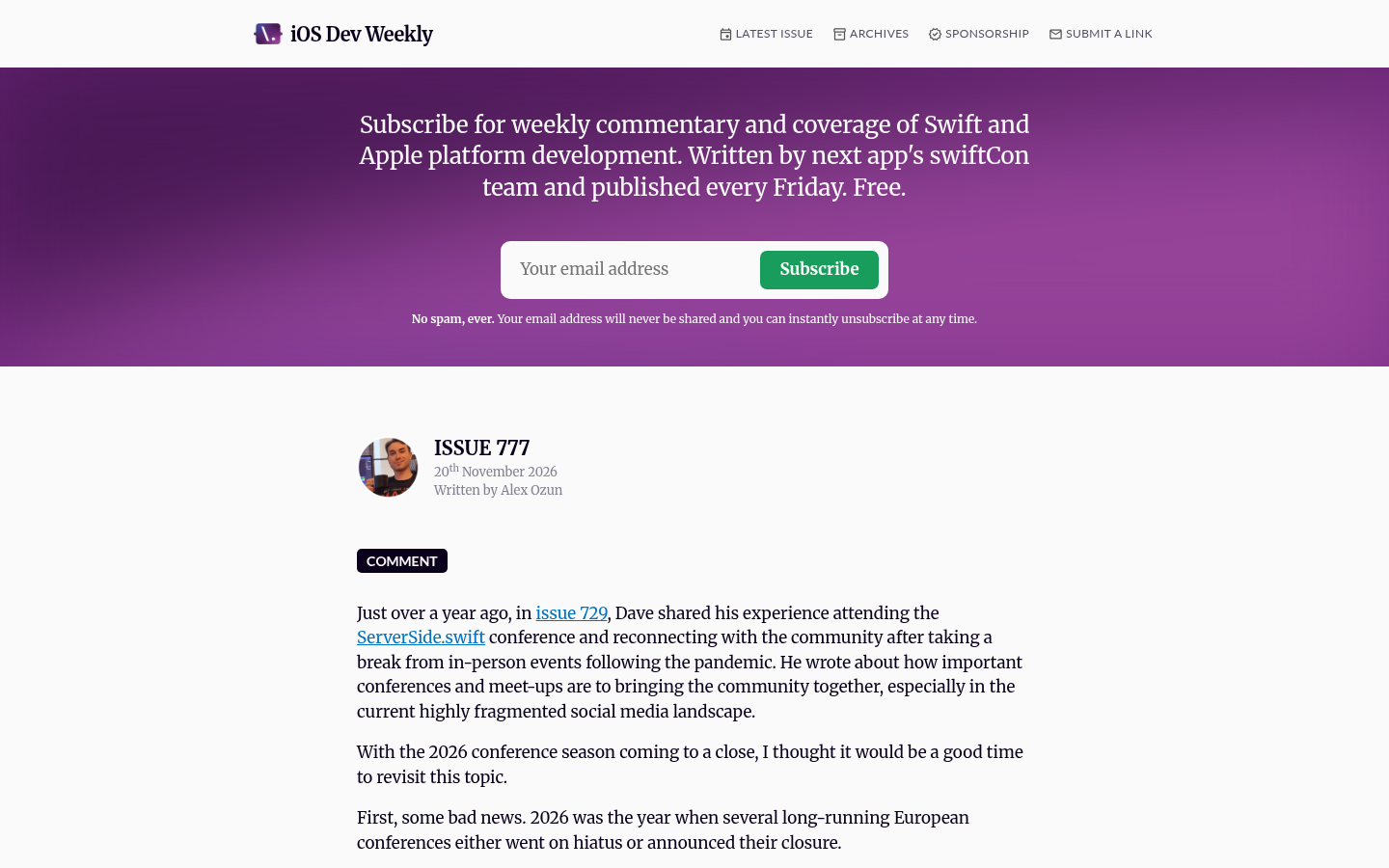
Founded by Dave Verwer in 2011, it's one of the longest-running newsletters for Swift and Apple platform developers. It goes out every Friday, covering SwiftUI, Xcode, new libraries, and technical articles from the iOS community.
The sponsorship format is simple. There's only one advertiser per issue, and your sponsored link appears directly below the opening commentary. You're not competing with several other paid placements for attention.
At €2,500 per issue, that works out to roughly €62.50 per 1,000 subscribers. I'd want to see recent sponsor-click numbers before deciding whether the price makes sense.
Gergely Orosz of The Pragmatic Engineer has also recommended iOS Dev Weekly. He's advertised there himself and said he was happy with the results.
The newsletter changed ownership in May 2026, when Mobile Seasons, the company behind droidCon, acquired it. I'd ask for updated sponsorship reports under the new ownership before booking.
For a mobile crash-reporting SDK, I'd promote a Swift tutorial showing developers how to capture crashes and inspect stack traces.
Would we recommend sponsoring them? Yes, for products built specifically for iOS developers. I'd book one issue first, then consider a multi-issue package if the traffic brings in relevant users.
7. Bytes
My rating: 3.5/5
Best for: JavaScript SDKs, frontend tools, React libraries, and developer APIs
Audience: 210,000+ subscribers, with a 40%+ average open rate
Sponsorship cost: Custom quote through BuySellAds
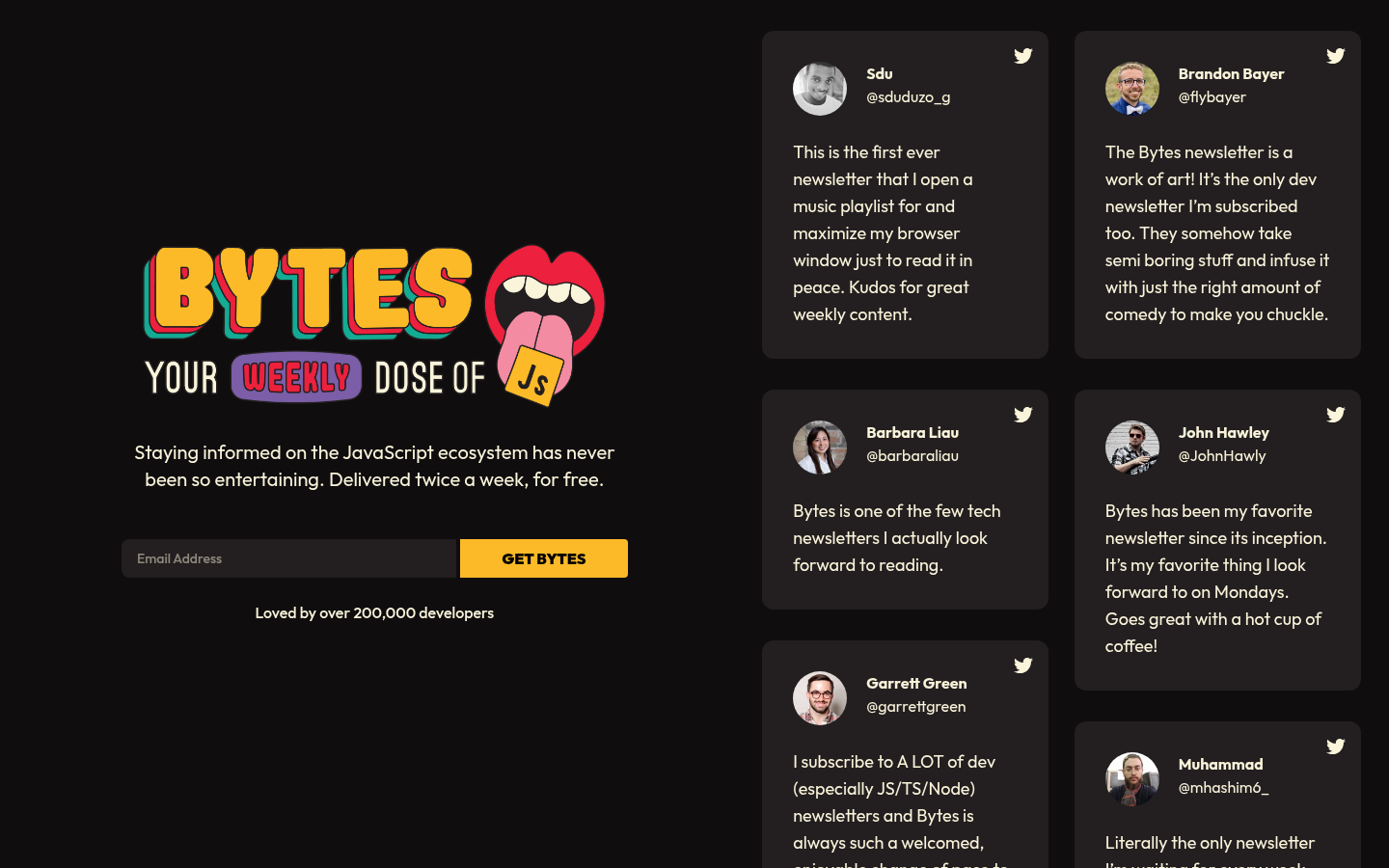
If you've read Bytes, you'll know it's not your typical developer newsletter. There's plenty of JavaScript news, but also memes, jokes, and commentary that make it genuinely fun to read.
It's part of Fireship and goes out every Tuesday and Friday, covering JavaScript, TypeScript, React, and the wider frontend ecosystem.
According to BuySellAds, 46% of readers are full-stack developers, while 25% hold management positions such as CTO or tech lead. Around 52% are based in the US and Canada, with another 30% in Europe.
Those demographics make it interesting for DevTools companies targeting North American and European developers.
The sponsorship creative matters here. Bytes has a pretty distinctive writing style, and I wouldn't drop a formal corporate announcement into a newsletter full of jokes and developer humor.
For a JavaScript testing tool, I'd promote a short demo showing it catching a bug that slipped through a test suite. Give readers something useful, and let the publisher adapt the copy to its tone.
Pricing isn't public. You can contact their advertising team or enquire through BuySellAds.
Would we recommend sponsoring them? Yes, particularly for JavaScript and frontend products. I'd request recent sponsor-click reports and see examples of previous ads before booking.
8. Refactoring
My rating: 3.5/5
Best for: Developer productivity, engineering analytics, AI coding tools, and engineering management platforms
Audience: 170,000+ engineers and managers
Sponsorship cost: Custom quote through BuySellAds
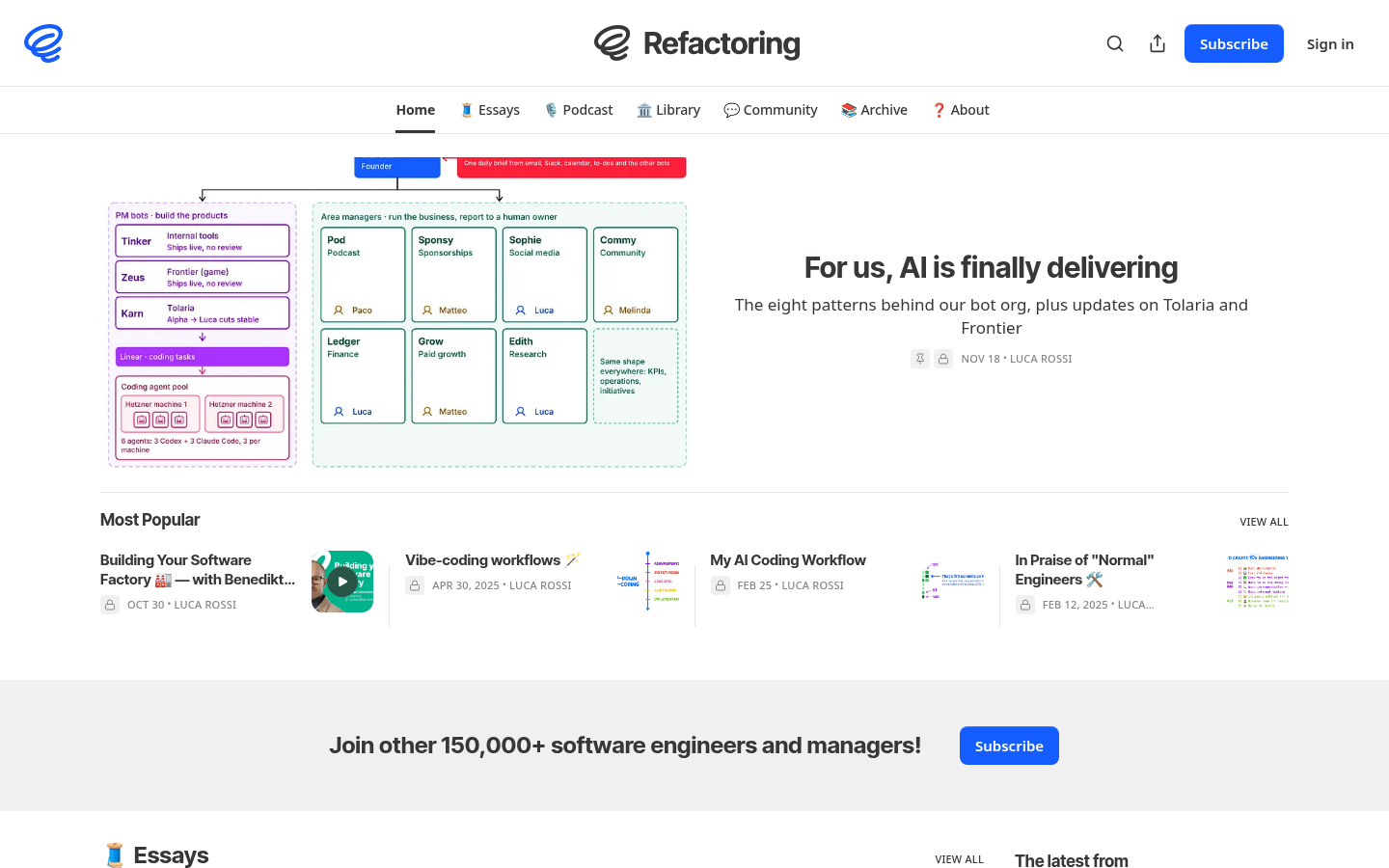
Refactoring is written by Luca Rossi, a former startup CTO, and focuses on helping engineering teams ship software and manage technical work.
The newsletter covers engineering leadership, team productivity, AI-assisted development, and software delivery. Luca publishes practical advice on Mondays, longer essays for paid subscribers on Wednesdays, and podcast interviews with engineering leaders.
According to its BuySellAds profile, 60% of readers hold manager, VP, or C-level positions. The publisher's website reports more than 170,000 readers, while BuySellAds lists 180,000.
That makes Refactoring particularly relevant if you're selling something an engineering manager needs to approve or roll out across a team.
There's also evidence of repeat advertiser interest. Ad Almanac records sponsorships from companies like Unblocked, Notion, and DX.
For an engineering analytics platform, I'd promote a case study showing how a team identified bottlenecks in its development process. Refactoring's readers are more likely to care about the operational impact than a long list of product features.
You can enquire about newsletter placements and podcast sponsorships through BuySellAds. Pricing isn't public.
Would we recommend sponsoring them? Yes, particularly for developer productivity tools sold to engineering leaders. For a self-serve API targeting individual developers, I'd prioritize a more hands-on technical newsletter.
9. Engineering Leadership
My rating: 3.5/5
Best for: Developer productivity, engineering analytics, AI coding tools, and DevEx platforms
Audience: 200,000+ subscribers, with a reported 30% open rate
Sponsorship cost: Custom quote from the publisher
Engineering Leadership is written by Gregor Ojstersek, who worked his way from software engineer to CTO.
His newsletter covers engineering management, career growth, team productivity, and the challenges of leading software teams. He publishes two editions a week, one free and one for paid subscribers.
The audience is particularly relevant if you're selling a tool that needs approval from an engineering manager or CTO. Think developer productivity platforms, code review automation, or tools that help teams understand how engineering work gets done.
According to the publisher's sponsorship information, the newsletter has over 200,000 subscribers and a 30% open rate.
I also checked who's advertising there. Ad Almanac shows placements from DX, Unblocked, and CodeRabbit. All three sell products that help engineering teams work more effectively, so their presence makes sense.
One thing I'd clarify before booking is whether the sponsorship appears in the free edition. That's important because the newsletter also has paid-only content, and I'd want to know exactly how many subscribers receive the sponsored issue.
For an AI code review tool, I'd promote a case study showing how a team reduced review time without compromising code quality. That's a more relevant conversation for engineering managers than a list of AI features.
Would we recommend sponsoring them? Yes, for products targeting engineering managers and technical decision-makers. For a self-serve developer API, I'd prioritize newsletters where individual engineers are the main audience.
10. Ruby Weekly
My rating: 3.5/5
Best for: Ruby on Rails hosting, application monitoring, developer APIs, and Ruby-specific tools
Audience: 35,565 subscribers, with a 47% open rate
Sponsorship cost: $1,220 for a primary placement, $540 for a sponsored link, or $220 for a classified ad
Ruby Weekly has been around since 2010, making it one of the longest-running newsletters in the Ruby and Rails community.
Published by Cooperpress and curated by Peter Cooper and Glenn Goodrich, it covers Ruby releases, Rails updates, performance improvements, and open-source libraries.
According to Cooperpress's media kit, 62% of subscribers opened at least one of the previous five issues. That's a useful sign of recurring readership, although it doesn't tell us how many people click sponsorships.
I also checked its advertising history. AppSignal and FastRuby.io have sponsored multiple issues, with AppSignal appearing for nine weeks and FastRuby.io for seven in the period tracked. Both sell products or services directly relevant to Ruby developers.
The primary placement costs $1,220, but I'd probably start with the $540 sponsored link for a first campaign.
For a Rails performance monitoring tool, I'd promote a benchmark or tutorial showing developers how to identify slow Active Record queries. It gives readers a reason to explore the product without needing a lengthy introduction.
Would we recommend sponsoring them? Yes, if Ruby or Rails developers are important to your product. Otherwise, I'd spend the budget on a newsletter covering the language or framework your users actually work with.
How to choose a developer newsletter to sponsor
Here's what I'd check before booking a placement.
Check the audience, not just the subscriber count. For a PostgreSQL product, I'd consider Postgres Weekly before a general AI newsletter. Ask for a breakdown by job role, geography, and tech stack.
Request actual sponsorship performance. Ask for the last three sponsor reports, including unique clicks, placement position, and bot filtering. A 45% open rate tells you little about how many people clicked an ad.
Work out the acquisition cost. If a placement costs $1,200 and brings in six sign-ups, that's $200 per sign-up. Track activation too. For an API product, I'd look at developers completing their first successful request.
Promote something developers can try. For React Status, I'd share a working React debugging demo. For Golang Weekly, a Go instrumentation tutorial. Match the creative to what subscribers already read.
Check the final proof and tracking. Test every link before publication and use unique UTMs for each placement. We've had a publisher send an ad with a broken link, so I wouldn't skip this.
Review results before rebooking. Compare publisher clicks with GA4 sessions, sign-ups, and product activity. If the audience converts, test another placement. If the numbers don't match, investigate before spending again.
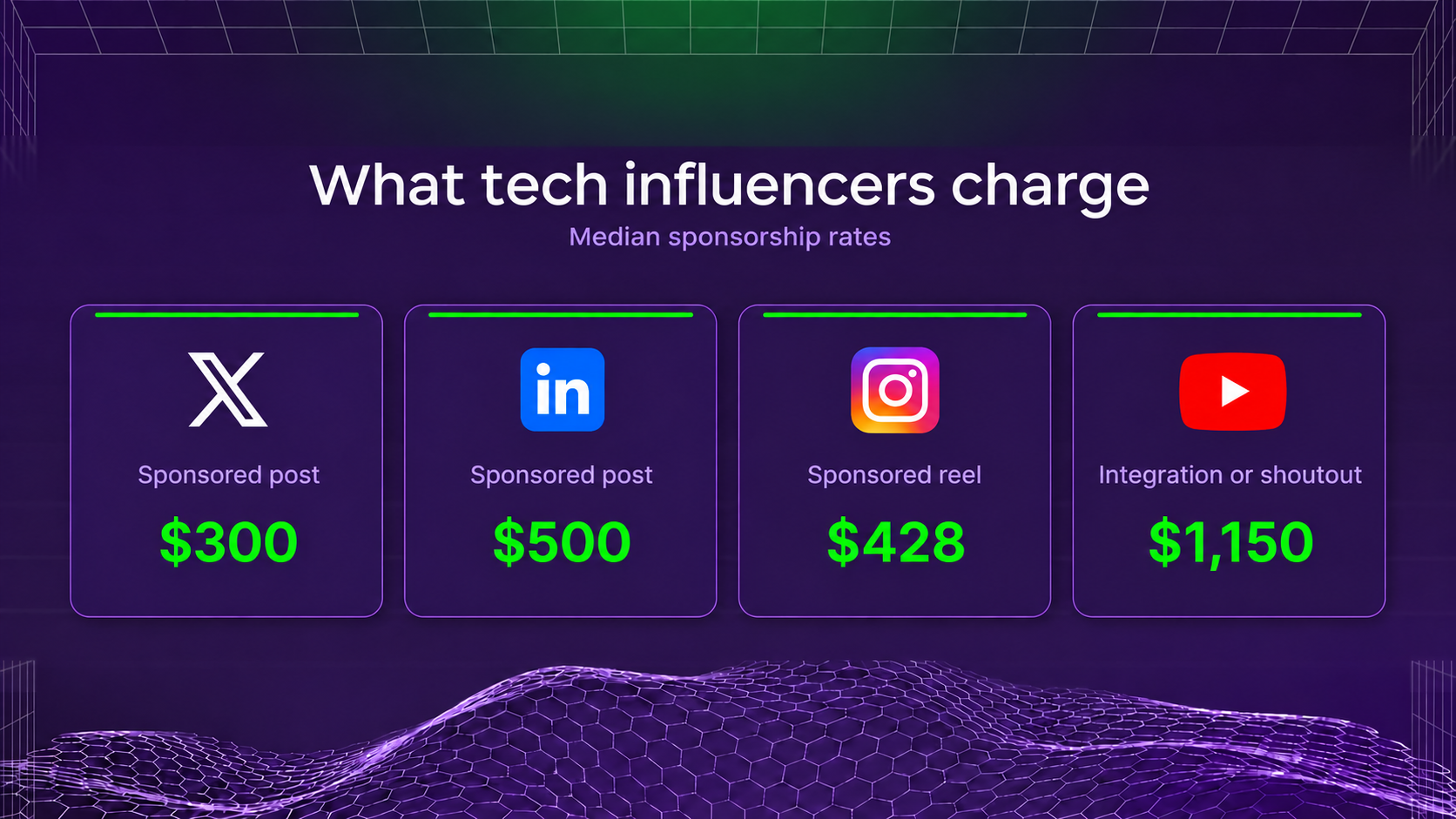
I'd start with one placement rather than committing to a package. You'll have actual campaign data to negotiate the next booking. If you're also budgeting for creator partnerships, I've broken down what tech influencers charge by platform.
Why the hassle? Let Hackmamba manage your influencer marketing campaigns
Finding the right newsletters is one thing. Then come the publisher negotiations, media kits, sponsorship briefs, tracking links, approvals, and figuring out whether those clicks turned into actual product users.
It's a lot to manage, especially when you're running campaigns across multiple publishers.
At Hackmamba, we handle all of that. As a tech influencer marketing agency, we help DevTools, AI, and infrastructure companies run newsletter sponsorships and creator partnerships, from sourcing and negotiations to campaign execution and reporting.
You focus on building the product. We'll handle getting it in front of the developers who need it. Book a call with our team.
FAQ
Published prices vary by audience and placement. Golang Weekly charges $1,120 for a primary sponsorship, while AlphaSignal lists $6,000 for its main ad. Smaller sponsored links and classified ads can cost a few hundred dollars. I'd request recent sponsor-click reports before comparing prices.
There's no reliable rate across every developer newsletter. Ask publishers for the percentage of opens that clicked previous sponsored placements, not the overall newsletter click-through rate. Also check whether they report unique clicks and filter automated traffic.
Compare the publisher's unique clicks with your GA4 landing-page sessions. Ask whether their reports filter email security scanners and bot activity. Some differences are normal, but a large gap needs investigating before you rebook.
It depends on who uses your product. I'd consider TLDR or Console for general DevTools, Postgres Weekly for database products, React Status for frontend SDKs, and DataTalks.Club for data engineering tools. Start with the newsletter covering your users' actual tech stack.
Give every placement a unique UTM-tagged URL. Track visits and sign-ups in GA4, then use PostHog or your product analytics to measure activation. For an API product, I'd track developers completing their first successful API request, not just creating an account.
About author
From SEO and growth campaigns to documentation, landing pages, and developer-focused content, the list goes on! My passion lies in helping products connect with developers and driving measurable results through thoughtful marketing. Outside of work, you’ll find me chasing new adventures, gazing at the moon, and enjoying the timeless charm of old Hollywood movies.